
Gold reserves were down by $580 million in the reporting week to $37.440 billion.

Gold reserves were down by $1.441 billion in the reporting week to $35.999 billion.

Gold reserves rose by $320 million to $31 billion.

India's forex reserves declined by $1.42 billion to $631.53 billion for the week ended in February 25 due to a dip in currency assets, according to the Reserve Bank data released on Friday. The overall reserves had increased by $2.76 billion to $632.95 billion in the previous reporting week. During the reporting week, the foreign currency assets (FCA) declined by $2.23 billion to $564.83 billion.

According to the Ministry of Energy, the system of frequency of the national grid went down at 7:34 am local time, resulting in the breakdown.

Gold reserves were down by $331 million to $37.264 billion.

The country's foreign exchange reserves swelled by USD 3.005 billion to a lifetime high of USD 490.044 billion in the week ending May 22, mainly on account of a rise in foreign currency assets, RBI data showed on Friday. In the previous week, the reserves had increased by USD 1.726 billion to USD 487.04 billion.

The Indian rupee, which has depreciated 1.1 per cent so far in August, is expected to decline further on the back of a strengthening US dollar and a weakening Chinese yuan, according to a Business Standard poll of analysts. The Indian rupee hit an all-time low recently, closing at 83.15 per dollar. Five of the 10 respondents said the Indian currency might touch 83.5 per dollar in August itself, while others said the worst could be over.

The apex bank held 586.44 tonne of gold as on September 30, of which 294.14 tonne are held overseas in safe custody with the Bank of England and the Bank for International Settlements, while the remaining gold is held domestically

Declining for the third consecutive week, India's forex reserves dipped by $77 million to reach $635.83 billion for the week ended December 10, RBI data showed on Friday. In the previous week, the reserves had slid by $1.78 billion to $635.90 billion. In the reporting week ended December 10, the dip in the forex kitty was on account of a decline in foreign currency assets (FCA), a major component of the overall reserves.

Foreign currency assets, a major component of the overall reserves, fell by $490 million to $441.458 billion in the reporting week.

India's forex reserves decreased by $1.145 billion to $640.874 billion for the week ended on November 5 on a fall in currency and gold assets, the Reserve Bank said on Friday. The overall reserves had increased by $1.919 billion to $642.019 billion for the previous reporting week. Foreign currency assets, a major part of the overall reserves, decreased by $881 million to $577.581 billion for the reporting week, the RBI said in the weekly data.

'Never expected, and never in history, not a single country has extended that kind of assistance'

Chief Economic Advisor (CEA) V Anantha Nageswaran on Tuesday said India is not defending the rupee and the Reserve Bank of India is taking necessary steps to ensure that the movement of the rupee is gradual and in line with market trends. Nageswaran further said that the rupee is being managed in a manner that reflects the fundamentals of the economy. "India is not defending the rupee... I don't think Indian fundamentals are such that we need to defend the rupee. "The rupee can take care of itself," he said at an event in New Delhi.

It is thanks to the policy of liberalisation conceived by Manmohan Singh and enforced by P V Narasimha that the Indian economy has now become the world's 5th largest economy by nominal GDP, asserts Dr Sudhir Bisht.

Neither the foreign exchange, nor the gold, and certainly not the revaluation reserve should be available for spending by anyone. he revaluation account is simply not money. It is simply an accounting entry, says Rashmin C Sanghvi.
During the week, gold reserves decreased by $200 million to $26.709 billion.
In the steepest weekly fall ever, India's forex reserves slid by $11.17 billion to $606.47 billion as the currency came under pressure due to geopolitical developments, according to the Reserve Bank data released on Friday. For the previous reporting week ended March 25, the overall reserves had slid by $2.03 billion to $617.65 billion. The steep fall in the reserves was because of a decline in the core currency assets, which fell by $10.73 billion to $539.73 billion.
India's forex exchange reserves increased by $289 million to $640.401 billion for the week ended November 19, the Reserve Bank said on Friday. The overall reserves had declined by $763 million to $640.11 billion in the previous reporting week. They had touched a life time high of $642.45 billion in the week ended September 3, 2021.
India's forex reserves decreased by $587 million to $635.08 billion for the week ended December 24, the RBI said on Friday. In the previous week ended December 17, the overall reserves had decreased by $160 million to $635.67 billion. The kitty had touched a lifetime high of $642.45 billion in the week ended September 3, 2021.

Gold reserves in the reporting week increased by $707 million to $33.52 billion.

The foreign exchange kitty had crossed the half-a-trillion mark for the first time in the week ended June 5, 2020, after it had swelled by $8.223 billion to stand at $501.703 billion.

Gold reserves were up by $1.525 billion in the reporting week to $37.625 billion.

Probably 35 bps. There could be even an encore in February 2023 to take the policy rate to 6.5% before the financial year ends, predicts Tamal Bandyopadhyay.

The country's exports rose by about 6 per cent to a "record" $447 billion during 2022-23 on account of healthy growth in the outbound shipments of sectors such as petroleum, pharma and chemicals and marine, Commerce and Industry Minister Piyush Goyal said on Thursday. The country's imports also grew by 16.5 per cent to $714 billion in 2022-23 as against $613 billion in 2021-22. He said that the exports of goods and services together scaled "new heights" and has increased by 14 per cent to $770 billion in 2022-23 as against 676 billion in 2021-22.

Reserve Bank Governor Shaktikanta Das on Wednesday said in the wake of appreciating US dollar, the movement of rupee has remained least disruptive as compared to its peers, and the size of foreign exchange reserve is comfortable. On a financial year basis (from April to October 2022), the rupee has appreciated by 3.2 per cent in real terms, even as several major currencies have depreciated, he said while announcing the latest set of bi-monthly monetary policy. "The story of the rupee has been one of India's resilience and stability," the Governor said while pointing out that the appreciation of the US dollar this year, which precipitated large-scale depreciation of all major global currencies including the Indian rupee, has drawn wide attention.

India's exports in April jumped nearly three-fold to USD 30.63 billion from USD 10.36 billion in the same month last year, according to government data released on Friday.

China's forex reserves witnessed an increase of $509.7, a 12.8 per cent rise from 2012, People's Bank of China said.

Sliding from a lifetime high, India's forex reserves declined by $4.148 billion to reach $603.933 billion for the week ended June 18 due to a fall in gold and currency assets, RBI data showed on Friday. The forex kitty had surged by $3.074 billion to a record high of $608.081 billion in the previous reporting week. The foreign currency assets (FCA), a major component of the overall reserves, declined by $1.918 billion to $561.540 billion for the reporting week, as per data by the Reserve Bank of India (RBI).

President Ram Nath Kovind on Monday said that India has once again established itself as the world's fastest-growing economy. "Due to consistent endeavours, India has again emerged as one of the fastest-growing economies in the world. "GST collection has consistently remained above Rs 1 lakh crore during the last several months," President Kocind said while addressing both Houses of the Parliament at Central Hall ahead of the Budget Session. In the first seven months of the current financial year, the inflow of 48 billion dollars, the President said is a "testimony to the belief the global investor community has in India's growth story."
The currency market won't care for our moans, groans, cries and sighs. The rupee will find its own level, explains Tamal Bandyopadhyay.

Two-wheeler exports from India fell by 17.8 per cent to 3.65 million units in 2022-23 (FY23), according to data released by the Society of Indian Automobile Manufacturers (Siam) on Thursday. This decline is due to a rise in global inflation and the weakening of economies and currencies in key export markets of Africa, Latin America (LatAm), and South Asia. In contrast to FY23, two-wheeler exports from India jumped 35.4 per cent to 4.44 million units in 2021-22 (FY22).

'India's sizeable foreign exchange reserves should serve as a buffer.'

India's economy grew 6.1 per cent in the fourth quarter of 2022-23, pushing up the annual growth rate to 7.2 per cent, official data showed on Wednesday.

India needs foreign exchange buffer reserves to insulate itself from exchange rate volatility as we have "no friends" for swap lines and Japan was the only country that helped during the taper tantrum in 2013, former RBI Governor Raghuram Rajan said on Tuesday. Participating in a virtual event organised by economic think tank NCAER, Rajan said during the taper tantrum in 2013, India asked for swap lines, and only country who helped was Japan. "We need this (foreign exchange) reserve buffer to insulate ourselves because we have no friends.

Exports dipped 1.6 per cent to 8.95 trillion yuan.

Equity benchmark Sensex on Monday crashed about 1,546 points to sink below the 58,000-level due to across-the-board selloff tracking sluggish global markets. Besides, persistent foreign capital outflows continued to affect the market sentiment, traders said. Benchmark indices started the session on a weaker note and the selling intensified during afternoon trade, with almost all sectoral indices ending in the red. The 30-share BSE Sensex ended 1,545.67 points or 2.62 per cent lower at 57,491.51.
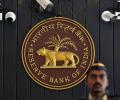
The Reserve Bank of India (RBI) is precariously balancing two opposing objectives - maintaining easy financial condition in the domestic market, while ensuring external stability - and economists have started taking note. They say India is going through the classic trilemma of the 'Impossible Trinity'. The RBI cannot have an independent monetary policy (setting domestic interest rates) in an environment of an open capital account and flexible exchange rates. What is even more complicated for the central bank now is that financial market stability overlays all the other three objectives.

India's forex reserves increased for the second consecutive week, touching $584.554 billion as of February 26, up by $689 million, the Reserve Bank said on Friday. The overall reserves had increased by $169 million to $583.865 billion in the previous reporting week. The reserves, which have been steadily increasing over the last few months, had touched an all-time high at $590.185 billion for the week ended January 29 this year.

The Indian rupee is expected to trade between 80 and 84 against dollar in the first three months of 2023 with support from overseas inflows though worsening current account deficit (CAD) and reduced interest rate differential between the US and India pose challenges. According to a Business Standard Poll of 10 participants, most said the rupee could gain strength in January due to foreign inflows, and the Reserve Bank of India (RBI) is not expected to allow the currency to depreciate ahead of the Union Budget scheduled on February 1. The rupee depreciated 10.15 per cent in 2022, its worst performance since 2013 as the war in Europe and the interest rate increase by the US Federal Reserve prompted investors to flee emerging markets.
