
Equity benchmark Nifty scaled the psychological milestone of 21,000 in afternoon trade on Friday, and the Sensex touched its all-time intraday high of 69,888.33 after the central bank's decision to keep policy rates unchanged in line with market expectations. The 50-share benchmark index opened on a bullish note, after taking a breather on Thursday, and rose to 21,006.10. As many as 25 stocks were trading in the green, and 24 stocks defied the broader market and were trading in the negative territory.

Operating margins have been the primary driver of corporate earnings in India in recent quarters, despite revenue growth suffering from weak consumer demand. Companies across sectors have reported a sharp improvement in earnings before interest, tax, depreciation, and amortisation (Ebitda) margins over the past two years, benefiting from lower commodity and energy prices. Higher margins more than compensated for slower revenue growth, resulting in double-digit growth in net profit for five consecutive quarters.

It's not only the Indian markets that command a valuation premium over their global peers; shares of subsidiaries of India-listed multinational companies (MNCs) also trade at rich valuations compared to their parent companies. An analysis of 12-month forward price-to-earnings (P/E) and price-to-book (P/B) multiples of domestically listed MNCs shows that most quotes have a premium ranging from 2.1x to 6x that of their parent. Similarly, P/B, in most cases, is significantly higher in the domestic market.


Global IT firms are taking a cue from consumer firms, which revolutionised marketing tactics in the FMCG segment with the shampoo-in-a-sachet concept by appealing to semi-urban as well as rural consumers.

Profits of India's top listed companies have been growing at a faster pace than those of their American peers, but when it comes to revenue growth, the order has reversed recently. The combined net profit of the S&P 500 companies was up 14.1 per cent year-on-year (Y-o-Y) during the trailing 12 months (TTM) ended December 2023, as against 17.4 per cent profit growth logged by the BSE 500 companies in the same period. This is the second consecutive year of faster profit growth for the BSE 500 companies.

Disappointing quarterly earnings numbers and revenue forecast from IT services company Wipro also weighed on investor sentiments. The 30-share BSE Sensex fell 247.78 points or 0.38 per cent to settle at 65,629.24 points. During the day, it plunged 533.52 points or 0.80 per cent to 65,343.50 points.

Top losers include Hero MotoCorp, HDFC, SBI, Infosys, HCL Tech, ICICI Bank, Bajaj Finance, ONGC, Bajaj Auto and IndusInd Bank, falling up to 2.63 per cent.

Since March 2020, when the Nifty50 plummeted to 7,511 following the announcement of a nationwide lockdown, the stock market has been on an upward trajectory. Over the next four years, the major market index has delivered a remarkable compounded annual growth rate (CAGR) of over 31.5 per cent. In the past year alone, the Nifty50 has gained by 27 per cent, hitting a succession of record highs.

Mahindra & Mahindra was the top laggard in the Sensex pack, sliding 2.05 per cent, followed by Bajaj Finance, Tata Steel, SBI, Asian Paints, Kotak Mahindra Bank and Titan. However, IT majors HCL Technologies and TCS defied the trend and gained 1.02 per cent and 0.47 per cent, respectively. FMCG firm Hindustan Unilever rose 0.32 per cent.
A hotel in 1975, entry into paperboards in 1979, India's dominant cigarette maker, ITC, read the tea - or tobacco - leaves early, leveraged its enterprise strengths and stepped up the diversification agenda to create multiple drivers of growth. Some failed, some faltered, some were transformational, adding steadily to the top line. Now those efforts are making a difference: margins from non-cigarettes - FMCG, hotels, agri, paperboards, paper and packaging - are expanding and profits are kicking in more significantly than ever before.

Diversified entity ITC Ltd on Thursday reported a 22.66 per cent rise in consolidated net profit at Rs 5,225.02 crore in the fourth quarter ended March 2023, led by a strong growth momentum across operating segments. The company had posted a net profit of Rs 4,259.68 crore a year ago, ITC Ltd said in a regulatory filing. Its revenue from operations increased 7 per cent to Rs 18,799.18 crore in the period under review against Rs 17,754.02 crore in the year-ago period.
Moving ahead from the conventional advertising focus on brands, FMCG companies are now trying to establish a connection among the company and its various brands.

Prime Minister Narendra Modi on Thursday appealed to farmers and other stakeholders associated with the cooperative sector to make GCMMF, which owns the 'Amul' brand, the world's number one dairy company from its current eighth position. He was addressing nearly one lakh people, mostly cattle rearers and farmers, gathered at the Narendra Modi stadium in Motera area of Ahmedabad for the golden jubilee celebration of the Gujarat Cooperative Milk Marketing Federation (GCMMF).

With the rains at unprecedented low in August, kiranas are thinking twice before stocking up on goods. "With August 2023 rain shortfall at almost a 100-year low, we are seeing kiranas stocking up very carefully," Akshay D'Souza, chief of growth and insights at Bizom. He added, "As we look ahead, it does seem that the impact of rains in September will be critical to the sowing season.

Sensex, Nifty end the day in red ahaead of F&O expiry.
ITC Ltd on Friday reported a 23.09 per cent increase in consolidated net profit at Rs 5,070.09 crore for the third quarter ended December 2022, helped by growth momentum across its operating segments. The diversified company had posted a net profit of Rs 4,118.80 crore during the October-December quarter of the previous fiscal, ITC said in a regulatory filing. Its revenue from operations was up 3.56 per cent to Rs 19,020.65 crore during the quarter under review, as against Rs 18,365.80 crore in the corresponding period of the previous fiscal.

From anti-profiteering to affixing stickers on existing stocks, FMCG companies are bracing for new set of GST challenges

While the four largest listed paint companies have seen marginal negative returns, the S&P BSE Fast Moving Consumer Goods (FMCG) and the National Stock Exchange Nifty FMCG indices have delivered a solid 16 per cent return during the same period. Initially, volume growth and reduced costs bolstered the sector's sentiment, but brokerages have grown cautious due to increased competitive pressures.

They are evaluating realignment of warehouses and supply chains, besides exploring locations to set up hubs and shutting down some distribution centres

ITC stock slipped over 4 per cent on Thursday (February 8) after British American Tobacco (BAT) said it could sell some of its stake in the company, recovering partially in trade. The stock of the cigarette-to-hotels conglomerate traded at Rs 420 levels, rising 1.3 per cent in intraday deals as compared to the S&P BSE Sensex that traded flat for most part of the day. The development, meanwhile, saw Jefferies downgrade the stock to 'hold' from 'buy' earlier with a target price of Rs 430, down a huge 17.3 per cent from its earlier price target of Rs 520.

Hindustan Unilever's Q3FY24 performance was lacklustre, with both sales and operating profit barely moving from the year-ago period due to price cuts and higher advertising costs. Besides weak demand, the FMCG (fast-moving consumer goods) major is facing increased competitive pressures, particularly from regional players, which, coupled with a slow recovery in rural markets, could put revenues under pressure going forward. Margins are expected to remain range-bound as benefits from falling raw material costs are expected to be neutralised by rising promotional budgets.

The Rs 2,000-crore Patanjali, looking to grow its turnover two-and-a-half times in FY16.

Finance Minister Nirmala Sitharaman is likely to step up efforts to boost consumption and rural economy while keeping inflation under check when she presents her sixth straight Budget on February 1. Experts said one way to boost consumption is to put more money in the hands of people, and one of the possible ways of doing it is by reducing the tax burden through tinkering with tax slabs or increasing the standard deduction. Another proposal is related to increasing the funds under the rural employment guarantee scheme MGNREGA and higher payout for farmers.

Could the MPCE survey results be used as a basis of reconstructing the Consumer Price Index with new weights, asks Madan Sabnavis.

Kotak Mahindra Bank was the biggest loser from the Sensex pack, skidding 1.83 per cent, followed by Axis Bank, NTPC, Hindustan Unilever, ICICI Bank, Bharti Airtel, Reliance Industries, HCL Technologies, IndusInd Bank and Nestle. In contrast, Bajaj Finance, Bajaj Finserv, Tech Mahindra, Tata Consultancy Services, Titan, Infosys, HDFC Bank, HDFC and ITC were the gainers.

While the government's demonetisation move is aimed at curbing under-invoicing, the worry was that retailers would de-stock in the short term, impacting sales.

Hindustan Unilever Ltd on Friday reported a 1.08 per cent increase in consolidated net profit at Rs 2,508 crore in the third quarter ended December 2023. The company had posted a consolidated net profit of Rs 2,481 crore in the same quarter last fiscal, Hindustan Unilever Ltd (HUL) said in a regulatory filing. Its revenue from sales of products was marginally down to Rs 15,259 crore during the quarter.

From the Sensex pack, NTPC jumped nearly 4 per cent after the company posted over 23 per cent rise in consolidated net profit in the April-June quarter of 2023-24. Power Grid, Tech Mahindra, Tata Steel, Tata Consultancy Services, Wipro, Maruti and JSW Steel were among the other major gainers.

From the Sensex pack, Bharti Airtel, HDFC Bank, Titan, UltraTech Cement, ITC, Sun Pharma, Bajaj Finserv, Bajaj Finance, Hindustan Unilever and Kotak Mahindra Bank were among the major gainers. Tata Steel, Axis Bank, NTPC, ICICI Bank and IndusInd Bank were the major laggards.

The stock of Godrej Consumer Products Limited (GCPL) fell about 3.7 per cent in trade after its Q3FY24 earnings disappointed brokerages and led to downgrades. Further, the stock, after a 15 per cent run-up over the past month prior to Monday's correction, had already factored in the upside from the business front. Its peer in the consumer space, Marico, too, saw a 4 per cent drop in its stock price.

Reliance Retail's digital commerce platform JioMart will morph into an e-marketplace offering multiple brands - from electronics, consumer durables, fashion and lifestyle, beauty, home, kitchen, and grocery - as it girds up to take on the likes of Amazon and Flipkart ahead of the festival season sales. India's largest retailer was in the process of onboarding third-party sellers these past few months, further increasing its selection across categories multifold. Its website and application offers general merchandise as well.

'In the next one-and-a-half, two months you'll get decent amount of opportunities in the mid-cap and small-cap sector at lower levels.'
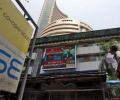
Equity benchmark indices Sensex and Nifty buckled under selling pressure after a nine-session rally on Monday, as massive sell-off in IT, tech and telecom counters unnerved investors.

Among index funds, the most popular products are funds tracking the Nifty 50 and Sensex, says Dwaipayan Bose, and explains the finer points of selecting the right index mutual fund.

Domestic equity markets, which are at record high levels, will be driven by quarterly earnings, global trends and foreign fund movement, analysts said. The movement of rupee and global oil benchmark Brent crude will also be tracked by investors. "The direction of global stock markets, fluctuations in the rupee-to-dollar exchange rate, and movement in crude oil prices will all play a crucial role in influencing the overall market trend.

The stock has gained over 10 per cent in the last month but it could still have an upside, with valuations between Rs 5,200 and Rs 5,700 from several analysts and strong 'buy' consensus.

'We went from zero to about 10 million users in three months. Paytm came out with the wallet play and we came out with the UPI play.'

Foreign portfolio investors (FPIs) have withdrawn over Rs 12,000 crore from Indian equities this month so far, mainly due to a sustained rise in US bond yields and the uncertain environment resulting from the Israel-Hamas conflict. However, the story takes an intriguing turn on observing FPI activity in Indian debt as they have infused over Rs 5,700 crore into the debt market during the period under review, data with the depositories showed. Going ahead, the trajectory of FPIs' investments in India will be influenced not only by global inflation and interest rate dynamics but also by the developments and intensity of the Israel-Hamas conflict, Himanshu Srivastava, associate director - manager research, Morningstar Investment Adviser India, said.
