
Russian President Vladimir Putin has proposed a new investment platform, based on the New Development Bank (NDB), to fund projects in trade, infrastructure, logistics, and technology across BRICS nations, emphasising that the grouping's expanding economic cooperation is not 'against anyone' but aims to advance members' national interests.

Reserve Bank of India (RBI) Deputy Governor Rohit Jain has warned that financial institutions' increasing reliance on a small number of common technology providers, including cloud and AI model providers, could create a new source of systemic risk. He highlighted 'speed, concentration and opacity' as key risks, noting that a disruption at one provider could rapidly spread across multiple institutions, amplifying existing financial risks.
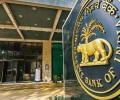
The Reserve Bank of India (RBI) is planning to extend tokenisation to various financial asset classes, building on its successful trials with certificates of deposit (CDs). This move aims to enhance the efficiency of issuance, trading, and settlement of financial assets, leveraging blockchain technology and wholesale Central Bank Digital Currency (CBDC) for atomic settlements.

The Securities and Exchange Board of India (Sebi) is set to expand its artificial intelligence (AI)-based surveillance beyond trading data to include corporate filings, aiming to proactively flag financial misstatements and manipulation in quarterly results without relying solely on investor complaints.

Fintech giant PhonePe has launched 'PhonePe UPI 123Pay', a new service enabling UPI transactions for feature phone users without requiring an internet connection. This initiative aims to bring digital payment capabilities to over 200 million feature phone users, promoting financial inclusion across India.

The Securities and Exchange Board of India (Sebi) is set to undertake a comprehensive overhaul of the small and medium enterprise (SME) listing framework and tighten accountability around the use of artificial intelligence (AI) and machine learning (ML) in financial markets, Sebi Chairman Tuhin Kanta Pandey announced.

Foreign portfolio investors (FPIs) significantly increased their buying in Indian equities during the first half of August, with financial services attracting the largest inflows, reversing previous outflows. The IT sector also continued to see strong interest from overseas investors, driven by a reassessment of valuations and the role of Indian IT firms in AI deployment.

Chief Economic Advisor V Anantha Nageswaran has stressed the urgent need for India's financial sector to proactively address the safety and security risks of artificial intelligence, stating that waiting for problems to materialise is not an option.

High-performance computing server maker Netweb Technologies reported a more than twofold increase in net profit to Rs 85.32 crore for the first quarter ended June 30, 2026. This significant growth was primarily driven by its AI Systems segment, which contributed over 62% of the revenue. The company also saw its revenue from operations more than double to Rs 819.6 crore, reflecting strong demand and disciplined execution, with a robust order book of Rs 2,507 crore.

BRICS members have expressed 'serious concerns' over the unilateral imposition of trade and finance-related measures, including higher tariffs and non-tariff barriers, stating these actions distort trade and are inconsistent with WTO rules. The grouping also highlighted elevated risks to the global economic outlook due to geopolitical tensions, trade fragmentation, and protectionism.

Finance Minister Nirmala Sitharaman has called for enhanced accountability and safeguards for artificial intelligence, particularly as it integrates into critical sectors like finance. Speaking at the Global Fintech Fest, she highlighted the dual nature of AI, capable of accelerating transactions but also amplifying fraud and cyberattacks. Sitharaman stressed the need for human and institutional responsibility in AI-driven decisions, urging regulators and companies to scrutinise high-risk AI applications. She also proposed a federated industry platform for Indian tech companies to navigate international regulations and ensure tax compliance globally.

J R D Tata, chairman of the Tata group from 1938 to 1991, said that whenever he had to make a difficult decision, he would ask himself, what will be good for India, and what will be good for the Tatas. If he had a doubt, he would decide in favour of India. In the long run, it would turn out well for the Tatas too, he said, points out Arun Maira.

Indian banks and non-banking financial companies (NBFCs) are undertaking a comprehensive review and reset of their engagement terms with fintech firms, driven by the Reserve Bank of India's (RBI) draft Guidance on Regulatory Expectations for Data Governance and the stringent compliance requirements of the Digital Personal Data Protection (DPDP) Act, 2023, and its 2025 Rules.

Union Communications Minister Jyotiraditya Scindia announced India's ambition to lead the world in 6G mobile technology and become a designer of global technology standards. Speaking at the Global Fintech Fest 2026, Scindia highlighted India's shift from being a technology market to a technology maker, emphasizing progress in 5G rollout, affordable data, and digital infrastructure driving fintech growth, while also stressing the importance of digital security.

TRAI Chairman Anil Kumar Lahoti has called for robust safeguards, human oversight, and intervention capabilities as Artificial Intelligence becomes increasingly integrated into telecom networks. While acknowledging AI's potential to transform network management and threat detection, Lahoti stressed the need for responsible AI deployment, risk assessments, and clear accountability to ensure consumer trust and prevent misuse, especially in combating online fraud.
Queen Maxima of the Netherlands, the UN Secretary-General's Special Advocate for Financial Health, visited Mumbai to understand India's digital public infrastructure, including UPI and AI, in improving financial health for salaried individuals. She interacted with healthcare professionals and SalarySe leaders, praising India's advancements in financial inclusion and technology's role in empowering individuals.
Even as uncertainty continued to hamper the financial sector, these companies tided over the difficult times.

FATF Vice-President Vivek Aggarwal has urged the fintech industry to increase investments to combat emerging threats from AI, scam compounds, virtual digital assets, and quantum computing. He warned that these technological challenges pose a significant risk to India's rapid growth in the fintech sector, highlighting a current lack of adequate investment and risk realisation within the industry.

Gaganyaan astronaut Prasanth Balakrishnan Nair stressed the critical importance of AI sovereignty for national cybersecurity, citing the increasing difficulty in distinguishing between real and fake content due to AI. Speaking at the Kerala Cyber Suraksha Summit, Nair highlighted that future conflicts and industries would involve a 'whole-of-nation approach,' blurring physical and digital boundaries. He urged greater awareness of digital threats and emphasised India's need to build on its technological capabilities in AI and cybersecurity, drawing parallels with the success of Chandrayaan-3. Other speakers also underscored the rising threat of cyberattacks and the potential for Kerala to contribute to national technology requirements.

RNFI Services Ltd has received in-principle authorisation from the Reserve Bank of India (RBI) to operate as a Payment Aggregator - Physical (PA-P). This approval allows the company to expand its financial infrastructure into physical, offline, and in-store payments, complementing its existing regulated financial services portfolio.

PhonePe, at the Global Fintech Fest 2026, unveiled its strategic vision for the next decade, focusing on inclusive digital progress for individuals, households, and businesses across India. The roadmap details innovations in financial inclusion, wealth creation, credit access, and merchant solutions.

Arundhati Bhattacharya, Salesforce President and CEO for South Asia, stated that cloud and AI are democratising capabilities, offering India a unique opportunity to leapfrog in technology. Speaking at the IMC Chamber of Commerce, she emphasised that AI will create more jobs and urged Indian businesses to transform using technology, rather than merely digitising. She also highlighted the significant economic potential of AI adoption for India.

InsuranceDekho and RenewBuy have merged to establish India's largest artificial intelligence (AI)-enabled insurance distribution platform, targeting a significant premium book and extensive reach across the country.

South African President Cyril Ramaphosa on Friday described BRICS as an important global forum, highlighting the grouping's growing demographic and economic weight and noting that its members account for around half of the world's population and 40 percent of global GDP.
Salesforce executives, including South Asia CEO Arundhati Bhattacharya, predict a significant shift in India towards wider enterprise AI adoption, moving from experimentation to production deployments. The company plans to invest in physical infrastructure and talent upskilling in India. Salesforce's vision for the "agentic enterprise" involves a four-layer architecture, emphasising the need for robust security and governance for autonomous agents. Executives also highlighted the evolving nature of jobs, with AI handling repetitive tasks and creating new specialised roles, positioning India as a potential leader in agentic innovation by 2030.

India is actively integrating payment system harmonisation into its Free Trade Agreement (FTA) negotiations, especially with countries hosting a large Indian diaspora. This strategy aims to leverage India's growing fintech ecosystem, facilitate cross-border financial services, and position India as a global hub for financial services exports, particularly through platforms like GIFT City.

Arundhati Bhattacharyya, Salesforce President and CEO for South Asia, highlighted how cloud and AI are democratising capabilities, offering India a unique opportunity to leapfrog in the technology revolution. Speaking at the IMC Chamber of Commerce, she emphasised that AI will create more jobs by addressing unmet business demands and could significantly boost India's GDP, with NITI Aayog estimating a USD 500-600 billion addition by 2035. She urged Indian businesses to transform using technology, focus on data, redesign work, and invest in skills, stressing that AI is not just for large corporations.

A cyberattack on an automaker can spread through its wider supply chain and create significant financial losses.
Finance Minister Nirmala Sitharaman has urged the Reserve Bank of India to accelerate its central bank digital currency initiatives, emphasising the need to sharpen capabilities with the digital rupee amidst rapid advancements in tokenisation, agentic AI, and quantum computing. She also highlighted critical concerns regarding cybersecurity, warning that autonomous AI systems are evolving rapidly and require robust safeguards. Sitharaman proposed a federated industry platform to give India's technology ecosystem a collective international voice.

State Bank of India Chairman C S Setty stated that banks will take three to four months to deploy the significant funds mobilised through foreign currency non-resident (bank), or FCNR(B), deposits, which is unlikely to cause "abnormal lending". He also highlighted the need for agentic artificial intelligence (AI) costs to fall sharply for its widespread deployment in India, envisioning its role in transforming banking from fraud detection to personalised financial assistance.
Commerce Secretary Rajesh Agarwal highlighted the critical need for India to diversify its services exports beyond the dominant IT/ITeS and professional services sectors. Speaking at the Global Fintech Fest 2026, he emphasised the vast potential in the global financial services market, where India currently holds a small share, and stressed how fintech solutions, like UPI, can drive growth, reduce remittance costs, and support MSME trade finance, ultimately leading to sustainable economic expansion.

The Unique Identification Authority of India (UIDAI) is actively working on plans to expand Aadhaar's reach globally, particularly to benefit non-resident Indians (NRIs) and overseas citizens of India (OCIs). This initiative aims to enhance interoperability, attract investment, and streamline digital identification processes, with new guidelines for merchants and products like Aadhaar Lite also in development.

India's markets regulator Sebi has launched 'Demat 2.0', a pilot project for tokenisation of corporate bonds, enabling atomic settlement through integration with RBI's wholesale CBDC. This new market infrastructure uses Distributed Ledger Technology (DLT) to make bond issuance, trading, and settlement faster and more efficient. India is the first country to issue corporate bonds natively on a distributed ledger with central bank digital currency settlement. Additionally, RBI Governor announced new UPI innovations: 'Tap & Pay' for faster POS transactions and MyUPI, an AI-powered customer support solution.

Mumbai Cyber Police have apprehended six individuals, including an IIT graduate and a bank manager, for allegedly defrauding a senior citizen of Rs 1.12 crore through a "digital arrest" scam. The victim was coerced into transferring funds after being threatened with family arrest by impersonators.
Andhra Pradesh and Punjab National Bank (PNB) have signed an MoU to establish the PNB Quantum Finance Hub at Amaravati Quantum Valley. This initiative aims to foster innovation and adopt next-generation technologies like AI and Quantum Computing in the banking sector, focusing on cybersecurity, fraud detection, and customer experience.

The Shapoorji Pallonji (SP) Group, the second-largest shareholder in Tata Sons, has publicly endorsed a listing of the Tata Group's holding company, aligning with the board's push for greater transparency and public accountability despite opposition from the Tata Trusts.

BJP MP Raghav Chadha addressed the 12th IPU Global Conference of Young Parliamentarians in Samarkand, Uzbekistan, highlighting India's digital transformation journey. He emphasised how technology is widening access and promoting inclusion, citing UPI's success, affordable data, and robust data protection laws. Chadha also discussed India's digital cooperation with Uzbekistan and the importance of digital rights, safety, and skill development for all citizens.

In a high-profile POCSO case, Chennai police have discovered more minor victims of sexual harassment allegedly by granite businessman R Veeramani, with investigators suspecting the abuse spans over two decades. Additional victims' statements have been recorded, and the case involves charges under POCSO, IT, and SC/ST Acts.

The challenge for India lies in navigating complex landscape to its best advantage. The BRICS Summit will test its navigation skills, asserts former foreign secretary Shyam Saran.

Paytm CEO Vijay Shekhar Sharma stated that the government's new Merchant Discount Rate (MDR) on large-value UPI transactions will significantly increase the company's revenue and profitability. The 0.4% fee on UPI transfers exceeding Rs 2,000 to merchants, effective October 15, is expected to give Paytm a competitive edge. Sharma also highlighted the company's focus on generating free cash flow, expanding internationally, and developing proprietary artificial intelligence capabilities to drive future growth.
