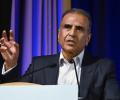
Bharti Airtel is strategically shifting its focus towards data centres, cloud services, and financial services as key drivers for its next phase of growth, leveraging significant past investments in digital infrastructure, as outlined by Chairman Sunil Mittal in the company's Annual Report for 2025-26.

Financial services attracted the bulk of the inflows, followed by telecommunications, automobiles and information technology.

State Bank of India (SBI) Chairman C S Setty has warned that artificial intelligence-related errors could cascade across interconnected financial systems, creating significant governance risks for institutions. He emphasised the critical need for clearly defined permissions, transaction limits, audit trails, and human intervention mechanisms as banks increasingly deploy autonomous AI systems.

Paytm's Singapore arm, Paytm Singapore Pte Ltd, will invest up to Rs 200 crore in subsidiaries of Singapore-based Funding Societies, including a 19.1 per cent stake in CardUp. This strategic move aims to expand Paytm's technology-led payments and financial services in Singapore through a "partner operated" model.

RNFI Services Ltd has received in-principle authorisation from the Reserve Bank of India (RBI) to operate as a Payment Aggregator - Physical (PA-P). This approval allows the company to expand its financial infrastructure into physical, offline, and in-store payments, complementing its existing regulated financial services portfolio.

Indian benchmark stock indices, Sensex and Nifty, experienced their worst single-day fall in over four months, with Sensex plunging nearly 1,484 points and Nifty settling below 25,350. Heavy profit booking in financial, banking, and metal shares, coupled with a global sell-off driven by concerns over AI-related valuations and US interest rates, contributed to the sharp decline.

Reserve Bank of India (RBI) Deputy Governor Rohit Jain has warned that financial institutions' increasing reliance on a small number of common technology providers, including cloud and AI model providers, could create a new source of systemic risk. He highlighted 'speed, concentration and opacity' as key risks, noting that a disruption at one provider could rapidly spread across multiple institutions, amplifying existing financial risks.

Commerce Secretary Rajesh Agarwal highlighted the critical need for India to diversify its services exports beyond the dominant IT/ITeS and professional services sectors. Speaking at the Global Fintech Fest 2026, he emphasised the vast potential in the global financial services market, where India currently holds a small share, and stressed how fintech solutions, like UPI, can drive growth, reduce remittance costs, and support MSME trade finance, ultimately leading to sustainable economic expansion.

Public shareholders in One 97 Communications (Paytm) have seen approximately 1.7 times returns on their investment over the past five years, driven by the fintech company's rising share price. This growth reflects a substantial increase in public ownership and institutional participation since its market debut, alongside improved financial performance and six consecutive quarters of profitability.

PwC India has launched its Future AI Experience Lab in Gurugram, offering businesses a platform to simulate scenarios and prototype AI, robotics, and digital twin solutions. The lab features over 90 pre-validated AI solutions across various sectors, aiming to help clients achieve measurable outcomes like revenue growth and productivity improvements.

Foreign portfolio investors (FPIs) significantly increased their buying in Indian equities during the first half of August, with financial services attracting the largest inflows, reversing previous outflows. The IT sector also continued to see strong interest from overseas investors, driven by a reassessment of valuations and the role of Indian IT firms in AI deployment.
IT services firm Tech Mahindra has announced a collaboration with AI coding platform SpaceXSI to help global enterprises modernise legacy applications, accelerate software delivery, and improve developer productivity through AI-assisted engineering across the software lifecycle. The partnership aims to embed AI intelligence across the software development lifecycle for better business outcomes, focusing on sectors like technology, telecommunications, and banking.
India has launched three indigenous AI foundation models, EKA-1, Dhir 2B, and Dhir 5B, under the IndiaAI Mission. Developed by Soket Labs Technology and Research and ZenteiQ AiTech Innovations, these models aim to enhance India's technological and strategic autonomy in artificial intelligence, offering solutions for various sectors including banking, cybersecurity, defence, and government services, with a focus on Indian languages and offline capabilities.

Analysts predict that the Indian stock market's direction in the upcoming holiday-shortened week will be primarily influenced by foreign investor activity, crude oil prices, and broader global economic trends, with significant FPI inflows already observed.
Indian equity benchmark indices extended losses for a second consecutive session, with the Sensex dropping 143 points, driven by a sell-off in power, banking, and financial stocks, coupled with elevated crude oil prices and persistent FII selling.

The Government of Karnataka has called for enhanced collaboration with the BFSI and FinTech sectors to bolster its technology ecosystem and accelerate the adoption of innovative solutions. This initiative, discussed at an Industry Meet, aims to foster partnerships between government, industry, and academia, particularly through programmes like 'Government First', in preparation for the Bengaluru Tech Summit 2026.

Google found that vulnerability disclosures and their exploitation nearly doubled between January and August 2026.

India is actively integrating payment system harmonisation into its Free Trade Agreement (FTA) negotiations, especially with countries hosting a large Indian diaspora. This strategy aims to leverage India's growing fintech ecosystem, facilitate cross-border financial services, and position India as a global hub for financial services exports, particularly through platforms like GIFT City.
IBM Chairman and CEO Arvind Krishna details the company's substantial annual investment in India and its global USD 10 billion commitment to quantum computing over the next five years. He addresses the potential for AI to displace 10-20 per cent of jobs, particularly in the BPO sector, while also highlighting India's significant opportunity in the AI ecosystem. Krishna urges India to accelerate AI adoption, scale existing tech initiatives, and build its semiconductor manufacturing, advocating for a light-touch approach to AI regulation and emphasizing critical thinking in an AI-driven economy.

Jensen Huang is reportedly considering a return as Nvidia's CEO, with strong lobbying efforts from influential tech executives like Elon Musk and Tim Sweeney. This comes as Nvidia's board investigates the circumstances of his departure last week, which followed reports of alleged extramarital relationships. The board is also exploring potential successors, though it states the process is in early stages.

Tech hiring demand at India's Global Capability Centres (GCCs) saw a 3.5 per cent sequential decline in Q2 FY27, indicating a slowdown in fresh recruitment. However, demand for specialised skills like AI, data analytics, and cybersecurity professionals continued to rise significantly, with AI and data roles growing 14 per cent quarter-on-quarter.
India is ranked as a "Rising Contender" in AI by Boston Consulting Group (BCG), indicating high readiness but lower disruption exposure. The report highlights India's strength in its large pool of AI specialists and IT-services workforce. While not yet an "AI Pioneer," India is leveraging its talent advantage, with government initiatives like Yuva AI for ALL and IndiaAI FuturesSkills aiming to upskill citizens and broaden access to AI education. The report emphasizes that execution and talent deployment are crucial for economies to gain ground in AI.
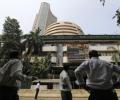
Analysts predict that the US midterm election results, which saw Democrats gain control of Congress, will primarily influence Indian markets through changes in global financial conditions, trade policy expectations, and geopolitical developments, with a keen focus on the US administration's actions in West Asia and their potential impact on crude oil prices.

Jio Platforms (JPL) is preparing a capex-light strategy to commercially launch 6G services in the early 2030s through software upgrades, rather than fresh infrastructure investments, according to Akash Ambani, managing director of JPL.

Wipro reported a marginal 1.40 per cent decline in consolidated net profit to Rs 3,200.6 crore for the July-September quarter of FY27, despite a 9.1 per cent increase in revenue from operations to Rs 24,752.7 crore.
Cortex DC, a company of The Chatterjee Group (TCG), announced its entry into the data centre market with plans to develop 2 GW of AI-ready capacity across India over the next seven years. The initiative aims to meet the growing demand for high-performance computing, targeting hyperscalers, cloud service providers, and advanced AI workloads with a focus on speed, scale, and sustainable power.
This ends a 16-month selling streak, the longest since 2006, after FPIs sold every month from July 2025 to October 2026 in the secondary market.

Chief Economic Advisor V Anantha Nageswaran has stressed the urgent need for India's financial sector to proactively address the safety and security risks of artificial intelligence, stating that waiting for problems to materialise is not an option.

Indian benchmark equity indices, Sensex and Nifty, extended their winning streak for a third consecutive day, driven by sustained foreign institutional investor (FII) inflows and a dip in global crude oil prices. The Sensex closed above 81,900, while the Nifty settled near 25,300, despite mixed global cues.

RBI Deputy Governor Poonam Gupta stated that India's economic growth momentum remains strong despite various global and domestic shocks, attributing this resilience to a diversified growth base and improved policy responses. She highlighted the economy's 7.8 per cent growth in Q1 and continued momentum into Q2, suggesting potential upgrades to growth forecasts.

S Mahendra Dev, chairman of the Economic Advisory Council to the Prime Minister (EAC-PM), stated that India needs to increase the manufacturing sector's share in its GDP from the current 16-17 per cent to 25 per cent by 2047 to achieve developed economy status. This goal requires an average real GDP growth of around 8 per cent annually over the next 21 years, supported by a 34-35 per cent investment rate and diversified long-term financing.

Anup Saha, currently a Wholetime Director at Kotak Mahindra Bank, has been appointed as the new Managing Director and Chief Executive Officer for a three-year term, effective January 1, 2027, with the Reserve Bank of India's approval.

Aditya Birla Group Chairman Kumar Mangalam Birla stated on Tuesday that investments in artificial intelligence should be driven by potential returns, not by a "fear of missing out." Speaking at the 2026 Bloomberg New Economy Forum, Birla indicated that his group would adopt AI more gradually than previously planned, moving away from an "AI arms race" mentality. He also discussed the varied applications of AI across different business sectors, the challenges of capital allocation, and the impact of geopolitical events on global companies.

Fintech giant PhonePe has launched 'PhonePe UPI 123Pay', a new service enabling UPI transactions for feature phone users without requiring an internet connection. This initiative aims to bring digital payment capabilities to over 200 million feature phone users, promoting financial inclusion across India.

India is proposing the Data Empowerment and Protection Architecture (DEPA) for AI Training, a national framework designed to enable startups, researchers, and companies to train AI models using data from hospitals, banks, and public agencies while ensuring privacy and security. This initiative aims to unlock significant AI-driven value for India's GDP by 2030.

The $6.3 billion Binance heist has renewed concerns over nation-State cyberattacks and AI-driven vulnerabilities, putting the security preparedness of crypto exchanges under scrutiny.

NVIDIA's Board of Directors has unanimously reinstated Jensen Huang as President, Chief Executive Officer, and Board member, effective immediately, following discussions and input from the US government, which concluded his reinstatement poses no national security risk.

The Tamil Nadu Cyber Crime Wing has busted an illegal SIM box network operating under the guise of a loan recovery agency in Chennai's Saidapet. Two employees were arrested, and significant equipment linked to hundreds of cyber fraud complaints across India was seized. The operation highlights ongoing efforts against sophisticated cybercrime.

The Union finance ministry has constituted a high-level committee, chaired by former Central Vigilance Commissioner Suresh N Patel, to recommend structural, regulatory, and legislative reforms for India's banking sector, aiming to make banks globally competitive and support the financing needs of a developed economy.
Queen Maxima of the Netherlands, the UN Secretary-General's Special Advocate for Financial Health, visited Mumbai to understand India's digital public infrastructure, including UPI and AI, in improving financial health for salaried individuals. She interacted with healthcare professionals and SalarySe leaders, praising India's advancements in financial inclusion and technology's role in empowering individuals.
