
Production of eight infrastructure sectors expanded by 3.8 per cent in December 2021 against a 0.4 per cent contraction in the same month last year on better show by coal, cement and refinery products, according to the official data released on Monday. Barring crude oil and steel, all sectors recorded positive growth in December 2021. The core sector industries had grown by 3.4 per cent in November 2021.

In her defence, the teacher, Tripti Tyagi, has said that the video has been tampered with in order to stoke tensions.

The location of the bust of Gandhi has been chosen as a mark of solidarity for peace and non-violence.

Prime Minister Narendra Modi arrived in the Japanese city of Hiroshima on Friday to attend the annual summit of the G7 grouping and the third in-person Quad leaders' meeting during which he will exchange views with world leaders on global challenges and discuss ways to collectively address them.

RBI's projection of retail inflation at 6.8 per cent in the current fiscal is neither too high to deter private consumption, nor so low as to weaken inducement to invest, the Economic Survey said on Tuesday. However, entrenched inflation may prolong the tightening cycle and therefore, borrowing costs may stay 'higher for longer', it said. The Economic Survey 2022-23 was tabled in Parliament by Finance Minister Nirmala Sitharaman.
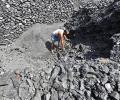
The production growth of eight infrastructure sectors slowed down to 4.3 per cent in March due to a decline in the output of coal and crude oil, though for the full 2021-22 fiscal, the core sector recorded a 10.4 per cent expansion, according to official data released on Friday. The eight infrastructure sectors - coal, crude oil, natural gas, refinery products, fertiliser, steel, cement and electricity - had expanded by 6 per cent in February. During April-March 2021-22, the eight sectors grew by 10.4 per cent compared to a contraction of 6.4 per cent in 2020-21. The output of coal and crude oil contracted by 0.1 per cent and 3.4 per cent in March.

In his opening remarks at the G20 Leaders' Summit at the Bharat Mandapam in New Delhi, Modi said the 21st century is a time of giving new direction to the world.

China has signalled that it will prevent India from assuming leadership of the Global South, observes Ambassador T P Sreenivasan.

A video showing the incident involving school teacher, Tripta Tyagi, and the Class 2 boy in Muzaffarnagar has gone viral on social media eliciting strong words from several political parties.

As India's stock rises, the resolution of the border row may become even more difficult, warn Harsh V Pant and Kalpit Mankikar.
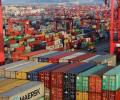
Indian exporters are keeping their fingers crossed on account of rising Covid infections in China and other countries as it could again disrupt supply chains and affect demand for goods. Federation of Indian Export Organisations (FIEO) director general Ajay Sahai said that if the cases continue to increase in the coming days, it may have implications on imports. "We are keeping our fingers crossed," he said.

An evening celebrating the best of what medicine has to offer.

"We would take PM Modi at his words and welcome those comments when they took place. Other countries will make their own decision on engagement with Russia. We continue to coordinate with allies to mitigate impacts of war," said State Department's Principal Deputy Spokesperson Vedant Patel during a press conference on Thursday.

Investors are showing some interest in the downstream energy cycle. Refiners and marketers, especially the public sector (PSU) oil marketing companies (OMCs) could see a revival of marketing margins. Lower crude oil and gas prices may also improve margins in industries like paints, logistics, synthetic fabrics, plastics, and fertilisers. In the medium-term, however, there could be a supply overhang affecting OMCs as new refining capacities are scheduled to be commissioned, especially in China, and this may lead to a drop in the refining margins as capacity would be surplus to demand until and unless there's a pick-up in global growth.

Less-than-expected rainfall and a poor spatial distribution, experts say, can rekindle fears of a rise in food and fuel inflation that can have an impact on the RBI's monetary policy. The fear of less than optimal rainfall due to El Nino this year, analysts believe, is the biggest short-term risk for the markets, which they said has not been fully priced in yet by them. Monsoon set over Kerala on June 08, a week later than its scheduled date.
Overcoming its initial concerns, national reinsurer GIC Re has contributed to the formation of an insurance pool to cover most imports from Russia. While it will be called the fertiliser pool with a corpus of Rs 500 crore, it can be used to cover the risks of oil and gas imports too. This was decided by a clutch of Indian insurance companies, led by the state-owned ones. GIC Re's share is about 40 per cent in the pool. Last month, GIC Re had shot off a letter to all non-life insurance companies that underwrite marine risks not to ask it for reinsurance of cargoes that originate from Russia.

'AI can be very useful for making analysis and especially making city-based local forecasts.'

State-owned Indian Oil Corporation (IOC), Adani-Total Gas Ltd and Shell were among the 29 companies that bid and bought natural gas to be produced from the deepest field in the KG-D6 block of Reliance Industries Ltd and bp, sources said. IOC walked away with almost half of the 6 million standard cubic meters per day of gas sold in an e-auction on Wednesday while state-owned gas utility GAIL bought 0.7 mmscmd, Adani-Total Gas Ltd 0.4 mmscmd, Shell 0.5 mmscmd, GSPC 0.25 mmscmd and IGS another 0.5 mmscmd, two sources with knowledge of the matter said. Reliance-bp on Wednesday held an e-auction for sale of gas from the MJ field in their eastern offshore KG-D6 block after incorporating the government's new marketing rules to give CNG-selling city gas companies first priority over supplies.

Finance Minister Nirmala Sitharaman on Wednesday announced hiking the capital expenditure by 33 per cent to Rs 10 lakh crore for infrastructure development for 2023-24 and will be at 3.3 per cent of the GDP. Presenting the Budget for 2023-24, she said the newly established infrastructure finance secretariat will assist in attracting more private investment. "Capital investment outlay is being increased steeply for the third year in a row by 33 per cent to Rs 10 lakh crore, which would be 3.3 per cent of GDP.

Prime Minister Narendra Modi on Saturday announced the adoption of the New Delhi Leaders Declaration, a significant victory for India's G20 presidency that came amid increasing tensions and divergent views over the Ukraine conflict.

'It has been an ongoing process, talking to the relevant ministries about eliminating leakages and curbing non-core expenditure in various schemes.'

The Prachand Light Combat Helicopter is a huge boost to the IAF's combat prowess.

'It will be important strategically and geographically because there is no port in India which is as close to the international shipping route as Vizhinjam.'
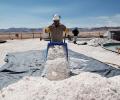
The Union Government on Thursday said that 5.9 million tonnes of lithium reserves have been found for the first time in the country in Jammu and Kashmir. Lithium is a non-ferrous metal and is one of the key components in EV batteries. "Geological Survey of India for the first time established Lithium inferred resources (G3) of 5.9 million tonnes in the Salal-Haimana area of the Reasi district of Jammu and Kashmir," the ministry of mines said on Thursday.
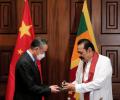
Chinese Foreign Minister Wang Yi on Sunday met Sri Lanka's top leadership and discussed a host of issues, including the debt crisis faced by the island nation, investments, promoting tourism and the fight against the COVID-19 pandemic as the two countries marked the 65th anniversary of diplomatic ties.

Prime Minister Narendra Modi on Friday pushed Russian President Vladimir Putin to end the conflict in Ukraine, saying 'today's era is not of war' even as he called for finding ways to address the global food and energy security crisis.
Indian Oil Corporation (IOC), the nation's largest oil firm, has walked away with half of the natural gas that Reliance Industries Ltd and its partner bp of the UK offered in the latest auction of the fuel used to generate power, produce fertilizer, turned into CNG and used for cooking purposes. IOC got 2.5 million standard cubic meters per day out of the 5 mmscmd of gas auctioned last month, sources with knowledge of the matter said. The oil refining and marketing company, which was the top bidder even in the previous auction of gas from the eastern offshore KG-D6 block of Reliance-bp, bid the volumes on behalf of seven fertilizer plants.

According to the external affairs ministry, the prime minister will first visit Hiroshima in Japan from May 19 to 21 to participate in the annual summit of the G7 advanced economies under the Japanese Presidency.

Pilot said "opportunist" people are ruling at the Centre after taking votes on emotions but they have failed the country on all fronts.

A day ahead of a crucial G20 meeting, External Affairs Minister S Jaishankar on Wednesday evening hosted a welcome dinner for the foreign ministers attending the deliberations but the reception was missed by his counterparts from the US, China, Germany and France.

The government's subsidies on food, fertilisers, LPG and kerosene are pegged at Rs 5.96 lakh crore in the current fiscal, over 2.5-fold jump from the initial budget estimates as the Centre distributed additional foodgrains free of cost to help poor mitigate the impact of COVID-19 pandemic. In February 2020 Budget, presented in the pre-COVID scare, the government had estimated the subsidy bill at Rs 227,794 crore. However, all the budget estimates, have undergone major revisions as the country imposed strict lockdown to check the spread of COVID-19.
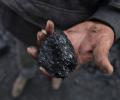
The output of eight core sectors grew 8.9 per cent in June, mainly due to a low base effect and uptick in production of natural gas, steel, coal and electricity, official data showed on Friday. The eight infrastructure sectors of coal, crude oil, natural gas, refinery products, fertilisers, steel, cement and electricity had contracted by 12.4 per cent in June 2020 due to the lockdown restrictions imposed to control the spread of coronavirus infections. In May this year, these key sectors had recorded a growth of 16.3 per cent, while it was 60.9 per cent in April.

The state's revenue receipts might not afford various freebies announced by the parties, unless revenue deficit and hence fiscal deficit is widened.
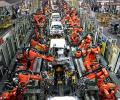
India's economy grew 6.1 per cent in the fourth quarter of 2022-23, pushing up the annual growth rate to 7.2 per cent, official data showed on Wednesday.

A sumptuous meal of Dal, Bati, Churma or Jodhpuri Kabuli pulao, followed by a lip-smacking dessert of Bikaneri ghevar or Jodhpuri mawa kachauri.
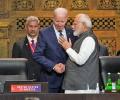
The US President also underlined that both countries "will advance sustainable and inclusive growth while tackling shared challenges like the climate, energy, and food crises."
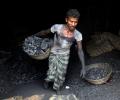
The production of eight infrastructure sectors rose by 7.5 per cent in October on healthy performance by the segments of coal, natural gas, refinery products and cement, official data released on Tuesday showed. The output of eight core sectors of coal, crude oil, natural gas, refinery products, fertilisers, steel, cement and electricity had contracted by 0.5 per cent in October 2020, according to the data released by the commerce and industry ministry. Core sectors' growth stood at 4.5 per cent in September this year.

If the corruption issue doesn't claim Mr Baghel, the Congress's chances in the assembly election later this year are good, observes Aditi Phadnis.
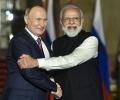
India is keen to strengthen its partnership with Russia on Arctic subjects and there is immense scope for cooperation in the field of energy as well, Prime Minister Narendra Modi said.

The change of heart in the US and India was propelled by the increased threat of China to both countries, explains Ambassador T P Sreenivasan.
