
Amid volatility in stock markets generated by tension between Russia and the US over Ukraine, LIC chairman M R Kumar on Monday said that the insurance behemoth was watching the geo-political situation carefully, though it was keen on listing of the IPO in March. The Life Insurance Corporation (LIC) has already filed the DRHP with the Securities and Exchange Board of India (SEBI) for its initial public offering (IPO). "We are watching the situation closely and carefully...but we are very keen on having listing in March," Kumar said, when asked about the impact of the evolving geopolitical situation on the upcoming IPO.

Tech Mahindra, the top loser in the Sensex pack, shed over 2.5 per cent. It was followed by UltraTech Cement, Reliance Industries, HCL Tech, HDFC, Kotak Bank, HDFC Bank and TCS. NSE Nifty plunged 179.35 points to 17,745.90.

Improved credit profile may make you eligible to transfer your existing home loan to another lender at a much lower rate.

It has mostly been a one-way street for markets that have moved up sharply since July. The front-line indices - the S&P BSE Sensex and the Nifty50 - have gained 6.7 per cent and 7.3 per cent, respectively, in the past three months. The rally in mid- and small-caps has been sharper, with both indices surging 14 per cent and 9 per cent, respectively, during this period. This sharp run has made analysts at Jefferies cautious.

The difference between what the banks play in the US and India is not that of soccer and football but rugby and football. SVB also has a unique character. But when risks are mispriced, the fallout could be very similar, points out Tamal Bandyopadhyay.

'Such big falls are quite frequent these days, so do not try to time this market.' 'Use big dips to accumulate quality stocks.'

Days after the US Fed raised the interest rate, the RBI may go in for its third consecutive policy rate hike by at least 35 basis points to check high retail inflation, experts said. The central bank has already announced to gradually withdraw its accommodative monetary policy stance. The Reserve Bank of India's rate-setting panel -- the Monetary Policy Committee -- will meet for three days from August 3 to deliberate on the prevailing economic situation and announce its bi-monthly review on Friday.

It has been a slow 2022 thus far for the primary markets. In the last 8 months, only 16 companies have raised Rs 40,311 crore via the initial public offer (IPO) route, data from PRIME Database suggests. In comparison, 63 companies had raised a cumulative Rs 1.18 trillion via the IPO route in 2021. A large part of the funds raised in 2022 were on account of the two IPOs - Life Insurance Corporation of India (LIC) and logistics firm Delhivery - that raised a total of over Rs 26,000 crore between themselves.

ICICI Bank, HUL, HDFC Bank, M&M, Ultra Cement, IndusInd Bank and Tech Mahindra were among the losers in the Sensex pack. NSE Nifty slipped 13.95 points to 17,355.30.

India needs foreign exchange buffer reserves to insulate itself from exchange rate volatility as we have "no friends" for swap lines and Japan was the only country that helped during the taper tantrum in 2013, former RBI Governor Raghuram Rajan said on Tuesday. Participating in a virtual event organised by economic think tank NCAER, Rajan said during the taper tantrum in 2013, India asked for swap lines, and only country who helped was Japan. "We need this (foreign exchange) reserve buffer to insulate ourselves because we have no friends.

Domestic equities will be mainly driven by global market trends, foreign institutional investors' movement and developments around new Covid variant Omicron this week, according to analysts. Markets traded under pressure last week following weak global cues and overall investor sentiment remained downbeat throughout the week, they observed. "Global markets, Omicron variant, dollar index and FIIs' behaviour will be key factors to drive the market this week," said Santosh Meena, head of research, Swastika Investmart Ltd. One major event last week was US Federal Reserve's announcement that it will end bond-buying from March, and it also signalled starting rate hike cycle thereafter.

It has been a choppy calendar year 2022 (CY22) for global financial markets amid the spectre of rising inflation that led most central banks, especially the US Federal Reserve (US Fed), to tighten their monetary policy. Most equity indices across the globe have seen a sharp fall from their respective peak levels in this backdrop. FTSE India, for instance, has corrected 16 per cent from its October peak.

In August, domestic equity markets garnered one of the highest foreign portfolio investor (FPI) flows since the outbreak of the pandemic in 2020, despite the US Federal Reserve standing firm on unwinding its stimulus measures to control inflation. FPIs pumped in over Rs 51,000 crore ($6.4 billion) in August, the most since December 2020 and the third-highest tally since March 2020-the month the Covid-19 pandemic roiled global markets. This was the second consecutive month of positive foreign flows. In the preceding nine months, FPIs had yanked out over $32 billion or Rs 2.2 trillion.

Yellen, 74, was confirmed by the Senate in a broad bipartisan support of 84-15 votes on Monday. Both the Democratic and the Republican parties have 50 members in the 100-seat Senate.

Investors have scaled back their allocation to equities as pessimism has reached "dire" levels due to cloudy economic outlook, according to the latest Bank of America (BofA) monthly global fund manager survey that covered nearly 300 money managers with combined assets of $800 billion. The survey showed that the expectations for global growth and profits are at all-time lows and cash levels are at highest since the 9/11 attacks. Interest rate hikes by central banks, the unwinding of an easy monetary regime, disruptions in global supply chains, and fears of recession have heightened market volatility since the beginning of the year.

When he didn't respond (Mr Saver has lost count of how many relationship managers he has had in the past few years!), the gentleman landed up at his doorstep and started pleading with him to open fixed deposits with the bank, observes Tamal Bandyopadhyay.

Edtech unicorn Vedantu has laid off 424 employees, about 7 per cent of its workforce, according to a blog post shared by the Bengaluru-based firm. This comes as the focus in the edtech space has shifted to profitability, according to experts. The lay-off comes days after the company fired 200 contractual and full-time employees, at a time when offline schools and colleges are opening up and learning is evolving into a more nuanced blended delivery model with a mix of online and offline.

From the peak of $3.67 trillion in January, India's market cap has eroded by $676 billion amid rising bond yields and a record-breaking sell-off by overseas investors.

'When the gold price rises rapidly, India's physical gold market remains on standby.'

Equity benchmarks Sensex and Nifty halted their five-day rally on Tuesday and settled deep in the red, mirroring weak global markets, with decline in index heavyweights Reliance Industries, Infosys and HDFC Bank. Despite opening with gains of over 200 points, the 30-share Sensex turned highly volatile and tumbled 709.17 points or 1.26 per cent to close at 55,776.85. During the day, the benchmark index plunged 1,067.07 points or 1.88 per cent to 55,418.95. The broader NSE Nifty also declined 208.30 points or 1.23 per cent to close at 16,663.

Bharti Airtel was the top gainer in the Sensex pack, rallying over 4 per cent, followed by Axis Bank, Tata Steel, Titan, Maruti and Bajaj Finance. NSE Nifty surged 225.85 points to its record closing of 16,931.05.
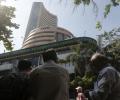
Rising for the fourth straight day, benchmark indices Sensex and Nifty settled marginally higher after a choppy session on Friday, tracking mixed global trends amid uncertainties on the geopolitical front. The BSE Sensex opened weak and declined 414.44 points to 55,049.95 in opening deals. But within minutes, it pared all its losses and jumped 369.56 points to 55,833.95. Facing volatility, the index finally settled at 55,550.30, higher by 85.91 points or 0.15 per cent.

Bajaj Finserv was the top gainer in the Sensex pack, rising over 4 per cent, followed by L&T, HDFC, Axis Bank, SBI, Reliance Industries and IndusInd Bank. NSE Nifty soared 276.30 points to its new closing peak of 17,823.

The Reserve Bank of India on Friday raised the benchmark lending rate by 50 basis points to 5.40 per cent to tame inflation.

Waves of foreign portfolio investments worth over Rs 51,000 crore splashed into the Indian market in 2021 as overseas investors turned net buyers of domestic securities for the third straight year while excess global liquidity and other factors steered the ebb and flow of their investing ways. With the global financial system still flush with liquidity, emerging market assets, especially equities, might well remain the preferred investment avenue for many more months to come, experts opined. As the equities sizzled during most of 2021, that also saw economy slowly coming back into the recovery path, Foreign Portfolio Investors (FPIs) turned net buyers but their investment is much less compared to net inflows of Rs 1.03 lakh crore in 2020.

With the international markets facing uncertainty after Russia invaded Ukraine and Western nations retaliated with sanctions, Indian companies are putting their international fundraising plans on hold as they wait for the markets to recover. Bankers said apart from the geopolitical crisis, international rates are hardening in anticipation of interest rate hikes by the US Federal Reserve to control rising prices in the US. The Ukraine situation has implications for the market. In such a situation, international investors try to shift to safe haven assets by exiting from emerging markets.

'Yet the market didn't do all that badly because it was cushioned by domestic inflows.'

Sliding for the fourth straight day, the BSE Sensex shed 152 points in choppy trade on Wednesday amid mixed global cues ahead of the US Federal Reserve's policy decision.

India has been relatively insulated from the severe headwinds in the West. However, with a third of the global economy expected to slip into recession in calendar year 2023, the impact will strongly be felt on India's exports and trade economy, leading economists said in a panel discussion at the Business Standard BFSI Insight Summit in Mumbai on Wednesday. The panel comprised former Reserve Bank of India executive director and former Monetary Policy Committee member Mridul Saggar, State Bank of India Chief Economic Advisor Soumya Kanti Ghosh, Citibank India Chief Economist Samiran Chakraborty, ICRA Chief Economist Aditi Nayar, and IndusInd Bank Chief Economist Gaurav Kapoor. The topic of the panel discussion was No recession in sight: Is India decoupled from developed economies?

Reserve Bank Governor Shaktikanta Das on Wednesday said underlying economic activity in India continues to be strong, but external factors will cause some "dent" to the economy. Speaking at the BFSI Insight Summit 2022 organised by Business Standard, Das said the RBI tracks 70 fast moving indicators and most of them are in the "green box". It is the external sector, mired by a fear of recession or clear visibility about slowing growth in a large part of the world, where the challenges lie, he said, adding that the impact of external demand will "dent" the economy.

Many banks' profits will take a hit and a few of them could even end up being in the red because of treasury losses, triggered by a sudden spike in government bond yields in the rising interest rate cycle, notes Tamal Bandyopadhyay.

Gold prices are struggling and are down 18 per cent from their March highs. But stock prices have fallen even more. As a result, the precious metal has begun to outperform equities - both in the domestic market and international markets. Gold prices are up 2.6 per cent in the domestic market in the current calendar year (CY22) so far, according to the World Gold Council (WGC), compared to a 1.7 per cent decline in the Sensex year-to-date (YTD).

'India seems to be on a relatively better wicket compared to other emerging markets.'

As markets complete the first half of the calendar year 2022 (CY22) with a fall of around 9 per cent, the interest-rate hike trajectory by global central banks, paired with the conundrum of inflation and growth, will move the needle for the market, observe experts. Here's a quick rundown on what they'll react to over the next six months.

Equity benchmarks mustered gains for the first time this week on Thursday as investors piled into the recently-battered metal, bank and IT stocks amid expiry of monthly derivative contracts. Snapping its three-session losing streak, the 30-share BSE Sensex rallied 503.27 points or 0.94 per cent to settle at 54,252.53. On similar lines, the broader NSE Nifty gained 144.35 points or 0.90 per cent to end at 16,170.15.

Continuing their selling spree for the sixth consecutive month, foreign investors pulled out a massive Rs 41,000 crore from the Indian equity market in March on anticipation of rate hikes by the US Federal Reserve and deteriorating geopolitical environment amid the Russia-Ukraine war. Further, flows from foreign portfolio investors (FPIs) are expected to remain volatile in the near term given the headwinds in terms of elevated crude prices and inflation, experts said. According to data available with the depositories, FPIs were net sellers to the tune of Rs 41,123 crore in the equity market last month.
Continuing their massive selling spree for the ninth consecutive month, foreign investors dumped Indian shares worth Rs 50,203 crore in June -- the highest net outflow in over two years -- amid aggressive rate hike by the US Federal Reserve, elevated inflation and relatively higher valuation of domestic equities. Foreign portfolio investors (FPIs) have now pulled out around Rs 2.2 lakh crore from domestic equities in the first six months of 2022 -- the highest-ever net withdrawal by them. Before that, FPIs withdrew Rs 52,987 crore in the entire 2008, data with depositories showed.

The sharp correction in equity markets has taken a toll on mid-and-small cap stocks that have underperformed their large-cap peers. Thus far in calendar year 2022 (CY22), the mid-and-small cap indexes on the BSE have slipped over 8 per cent and 7 per cent respectively, as compared to a fall of around 6 per cent in the S&P BSE Sensex. While investors dumped mid-and small-cap stocks as the markets remained choppy over the past few weeks, analysts still expect these two segments to see good investor interest from a medium-to-long term perspective.
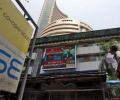
Analysts believe that investors should look at stocks that hit 52-week lows only if they have a dividend paying track record, are debt-free and have sound fundamentals.
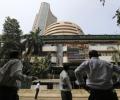
After rallying over 300 points, the 30-share BSE Sensex ended 169.14 points, or 0.42 per cent, higher at 40,581.71. Similarly, the broader NSE Nifty settled 61.65 points, or 0.52 per cent, higher at 11,971.80.
