
Cash payments will be discontinued at toll plazas on national highways from April 10, with FASTag as the primary mode of payment and UPI as a fallback option at a higher charge.

Con City has a fun premise and a handful of clever scams, but its biggest con is convincing you it's smarter than it really is.

India's toll collection growth is projected to moderate to 5-7 per cent year-on-year in FY27, a 150-200 basis points reduction, primarily due to the economic impact of the West Asia conflict and a slowdown in commercial traffic, according to Crisil Ratings.

Unified Payments Interface (UPI) transaction value and volume saw a slight month-on-month dip in April after record highs in March, but daily transaction volumes increased, indicating sustained growth in digital payments across India.
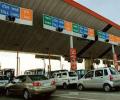
Union Minister Nitin Gadkari on Wednesday said the government will introduce a FASTag-based annual pass for private vehicles, priced at Rs 3,000, effective from August 15, in a step towards hassle-free highway travel.

Delhi Police have arrested five individuals for allegedly abducting and robbing a man after luring him through a dating application in the Kalkaji area. The victim was assaulted, forced to transfer money, and later abandoned.

From April 1, 2026, the Reserve Bank of India's new authentication directions modernise how every digital payment you make must be verified -- and place the burden of security squarely on your bank, not on you.

The Maharashtra cabinet has approved the mandatory use of FASTag for toll collection across the state from April 1. This move is expected to streamline administrative processes, enhance transparency, and reduce congestion at toll plazas. The cabinet also approved revisions to the Rules of Business, streamlining administrative functioning and making it more efficient. The revisions include provisions related to matters to be presented before the cabinet, cases requiring approval from the Chief Minister or Governor, and procedures for meetings of the cabinet and council of ministers.
The RBI on Wednesday barred Paytm Payments Bank Ltd from accepting deposits or top-ups in any customer account, prepaid instruments, wallets, and FASTags, among others after February 29, 2024.

'EV-charging is the next big opportunity after fuelling'
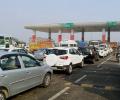
Fintech giant Paytm claimed it is selling more FASTags than all the banks put together on a daily basis.

Either drivers were blissfully unaware of the requirement or they hadn't bothered to get one installed in their vehicle.
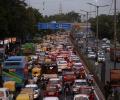
Truck rentals saw a positive momentum across most key trunk routes due to an increased pre-kharif agricultural activity and a resilient manufacturing sector. The Kolkata-Guwahati-Kolkata corridor witnessed a month-on-month (M-o-M) rise of 2.4 per cent, while the Mumbai-Chennai-Mumbai route grew by 1.9 per cent and the Delhi-Hyderabad-Delhi route saw a 1.6 per cent increase in truck rentals, said June edition of the Shriram Mobility Bulletin.

FASTag is a prepaid tag, affixed on vehicle's windscreen, that enables automatic deduction of toll charges and lets the vehicle pass through the toll plaza without stopping for the cash transaction.
Several executives argue that UPI has the potential to grow tenfold, but warn that the absence of a monetisation model risks stagnating the real-time payments system, which has been recording all-time-high transaction volumes every year.

While the most obvious beneficiary of this roll-out will be manufacturers of FASTags, or the Radio Frequency Identification chips, a PwC report says implementation of a pan-India electronic toll collection system on national highways may help save approximately Rs 87,000 crore annually.

'The next decade will be even more transformative,' says Prime Minister Modi. 'We are moving from digital governance to global digital leadership.'

Cheque payments will be safer; the limit for contactless card transactions hiked.

'The transition from payment banks to SFBs is only permissible for banks not owned by corporate entities.'

Paytm app users will continue to use all services like mobile and DTH recharges except for Paytm Payments Bank's offerings including wallet funds, Fastag and bank accounts, according to the company hit by RBI restrictions. Paytm Payments Bank users will not be able to add any funds to their wallet and bank accounts but will be able to use the balance until it is exhausted, according to the RBI order. "The RBI has issued a directive restricting Paytm Payments Bank account/wallet from accepting new deposits or allowing credit transactions after March 15, 2024.

Under the new regulations, known as the National Highways Fee (Determination of Rates and Collection) Amendment Rules, 2024, fees will now be charged on the actual distance travelled if the distance exceeds 20 kilometres.

UPI topped Rs 24 trillion in value of transactions and 19 billion in volume for the first time after becoming operational in April 2016.

Mumbai International Airport (MIAL) has proposed a significant increase in User Development Fee (UDF) for international passengers, while domestic passengers will be charged a UDF for the first time. However, MIAL also proposed a 35% reduction in landing and parking charges, aiming to balance infrastructure development with cost-effective air travel for airlines. The new tariff structure is subject to approval by the Airport Economic Regulatory Authority (AERA).

Unified Payments Interface (UPI) transactions saw an 8 per cent month-on-month increase in volume to 16.73 billion in December, the highest volume for the digital system since it became operational in April 2016. The value also increased by 8 per cent to Rs 23.25 trillion, up from Rs 21.55 trillion in November.

The RBI on Friday gave 15 days more till March 15, 2024 to Paytm Payments Bank Ltd (PPBL) to stop deposits, credit transactions or top-ups in any customer accounts, wallets, and FASTags, keeping in view the interest of customers, including merchants. As per a January 31 order of the central bank, PPBL was asked to stop further deposits, credit transactions, or top-ups in any customer accounts, prepaid instruments, wallets, FASTags, and National Common Mobility Cards, after February 29.
The Paytm application (app) could potentially face a permanent loss of its integrated mobile wallet feature, currently owned by Paytm Payments Bank (Paytm PB). With the recent crackdown on Paytm PB, sources say getting a fresh wallet licence may get tough for the group. "The Paytm app (One97 Communications) has to apply afresh to the RBI for a licence to operate a prepaid payment instrument (PPI) like a mobile wallet within the Paytm app, as PPI is a regulated entity.
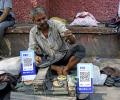
The National Payments Corporation of India on Thursday granted approval to Paytm-owner One97 Communications Ltd to participate in UPI as a Third-Party Application Provider (TPAP) under the multi-bank model. Axis Bank, HDFC Bank, State Bank of India, and YES Bank will act as Payment System Provider (PSP) banks to Paytm.
The Reserve Bank of India (RBI) has barred Paytm Payments Bank from most operations, including taking deposits and fund transfers with effect from March 1, 2024. The curbs on the bank come amid several alleged failures such as violations of know-your-customer (KYC) norms. Under such a scenario, here's what works for customers using Paytm Payments Bank, according to the company.

The National Payments Corporation of India (NPCI) has granted approval to Paytm to onboard new UPI users, subject to the adherence to all procedural guidelines and circulars, according to the company. The move is expected to come as a relief to Paytm, which had suffered a blow following the Reserve Bank of India's restrictions earlier this year on associate company Paytm Payments Bank Limited (PPBL) in onboarding new UPI users on the Paytm app. In March, the NPCI gave approval to Paytm to participate in UPI as a Third-Party Application Provider (TPAP).
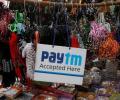
Fintech firm One97 Communications, which owns the Paytm brand, has received support from merchants, and it assured them of continuity of services without any disruption, the company said in a blog on Sunday. The blog post came amid the recent crisis around Paytm Payments Bank Limited (PPBL), an associate company of Paytm, which has been barred by the RBI from accepting deposits or top-ups in customer accounts, wallets, FASTags and other instruments after February 29.
Fintech firm One97 Communications, owner of Paytm brand, is laying off an undisclosed number of employees and claimed that it is providing outplacement support for their smooth transition, according to a company statement. Paytm's sales employee headcount in March 2024 quarter dropped by about 3,500 to 36,521 personnel on a quarter-on-quarter basis, mainly due the impact of the Reserve Bank of India's ban on services of Paytm Payments Bank.

HDFC Bank has been conscious in not accepting high-cost deposits, which have resulted in slower growth in October-December, said Sashidhar Jagdishan, managing director and chief executive officer, during an interaction with Goldman Sachs recently. He said during times of tight liquidity, short terms hardened, as was the case in October-December. "Not only did we participate, but we also gave up which came up for maturity," he said.
Paytm operator One97 Communications Ltd on Wednesday said it is not in talks to sell a stake to the Adani Group. Adani group has also termed such reports as "false and untrue." Commenting on a report that billionaire Gautam Adani was in talks with Paytm CEO Vijay Shekhar Sharma for a possible stake buy, One97 Communications said, the "news item is speculative and the company is not engaged in any discussions in this regard."
Fintech firm One97 Communications, which owns the Paytm brand, on Wednesday said its loss in the fourth quarter of the financial year 2023-24 has widened to Rs 550 crore following the ban imposed by the RBI on transactions related to its payments bank. The company had posted a loss of Rs 167.5 crore in the same period a year ago, the company said in a regulatory filing. "Our fourth quarter FY24 results were impacted by temporary disruption on account of UPI transition etc. and permanent disruption because of the PPBL embargo.

Beleaguered Paytm Payments Bank's managing director and CEO Surinder Chawla has resigned from the company, a regulatory filing said on Tuesday. Chawla's resignation comes amidst Paytm Payments Bank facing prohibitory action from banking regulator RBI. "Surinder Chawla, managing director and CEO of PPBL, has tendered his resignation on April 8, 2024, on account of personal reasons and to explore better career prospects.

Has Vijay Shekhar Sharma given up on the bank? For now, he seems to be on a save-OCL mission. The bank will face its logical end, observes Tamal Bandopadhyay.

One97 Communications Ltd (OCL), the parent firm of fintech major Paytm, has denied reports about any investigation by the Enforcement Directorate (ED) into the company, its associates, and its founder and chief executive officer (CEO), Vijay Shekhar Sharma. The company, in an exchange filing on Sunday, said it had cooperated with the authorities when users or merchants on its platform were subject to enquiries in the past. "We would like to set the record straight and deny any involvement in anti-money laundering activities.

At the heart of Paytm's slide lies the abject failure of its Super App strategy, notes Indrajit Gupta.

A 25 per cent year-on-year (Y-o-Y) increase in budget allocation towards the roads sector for FY24 has led to renewed interest among investors. However, a combination of escalating costs for Bharatmala and unseasonal rains to some extent have impacted progress. Bharatmala's cost has nearly doubled from Rs 5.35 trillion to Rs 10.6 trillion and the finance ministry has asked MoRTH to go slow until Cabinet approval is received.

Unified Payments Interface (UPI), the flagship payments platform of the National Payments Corporation of India (NPCI), touched a record high both in terms of volume and value of transactions in June after a slump in April and May. The platform recorded 2.8 billion transactions worth Rs 5.47 trillion in June, up 10.6 per cent in volume terms and 11.56 per cent in value terms over May. This is in sync with the opening up of the economy as Covid cases gradually came down from its peak in mid-May and lockdowns were eased in various places.
