
'Portfolios built in these phases often deliver the strongest outcomes over time.'

Equity mutual funds attracted Rs 29,911 crore in November, marking a 21 per cent increase from the preceding month, according to data released by industry body Amfi on Thursday. This rise in inflows comes after three consecutive months of decline, signalling an improvement in investor sentiment.

Indian stock market benchmarks Sensex and Nifty rebounded by over 1% on Monday, driven by value-buying in banking stocks after a three-day slump. Key gainers included UltraTech Cement, HDFC Bank, and Mahindra & Mahindra.

Indian equity markets experienced a significant downturn, with the Sensex and Nifty plummeting due to rising crude oil prices, geopolitical tensions in West Asia, and continuous foreign fund outflows.

Their assets under management (AUM) rose from Rs 1.04 trillion (January 31, 2025) to Rs 1.75 trillion (January 31, 2026), an increase of 68.3 per cent.

Indian benchmark stock indices Sensex and Nifty rallied for the second consecutive day, closing nearly 1 per cent higher, driven by gains in metal and auto sectors and positive global market trends.
Indian stock market benchmark indices Sensex and Nifty experienced a significant decline, driven by escalating tensions in the Middle East and rising crude oil prices.

Foreign investors pulled out Rs 21,000 crore (around $2.3 billion) from Indian equities over the last four trading sessions amid deteriorating global risk sentiment triggered by the West Asia crisis.
'Portfolios built in these phases often deliver the strongest outcomes over time.'

New Zealand Cricket backs the proposed NZ20 private league to replace Super Smash, with a 2027 launch in sight and a strong push to include the women's game.

India's aviation sector is facing fresh turbulence, with rising fuel costs, the Ministry of Civil Aviation's free-seat directive, and geopolitical disruptions in West Asia clouding near-term earnings visibility.

The Indian rupee rebounded against the US dollar after the Reserve Bank of India (RBI) restricted banks' net open positions in dollars. This move prompted banks to sell dollars, providing temporary support for the rupee amidst ongoing geopolitical tensions and rising oil prices.

A fall in the Nifty 50 to around 19,000 is not impossible, but that would likely require nuclear options to be exercised.

Indian equity markets experienced a significant downturn as geopolitical tensions in West Asia, rising oil prices, and foreign fund outflows dampened investor confidence. The Sensex and Nifty both fell sharply in early trade, reflecting broader global market weakness.

Ask rediffGURU Reetika Sharma your insurance, mutual fund and personal finance-related questions.
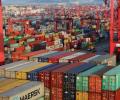
India's first maritime lender, state-owned Sagarmala Finance Corporation Ltd (SMFCL) hit the ground running with a Rs 4,300 crore disbursement announcement last Tuesday, within months of being registered as a non-banking financial company (NBFC) in June 2025.

By all available indications, the White House drafted a face-saving note and handed it, ready-made, to Islamabad. Pakistani Prime Minister Shehbaz Sharif was supposed to then post it in the guise of a plea urging Trump to extend the deadline by two weeks 'to allow diplomacy to run its course'. Trump would then graciously accept Pakistan's 'request' and declare a ceasefire. Sharif dutifully posted the message on X. Except that he, or whoever was handling the account, forgot to delete the tell-tale first line visible in the edit history: 'Draft - Pakistan's PM Message on X'. Prem Panicker's must read blog on the Iran War.

There is record underperformance and under-ownership. Some of this is cyclical and will turn on its own. However, we also need to regain our growth credentials. For this, both the government and companies have a role to play, as do investors, points out Akash Prakash.

Police in Navi Mumbai have dismantled a fraudulent call centre accused of swindling individuals out of over Rs 1 crore by falsely promising high returns on share market investments. Two individuals have been arrested, and investigations are ongoing.

Indian benchmark equity indices experienced a significant downturn, with the Sensex plummeting over 800 points and the Nifty falling sharply, driven by rising crude oil prices, geopolitical tensions, and foreign capital outflows.

India has initiated a probe into imports of subsidised paperboard from China and Indonesia following complaints from domestic manufacturers. The investigation will assess the impact of these imports on the Indian paper industry and determine if anti-subsidy duties are warranted.
India has initiated a probe into imports of subsidised paperboard from China and Indonesia following complaints from domestic manufacturers. The investigation will assess the impact of these imports on the Indian paper industry and determine if anti-subsidy duties are warranted.
Indian markets on Dalal Street rallied sharply as easing tensions in the US-Iran conflict and stable oil prices boosted sentiment. Track Nifty 50 and BSE Sensex performance and key global triggers.

Indian investors have seen their wealth erode by a staggering Rs 48.29 lakh crore since the West Asia war began on February 28, leading to a significant downturn in the BSE Sensex and NSE Nifty, driven by geopolitical tensions and rising crude oil prices.

They accounted for 39.1 per cent of the premium paid to trade equity options in September 2025.

Households should moderate large discretionary expenses for the time being.
'They should prioritise essential spending. They should maintain an emergency fund covering 6 to 12 months of expenses.'

There are hopes of a turnaround in overall corporate earnings after six quarters of single digit growth.

Foreign portfolio investors (FPIs) infused Rs 22,615 crore into Indian equities in February, marking the highest monthly inflow in 17 months, driven by factors such as the interim India-US trade deal, correction in domestic market valuations, and strong corporate earnings.

Do not exit in panic or buy falling stocks without reassessing fundamentals; instead, build a watchlist and invest gradually with a disciplined, long-term approach.
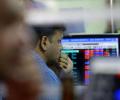
Indian stock market benchmark indices Sensex and Nifty experienced a significant drop in early trade due to rising crude oil prices, bearish global market trends, and continuous foreign fund outflows.
Indian stock market benchmarks Sensex and Nifty rebounded strongly after a two-day decline, driven by falling crude oil prices and positive global cues amid hopes of de-escalation in the Middle East.

The BSE Sensex and the Nifty 50 declined around 4.5 per cent each since the start of the West Asia conflict.

Using a trading terminal is not suitable for all market participants. Before market participants start using a trading terminal, it is important for them to know who really needs a trading terminal and what they can do with it. Here, we will explore who should actually use a trading terminal.

Following a ban on real-money gaming, Dream Sports, the parent company of Dream11, is strategically expanding its portfolio across 11 companies, including a new venture into wealth management and stockbroking, with a focus on serving a mass user base through AI-first solutions, cofounder Harsh Jain confirmed.

Delhi should keep all its options open in what is essentially a transitional period in the geopolitics of energy rather than remain a gatekeeper serving Trump's 'America First', suggests Ambasssador M K Bhadrakumar.

Indian stock market indices Sensex and Nifty closed nearly 1 per cent higher, marking their third consecutive day of gains, supported by a slight decrease in crude oil prices and positive global market trends.

Indian equity investors experienced a significant loss of 16.32 lakh crore due to a two-day stock market decline fueled by escalating geopolitical tensions involving the US, Israel, and Iran.

SIP inflows into active equity schemes from areas beyond the top 30 cities (B30), which first crossed this milestone in September 2025, stood at Rs 10,080 crore in October, industry data shows.

A student in Bahraich, Uttar Pradesh, was allegedly assaulted after protesting against the UGC Bill. Police have registered a case and are investigating the incident.

Satyan Gajwani, chairman of Times Internet Limited and RCB's new co-owner, discusses the significance of American companies investing in IPL franchises like RCB and Rajasthan Royals, highlighting the league's immense growth potential and global appeal.
 © 2026 Rediff.com - Advertise with us - Disclaimer - Privacy Policy - Sitemap - Feedback - About us - Terms of use - Grievances