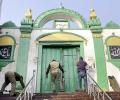
The latest issue of "Organiser", an RSS-linked magazine, has argued that the ongoing dispute over the Shri Harihar Mandir in Sambhal, Uttar Pradesh, is not about religious supremacy but about seeking "civilisational justice" by uncovering historical truth. The editorial, penned by Prafulla Ketkar, editor of "Organiser", contends that the debate should not be limited to a Hindu-Muslim perspective but should encompass a wider discussion on historical truths and social justice. The magazine further criticizes the Congress's handling of caste and religious issues, accusing it of whitewashing historical injustices and promoting a false narrative about Mughal rulers.

A ready reckoner on the Ram Janambhoomi-Babri Masjid issue.
'India does not possess the political leadership with the moral fibre or the necessary willpower among its key battling constituents to create a national reconciliation.'
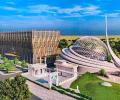
During the freedom struggle, Shah had launched revolts in the Awadh region. He made the local mosque, Masjid Sarai, located in Chowk area of Faizabad his headquarters. As he liberated Faizabad and larger part of Awadh region, he used the premises of this mosque to hold meetings with rebel leaders.

The issue of Lord Rama grabbed headlines again on Monday when Art of Living founder Sri Sri Ravi Shankar said he would travel to Ayodhya and open talks with stakeholders in the Ram Janmabhoomi-Babri Masjid dispute on November 16.
Centre's counsel Lala Ram Gupta told the Liberhan Commission that the issue is whether a temple existed on the disputed site before the construction of the Babri Mosque.

Taking a dig at the Bharatiya Janata Party government, Hindu religious leaders have said that they will construct the Ram temple at the "Lord's birthplace" in Ayodhya without any political assistance if the Supreme Court gives order in their favour.
With Ayodhya issue stuck in the quicksand of political and legal quagmire, a retired high court judge is spearheading a movement to resolve the issue peacefully and has claimed to have got the backing of over seven thousand locals -- both Hindus and Muslims.

'The burden of proof is on Muslim parties to show that this finding, that the mosque was built on land held sacred by Hindus, is wrong'

Syed Firdaus Ashraf walks the streets of Mahim, where Yakub Memon grew up and lived till the day before the serial blasts in 1993, on the day Yakub was hanged and discovers an undercurrent of unease and restrained anger.
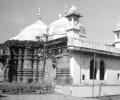
Contemporary records speak of Chhatrapati Shivaji's resolve to liberate Hindu holy places, and the later Maratha rulers carried forward his legacy, Colonel Anil A Athale (retd) reveals in a forthcoming book.
 © 2026 Rediff.com - Investor Information - Advertise with us - Disclaimer - Privacy Policy - Sitemap - Feedback - About us - Terms of use - Grievances