
The hugely significant development comes just days after Rana's last-resort attempt to evade extradition to India failed after the US Supreme Court justices denied his application, moving him closer to being handed over to Indian authorities to face justice in the dastardly attacks.
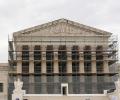
The US Supreme Court has denied the application of Tahawwur Rana, a Canadian national of Pakistani origin accused in the 2008 Mumbai terror attacks, seeking a stay on his extradition to India. Rana, currently detained in Los Angeles, had submitted the application after Associate Justice Elena Kagan initially denied it. Despite a renewed appeal, the Supreme Court ultimately rejected the request.
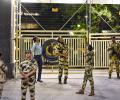
Tahawwur Hussain Rana, a Pakistani-born Canadian national accused of playing a role in the 2008 Mumbai terror attacks, has been extradited from the United States to India. Rana was arrested in the US in 2009 and convicted in 2011 for providing material support to the Lashkar-e-Taiba terror group, which carried out the Mumbai attacks. He had been fighting extradition since 2012, but the US Supreme Court ultimately denied his review petition, paving the way for his transfer to India. Rana will now face trial in India for his alleged role in the attacks, which killed 166 people.

Tahawwur Rana, accused in the 2008 Mumbai terror attacks, has renewed his application to the US Supreme Court seeking a stay of his extradition to India. The Supreme Court will hear the application next month. Rana, currently detained in Los Angeles, claims his extradition would violate US law and expose him to torture in India due to his health and Muslim background. The US government has denied these claims and authorized his surrender to India, citing the Extradition Treaty between the two countries. The Supreme Court's decision will determine if Rana will face justice in India or remain in the United States.

The United States has extradited Pakistani-Canadian Tahawwur Hussain Rana to India to face charges for his alleged involvement in the 2008 Mumbai terrorist attacks. Rana, 64, was convicted in the US in 2011 for providing material support to Lashkar-e-Taiba, the Pakistani militant group responsible for the Mumbai attacks. The US Department of State said it has long supported India's efforts to bring those responsible for the attacks to justice and that the extradition is a critical step towards seeking justice for the victims. Rana's extradition comes after the US Supreme Court denied his last-ditch attempt to evade extradition. He will now face justice in India for his role in the attacks which killed 166 people, including six Americans.
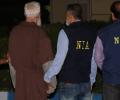
Tahawwur Hussain Rana, a Canadian national accused of involvement in the 2008 Mumbai terror attacks, has been extradited to India from the United States. Rana's interrogation is expected to shed light on the role of Pakistani state actors in the attacks, which claimed 166 lives. Indian authorities are particularly interested in his travels across India in the days leading up to the attacks, including visits to Hapur, Agra, Delhi, Kochi, Ahmedabad, and Mumbai. Rana's extradition follows a lengthy legal battle, with the US Supreme Court ultimately denying his application to challenge it. Rana is known to be associated with Pakistani-American terrorist David Coleman Headley, one of the main conspirators of the 26/11 attacks. The investigation into the Mumbai attacks has implicated senior members of terror outfits Lashkar-e-Taiba (LeT) and Harkat-ul Jihadi Islami (HuJI), as well as officials from Pakistan's Inter-Services Intelligence (ISI).

Tahawwur Rana, accused of involvement in the 2008 Mumbai terror attacks, is expected to be extradited to India from the United States soon. The US Supreme Court denied his last-ditch effort to stop his extradition, moving him closer to being handed over to Indian authorities. Rana's extradition is expected to help probe agencies expose the role of Pakistani state actors behind the attacks and shed new light on the investigation. He is associated with Pakistani-American terrorist David Coleman Headley, one of the main conspirators of the 26/11 attacks.
Tahawwur Rana, accused in the 2008 Mumbai terror attacks, has renewed his plea for a stay on his extradition to India, citing health concerns and alleging potential torture. He argues that his extradition would violate US law and the UN Convention Against Torture. Rana's lawyers claim he is at risk of being subjected to torture in Indian detention facilities due to his Pakistani origin, Muslim religion, and medical conditions. The US Supreme Court had previously denied his emergency bid for a stay, but he has now appealed to Chief Justice John Roberts. The US government has declined to provide information on any commitment from India regarding Rana's treatment, further fueling his concerns.

Tahawwur Rana, accused in the 2008 Mumbai terror attacks, has been extradited to India after the US Supreme Court denied his last-ditch effort to avoid being sent back. Rana, a close associate of David Coleman Headley, another key conspirator in the attacks, was expected to be extradited "shortly" after his legal appeals failed. This decision comes after a multi-agency team from India traveled to the US to complete all necessary paperwork and legalities with the US authorities. Rana's extradition marks a significant development in the pursuit of justice for the victims of the Mumbai attacks.

Tahawwur Hussain Rana, a Pakistan-born Canadian national and close associate of David Coleman Headley, is set to be extradited to India from the US. Rana was involved in the planning and execution of the 2008 Mumbai terror attacks, which killed 166 people, including six Americans. He assisted Headley in obtaining a visa for India, established a front company in Mumbai, and helped in reconnaissance of targets in Mumbai and New Delhi. Rana was convicted in the US for providing material support to Lashkar-e-Taiba (LeT) and sentenced to 14 years in prison. His extradition to India will allow authorities to question him about his involvement in the Mumbai attacks and potentially uncover new information about the role of Pakistani state actors.

John Kerry, the veteran American politician and 2004 presidential candidate, has been sworn in as the United States secretary of state, replacing Hillary Clinton.
Three Indian Americans, led by principal deputy solicitor general Neal Katyal, are among the top five contenders to replace United States Solicitor General Elena Kagan -- nominated by President Barack Obama to the Supreme Court -- if she is confirmed by the Senate in July, highly placed sources told India Abroad.

Top Indian American lawyer Neal Kumar Katyal will now serve as the United States government's top legal counsel, with Solicitor General Elena Kagan vacating the post following her nomination to the Supreme Court.Kagan informed the Supreme Court in a letter that she has been nominated by President Barack Obama for the vacancy in the apex court, and the development leaves her principal deputy Katyal to serve as the Acting Solicitor General.
Get your low down on what's happening in the world of Hollywood, right here!

United States President-elect Joe Biden on Monday named two Indian Americans -- Reema Shah and Neha Gupta -- to the Office of the White House Counsel.

Even as he was being sworn in inside the Supreme Court, scores of people protested across the street at the Capitol.

Indian-American elected officials, civil rights organisations and queers welcome the United States Supreme Court historic decision to legalize same-sex marriage nationwide for all Americans on Friday.
 © 2026 Rediff.com - Investor Information - Advertise with us - Disclaimer - Privacy Policy - Sitemap - Feedback - About us - Terms of use - Grievances