South Korean automaker Hyundai Motor Company on Tuesday exited Ola Electric Mobility by selling its entire 2.47 per cent stake in the company for Rs 552 crore through an open market transaction. According to the bulk deal data available on the NSE, Hyundai Motor Company sold more than 10.88 crore shares or 2.47 per cent stake in Bengaluru-based Ola Electric Mobility.
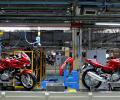
Two-wheeler (2W) giant Bajaj Auto registered record sales across the country over the weekend on the back of Gudi Padwa, hawking 26,938 vehicles that included motorcycles and its electric scooter Chetak.

New-age stocks to buy: Most new-age stocks have turned out to be wealth destroyers in stock markets, so far, in calendar year 2025. Shares of Ola Electric Mobility, for instance, have plunged nearly 50 per cent in the first half of CY 2025, while those of Swiggy, PB Fintech, Paytm, and Eternal (Zomato) have crashed between 6 per cent and 25 per cent, ACE Equity data shows.

Inventories of rare earth magnets used in critical automotive components - particularly electric vehicle (EV) traction motors and power steering systems - could run dry by mid-July this year, according to rating agency Icra.

Truck rentals saw a positive momentum across most key trunk routes due to an increased pre-kharif agricultural activity and a resilient manufacturing sector. The Kolkata-Guwahati-Kolkata corridor witnessed a month-on-month (M-o-M) rise of 2.4 per cent, while the Mumbai-Chennai-Mumbai route grew by 1.9 per cent and the Delhi-Hyderabad-Delhi route saw a 1.6 per cent increase in truck rentals, said June edition of the Shriram Mobility Bulletin.
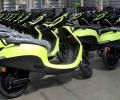
From premium electric motorcycles to mass-market scooters, manufacturers are rapidly expanding their portfolios to capture a larger share of the booming market.
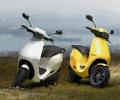
Amid the ongoing controversy in Maharashtra over Ola Electric stores operating without a trade certificate, sources at the Bengaluru-based electric two-wheeler manufacturer said the company is currently transitioning from a centralised warehouse model to a retail-focused approach. They emphasized that Ola Electric is ensuring all regulatory compliances are being met during this shift.

Bajaj Auto has become the top player in India's electric vehicle market by monthly volumes, across all categories, with over 25,000 sales and registrations in September. This comes on the back of a big push in expanding distribution by the company and steady demand of electric three-wheelers. In September, the company - according to the latest Vahan data - recorded sales of 17,570 electric two-wheelers, 4,575 three-wheelers, and 3,000 Yulu low-speed electric bikes (based on company sales numbers), which do not require a licence and are not registered on Vahan.
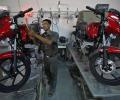
Bajaj Auto - the country's most valuable two-wheeler (2W) company by market capitalisation - met Street expectations in the January-March quarter (Q4) of 2024-25 (FY25) but still ended Friday as the worst performer on the Nifty 50, slipping 3.1 per cent.

The 17 rare earth elements that are at the centre of the current crisis are critical components of everyday products -- from cars to jet engines to electronics like smartphones and flat-screen TVs.

To help you ride the growth trajectory of India's equity markets, we have curated the top five fastest-growing stocks that hold an impressive upside. If you're planning to build a sound portfolio and capitalize on the growth of these leading institutions, it's time you watch these stocks.
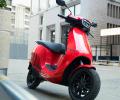
Ola Electric on Tuesday clarified that its February sales figures reflect genuine customer orders after full payments, and not just preliminary bookings with a token amount, stating that "nearly 90 per cent" of these orders were paid in full at the time of placement. "To be clear, the sales figures for February 2025 represent genuine customer demand backed by financial commitment, not token-amount bookings.
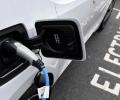
'The testing and certification have been completed, and implementation could occur within a year, depending on the number of vehicles.'
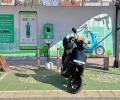
Leading Indian electric two-wheeler (e2W) companies have said that "swapping" of batteries is currently unviable and will only increase the cost for a consumer to run the vehicle.

Ola Electric has eliminated its regional warehouses across India, and will now leverage its 4,000 retail stores nationwide for maintaining vehicle inventory, spare parts, accessories, and last-mile deliveries. The strategic move is expected to boost EBITDA margins by almost 10 percentage points, besides improving inventory management and faster customer deliveries, sources directly familiar with the matter said.

Numeros Motors is also planning to come up with a passenger vehicle four-wheeler or a three-wheeler by 2027.
Ola Electric, India's largest electric vehicle company, has achieved a significant milestone by becoming the first two-wheeler automotive electric vehicle (EV) manufacturer in India to receive incentives under the Production Linked Incentive (PLI) Scheme for Automotive and Auto Component (PLI-Auto Scheme). The company has been granted a total incentive of Rs 73.74 crore for the Determined Sales Value of FY 2023-24 under the scheme, according to a stock exchange filing by the company.
Top executives from Siam and major carmakers recently met with Heavy Industries Secretary Kamran Rizvi to discuss the matter. Officials from NITI Aayog were also present.

Players like Ola Electric, Ather Energy, Kinetic Green and BGauss are introducing premium services and infrastructure enhancements.

Consumer rights regulator CCPA has ordered a detailed probe into complaints related to alleged "deficiencies" in services and electric two-wheelers manufactured by Ola Electric. The Central Consumer Protection Authority (CCPA) headed by Nidhi Khare has directed the Director General (Investigation), who is also head of the Bureau of Indian Standards (BIS), to investigate this matter.

The gap in demand for electric vehicles between large and mid-sized cities in the country is shrinking and the Tier-II 2 cities are likely to emerge as the next big demand centre for EVs, a report said on Tuesday. An analysis of the electric two-wheeler and car sales by strategic research provider BloombergNEF (BNEF) from 207 cities across 10 states also suggests that the electric two-wheeler sales in some tier 2 markets have surpassed metropolitans while within tier 2 cities, state capitals generally leading the growth in electric car sales.
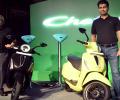
The two-wheeler giant had only 14 per cent of the electric two-wheeler market in May this year, but its 26.8 per cent in December
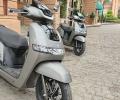
'Price competition is fierce, with many companies selling at zero margin.' 'This pricing pressure is challenging smaller companies and will likely drive some out of the market over time.'
Proliferation of home chargers of around 7 KWh and above, which take six to seven hours to fully charge a car depending on the model, bring running costs down by a third or so. That, coupled with the increasing range of modern electric cars, can lead to a massive increase in sales.

Firodia talked about his plans for the EV-components business, and the components business at large for the group
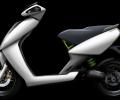
Bengaluru-headquartered electric two-wheeler manufacturer Ather Energy is all set to file its draft red herring prospectus within the second week of September to the Securities Exchange Board of India (Sebi) for its maiden initial public offering (IPO), in which it is expected to raise over $450 million. On Tuesday, the fourth-largest electric two-wheeler maker in the country by volume raised Rs 600 crore from its existing investor, the National Investment and Infrastructure Fund (NIIF), catapulting itself into a unicorn with a valuation of $1.3 billion.

So far this year, around 839,545 electric vehicles have been sold, accounting for approximately 6.69% of the total 12,541,684 vehicles sold.

Bengaluru outpaced Mumbai, Delhi, and Pune in 2023 to become India's leading city for electric car registrations. The city's tech-savvy workforce, increased acceptability, zero road tax, subsidised electricity for EV charging, and a wide charging station network contributed to this surge. Electric car registrations in Karnataka's capital surged more than threefold in 2023 to 8,690 units, overtaking the growth witnessed in the other three cities, according to data from Jato Dynamics

Overall, volume growth is likely to be in the range of 3-8 per cent for two-wheelers and 5-7 per cent for passenger vehicles owing to healthy demand from urban and rural areas and pending order books.
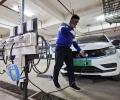
Even as the government debates whether to continue the FAME-II subsidy for electric vehicles (EVs), the share of such vehicles in overall sales is decelerating, after witnessing a heady growth in the first few years. The penetration of EVs - electric two-wheelers, passenger vehicles, three- wheelers and other segments collectively - in the first 10 months of FY24 has been pegged at 4.3 per cent, compared to 3.7 per cent in FY23, according to credit rating agency ICRA.
Electric two-wheeler company Ola Electric Mobility will float its initial public offering (IPO) on August 2, and a significant part of the proceeds will be used for capacity expansion of its cell manufacturing plant and revving up R&D. The initial share sale will conclude on August 6, and the bidding for anchor investors will open for a day on August 1, according to the red herring prospectus (RHP).
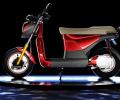
The government has taken a slew of steps to boost the sales of electric two-wheelers and three-wheelers under its Electric Mobility Promotion Scheme (EMPS) 2024, which includes allowing manufacturers to upload claims twice a month and gives them a 120-day window to submit it. The Rs 500-crore scheme -- which had replaced the flagship Faster Adoption and Manufacturing of Electric Vehicles (FAME) scheme-- comes to an end on July 31st.

Hyundai Motor India Ltd, the Indian arm of South Korean automaker Hyundai, has received capital markets regulator Sebi's approval to float an initial public offering (IPO), people familiar with the development said on Wednesday. This development marks a significant milestone for the Indian industry, as it is the first automaker initial share-sale in over two decades, following Japanese automaker Maruti Suzuki's listing in 2003.

Hopes to launch e-scooters within two years

Honda Motorcycle and Scooter India (HMSI) on Wednesday forayed into the fast-growing domestic electric mobility market with the introduction of e-scooters, ACTIVA e: and QC1, with swappable and fixed batteries. With this, the Japanese two-wheeler maker will now be competing with other legacy players such as Bajaj Auto, Hero MotoCorp, TVS Group as well as pure EV players like Ather and Ola, who already have a good presence in the segment, which is growing at 34 per cent year-on-year.

Bajaj Auto, the king of the market for CNG-powered passenger three-wheelers, now wants to replicate this dominance in two-wheelers. The difference is that while the former is zooming - registrations for CNG-powered passenger three-wheelers nearly doubled during January-December 2023 - the latter, meaning a market for CNG-powered two-wheelers, does not exist.

The calendar year 2024 is set to go down as the best year for initial public offerings (IPOs) in terms of funds raised. Following the IPOs of food delivery major Swiggy and two other companies slated for next week, this year's total will reach nearly Rs 1.2 trillion, going past 2021's record tally of Rs 1.19 trillion. Swiggy's Rs 11,327 crore IPO, the sixth-largest in India, and solar energy firm Acme Solar Holdings' Rs 2,900 crore IPO opened on Wednesday (Nov 6), while health-tech firm Sagility India's Rs 2,106 crore IPO opened a day earlier.

The state is also the biggest market for TVS, another incumbent player, and together with Bajaj Auto, they accounted for 88 per cent of Maharashtra's total electric scooter sales last month. As many as 8,417 units were sold in Maharashtra in September. Bajaj Auto's contribution was 4,048 vehicles and that of TVS was 3,389, according to model- and state-wise data from the Society of Indian Automobile Manufacturers (Siam).

Ola Electric's initial public offering (IPO), of Rs 5,500 crore, is essentially aimed at ensuring the company maintain its top position in the electric two-wheeler segment, with incumbent players TVS and Bajaj Auto giving a fight to the number one player in market share. Most experts and competitors say the amount being raised is in line with the investment required to expand the electric-vehicle (EV) business. There are two discernible trends in the competitive electric two-wheeler market.
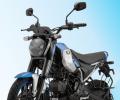
SG Corporate Mobility - the parent company of the Indian two-wheeler brand LML - has taken auto major Bajaj Auto to high court, claiming that it was illegally using its 'Freedom' trademark in newly-launched Bajaj Freedom CNG motorbikes, the company said in a statement on Thursday. SG Corporate Mobility claims that the term 'Freedom' has a deep-rooted association dating back to 2002 when the company had introduced its 'LML Freedom' motorcycle. The trademark 'Freedom,' along with the 'LML' brand, was officially assigned to SG Corporate Mobility in 2021 after being transferred by LML.
 © 2026 Rediff.com - Investor Information - Advertise with us - Disclaimer - Privacy Policy - Sitemap - Feedback - About us - Terms of use - Grievances