
That win gave us something no other victory ever would: It gave a young nation hope. It gave us the will to dream, notes Abhishek Mande Bhot.
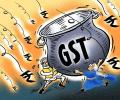
GST collection grew by 12 per cent in April to Rs 1.87 lakh crore, the highest monthly mop-up since the rollout of the indirect tax regime. The gross GST revenue collected in the month of April 2023 is Rs 1,87,035 crore of which CGST is Rs 38,440 crore, SGST is Rs 47,412 crore, IGST is Rs 89,158 crore (including Rs 34,972 crore collected on import of goods) and cess is Rs 12,025 crore, the finance ministry said in a statement. The previous high collection of Rs 1.68 lakh crore was in April last year.

Seattle is not only the first American city to ban caste discrimination but is the first jurisdiction at any level globally outside South Asia to do so.
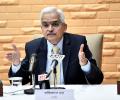
RBI Governor Shaktikanta Das on Wednesday replied to the 'history major central bank governor' taunt faced by him, questioning if Argentinian football legend Lionel Messi is also a post-graduate in history. An interviewer anchoring a fireside chat at a summit organised by Business Standard compared his position to an opponent facing Messi at a football arena in Qatar, to which Das replied with wit. "Don't mind it, but was Messi also a post-graduate in history? Not often, but I am sometimes reminded by people that I am supposed to have done history," Das said.

The first five months of 2023 have witnessed at least six major events/trends that augur badly for global economic and socio-political prospects, points out Shankar Acharya, former chief economic adviser to the Government of India.

India's GDP is estimated to grow at 7.4 per cent in the financial year 2022-23 with rising prices triggered by the Russia-Ukraine conflict posing as the biggest challenge to the global economic recovery, Ficci's Economic Outlook Survey released on Sunday said. According to the survey, the Reserve Bank of India (RBI) is likely to start a rate hike cycle in the second half of 2022, while a repo rate hike of 50-75 bps is expected by the end of the current fiscal. The RBI is expected to continue supporting the ongoing economic recovery by keeping the repo rate unchanged in its April policy review, the survey said.

About 56 million Indians may have plunged into extreme poverty in 2020 as a result of the pandemic, increasing the global tally by 71 million and making it the worst year for poverty reduction since World War II, according to fresh estimates by the World Bank. "The global goal of ending extreme poverty by 2030 is likely to be missed: By then, about 600 million people will remain in abject poverty. A major course correction is needed," Indermit Gill, chief economist at the World Bank, tweeted. The World Bank in its latest "Poverty and Shared Prosperity" made fresh estimates of poverty using a new extreme poverty line based on the purchasing power parity (PPP) of $2.15, the earlier one being at $1.9.

Production of eight infrastructure sectors increased by 5.4 per cent in November against a 3.2 per cent growth in the same month last year on a better show by coal, fertiliser, steel, cement and electricity segments, according to the official data released on Friday. Crude oil, natural gas and refinery products, however, recorded negative growth in November this year. The production growth of eight key sectors slowed down to 0.9 per cent in October.

The year 2022 saw the Reserve Bank of India (RBI) start acting on the policy repo rate after a gap of two years. The six-member monetary policy committee of the RBI reduced interest rate sharply - by 115 bps - when Covid-19 struck in 2020. In March 2020, days after the nationwide lockdown was announced, MPC in an unscheduled meeting reduced the repo rate by 75 bps, followed by another 40 bps in May. Status quo was maintained for the next two years since the May repo rate hike.

'It has been an ongoing process, talking to the relevant ministries about eliminating leakages and curbing non-core expenditure in various schemes.'
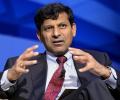
The argument that India is going towards a 'Hindu rate of growth' is "ill-conceived, biased and pre-mature" when weighed against the respective data on savings and investments, said SBI Research in its Ecowrap report. The term Hindu rate of growth was coined by economist Raj Krishna in 1978, which denoted the economic growth of about 3.5-4.0 per cent in terms of GDP during 1947-1980. "India's quarterly sequential Y-o-Y GDP growth has been in a declining trend in FY23.

anerjee, who reached Bolpur in the second half of the day, visited Sen at his residence and dubbed the accusations made against him as "baseless".

As people wait in long queues outside banks, they appear happy that the ban on Rs 500 and Rs 1,000 notes will unearth black money and root out corruption.

I suggest we build a Vigyan Mandir (Temple of Science) with the ambience of a place of worship, so that it becomes a destination for pilgrims. We should embed on its walls bronze plaques describing each scientist mentioned here along with about a dozen of our ancient mathematicians, recommends Professor Kalyan Singhal, historian of science and technology.

Nageswaran, an academic and former executive with Credit Suisse Group AG and Julius Baer Group, succeeds K V Subramanian, who demitted office of CEA in December 2021 after the completion of his three-year term. An official statement said Nageswaran assumed charge on Friday.

The Income Tax authorities have left the offices of the BBC in New Delhi and Mumbai after three days of lengthy questioning of some of its staff, the United Kingdom-headquartered public broadcaster said on Thursday.

The speed at which he led the central bank in different areas -- ranging from internal reorganisation to inflation fighting, stabilising the currency, taking on rogue corporations, cleaning up bank balance sheets, and opening the sector -- makes one believe that Rajan knew he had only three years to do his job. A fascinating excerpt from Tamal Bandyopadhyay's MUST-READ Roller Coaster: An Affair with Banking.

In a statement, Pfaff also noted that the countries Netaji had approached were the only ones willing to support the fight against a common adversary.

For all its claims to economic glory, the majority of India's population lives vulnerable lives, a situation that has only worsened over the past 15 years, to the extent that the government now fears to release economic data or even conduct a proper Census, notes Rathin Roy.

'I think my first obsessive, possessive and only half-requited -- as we would joke -- 'love' was Ivan. I saw him first slouching down the corridor of St Stephen's College nearly 50 years ago and was instantly smitten (as was everyone else around him).'
 © 2026 Rediff.com - Advertise with us - Disclaimer - Privacy Policy - Sitemap - Feedback - About us - Terms of use - Grievances