
Younger investors with long investment horizons may continue their SIPs.

'Future market gains will likely depend primarily on earnings growth.'

'In phases when smaller stocks do well, an equal-weight index performs better than its market cap-weighted peer.'

'As we navigate uncertain waters, a conservative approach to largecap investing could provide a strategic advantage.'

The calendar year 2024 is set to go down as the best year for initial public offerings (IPOs) in terms of funds raised. Following the IPOs of food delivery major Swiggy and two other companies slated for next week, this year's total will reach nearly Rs 1.2 trillion, going past 2021's record tally of Rs 1.19 trillion. Swiggy's Rs 11,327 crore IPO, the sixth-largest in India, and solar energy firm Acme Solar Holdings' Rs 2,900 crore IPO opened on Wednesday (Nov 6), while health-tech firm Sagility India's Rs 2,106 crore IPO opened a day earlier.

Business cycle funds aim to optimise returns by aligning their portfolios with different phases of the economic cycle. First-time investors, those who prefer stable sector allocations, and those averse to volatility should steer clear of them.

The controlling shareholders of smaller and mid-sized companies are reducing their stakes at levels seldom seen since the 2008 global financial crisis. Over 20 per cent of companies listed on BSE MidCap and BSE SmallCap have seen a decline in promoter holdings for five consecutive quarters, reveals data from DSP Mutual Fund, shared with Business Standard. In the latest June quarter, the figure stood at 22.6 per cent.

'Despite the current uncertainties, the long-term outlook remains constructive due to strong fundamentals, government initiatives, and a stable banking sector.'

'Liquid ETFs help in cash management by enabling a smooth transition between equity and cash within the same settlement cycle, as they trade in the same segment as equity.'

'Investors should not go for lump-sum investments in infrastructure funds at this point.' 'The SIP route is the best to avoid any major disappointment.'

Only investors with a higher risk appetite should enter these funds.

Among the Sensex firms, Larsen & Toubro, UltraTech Cement, JSW Steel, Titan, Bajaj Finance, Wipro, Tech Mahindra and Nestle were the major laggards. Maruti, Power Grid, Axis Bank, State Bank of India, NTPC, HDFC Bank, ITC and IndusInd Bank were the gainers.
Debt fund managers are reassessing their strategies after the setback delivered by the Reserve Bank of India recently. While most are refraining from any knee-jerk reaction to the central bank's surprise open market operation (OMO) announcements, they are taking a re-look at the duration of their schemes. Sandeep Yadav, head of fixed income at DSP Mutual Fund, said it has trimmed the duration of some schemes, considering the hawkish stance by the RBI.

If you are overweight on fixed-income instruments, go for ELSS, and vice versa.

Stocks of public sector undertakings (PSUs) have been on fire in the past year as investors cheered an improvement in key operating metrics and embraced counters of these state-owned enterprises, analysts suggest. The S&P BSE PSU Index has gained over 90 per cent in the past year, rising much higher than the S&P BSE Sensex, which has rose nearly 19 per cent during this period, according to ACE Equity data. The BSE PSU Index, reports show, has delivered a compound annual growth rate (CAGR) of 28 per cent (including dividends reinvestments) over five years and risen by almost 60 per cent in the past year.

Investors may take a 5 to 10 per cent exposure to silver. 'Have a long-term investment horizon when investing in silver ETFs to ride out short-term market fluctuations.'

Capital markets regulator Sebi has permitted mutual funds to again invest in foreign stocks within the aggregate mandated limit of $7 billion for the industry. This came in the wake of a major correction in global markets that brought down the valuation of international stocks. In January, Sebi had asked mutual fund houses to stop taking fresh subscriptions in schemes investing in overseas stocks. The directive to stop subscription was mainly on account of the mutual fund industry crossing the mandated limit of $7 billion for overseas investments.

In contrast with their strong performance in 2020 and 2021, pharmaceutical and healthcare funds experienced a decline in 2022, with returns plummeting by an average 9.8 per cent. This trend has continued in the current year, with year-to-date return remaining in the negative (-4.9 per cent). In the past three months, pharma funds have been hit hard, experiencing a 7.9 per cent decline.

Investors who decide to enter medium to long-duration funds should be cognisant of the risk.

Retail investors seem to have dipped into their mutual fund savings to meet pre-festival spending. According to data released by the Association of Mutual Funds in India (Amfi), investors pulled out Rs 6,578 crore from their systematic investment plan (SIP) accounts in September, the highest in the last 11 months. The redemptions were on the higher side during the previous festive season as well.

Silver, which is currently trading at Rs 68,453 per kilogram, has appreciated 21.7 per cent over the past three months. Investors, however, shouldn't get carried away by its recent performance and put their money in it. Instead, they should evaluate its pros and cons and then take a considered decision based on their risk appetite.

Mutual funds have launched a clutch of new fund offers in the silver ETF (exchange traded fund) category this year and collected Rs 1,400 crore in assets after the introduction of the newly-created investment asset class by market regulator Sebi in 2021. Further, fund houses including Kotak Asset Management Company have filed draft documents with the markets regulator to float silver ETF as well as silver ETF fund of funds for investors, information with the Securities and Exchange Board of India (Sebi) showed. These NFOs (new fund offers) are providing an opportunity to the investors to digitally invest and own silver which is easily tradable during market hours.

'It's important that every portfolio is well diversified.' 'My own portfolio is diversified across asset classes: 50% is in equity funds, 15% in international schemes, 25% in debt funds and 10% in sovereign gold bonds.'

The unlocking of the economy since June led to a significant recovery in various macro, micro and high-frequency data points, resulting in the equity markets surpassing their previous lifetime highs.

The stakeholders want protection from any litigation which might arise due to fresh claims against the company, especially after PE funds have bought stake in the company and the resolution plan has been cleared by the bankers.

Indian equities are no longer cheap vis-a-vis global markets, and only a short distance away from being the most expensive they have ever been.

'Investors need to understand that these schemes may not do well in the market that is in a bull run, but quality stocks would protect the downside.'
The worst may perhaps be over for these stocks, suggests Sanjay Kumar Singh.

Sanjay Kumar Singh suggests key factors investors need to keep an eye on while choosing the direct investment route.
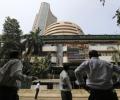
'It is easy to dramatise the events of today, but it is far more important to focus on the fact that we have a radically overvalued financial sector. It is a house of cards.'

Omkeshwar Singh, Head, Rank MF, a mutual fund investment platform, answers your queries.
 © 2026 Rediff.com - Investor Information - Advertise with us - Disclaimer - Privacy Policy - Sitemap - Feedback - About us - Terms of use - Grievances