
Current account deficit, which represents flow of money out of the country barring capital movements, stood at $4.5 billion in the first quarter of previous financial year.

It is increasing the dependence on foreign investments.

Oct-Dec current account deficit narrows

RBI said the continuing sluggishness of the global economy led to some moderation in exports growth and invisible receipts, while import growth accelerated due to the strong domestic recovery.

Rajan said an interest rate cut won't by itself lead to higher economic growth

The improvement in the current account deficit is expected to provide a major reprieve to the government and the Reserve Bank of India which have been battling to prop up the rupee.

Pegs the current account deficit for the current fiscal at 3.5 per cent of the GDP.

India's current account deficit rose sharply in the quarter ended June 30 to $13.7 billion, from $4.5 billion a year ago, due to lower invisible surplus and growth in imports outpacing exports.
India's current account deficit widened to $6.1 billion and the trade deficit increased to $18.5 billion even as exports surged by 17 per cent in the first quarter of the current fiscal.
The current account deficit was estimated at $1.04 billion in January-March. In addition, the surplus on capital account shrunk to $12.96 billion in April-June this year from $17.50 billion in the corresponding period last year due to stock market volatility and lower capital inflows. Net capital inflows fell 23.70 per cent to $13.2 billion during the first quarter this year as foreign institutional investors withdrew $5.18 billion from the country during the first quarter.

India's current account deficit hit a record high 4.8 per cent of gross domestic product in the fiscal year that ended in March

Lead indicators suggest that domestic current account deficit (CAD) is likely to reduce in 2023, while macro-economic stability has received a boost from inflation being brought back to the official tolerance band, according to the Reserve Bank of India's (RBI's) January 2023 Bulletin. "With the merchandise trade deficit reaching an all-time high of $83.5 billion in a quarter, and a rise in net outgo from the income account, the current account deficit increased to 4.4 per cent of GDP in Q2FY23," the State of the Economy article in the bulletin said. "It is noteworthy, however, that the CAD for Q1 was revised down from 2.8 per cent to 2.2 per cent on account of downward adjustment in Customs data.
The Fisc and savings-investment gap lie at the heart of policy responses.

It rose to 5.3 per cent of GDP in the second quarter.

The global demand recovery is likely to stay sluggish.
A wide import-export gap led to India's current account deficit rising to $5.4 billion in the third quarter of 2007-08, despite a higher surplus of earnings from software services, tourism and remittances from abroad.A sharp rise in trade deficit due to rise in imports caused the current account deficit to rise by $1.7 billion from $3.7 billion in the corresponding quarter last year, the Balance of Payment Data released by the Reserve Bank showed.

The investment banking major has hiked its FY'14 CAD forecast to 4.3 per cent of GDP from 3.8 per cent with slowing global recovery likely to delay export turnaround.

The country's current account deficit widened marginally to $9.7 billion or 1.1 per cent of GDP in April-June 2024, as against $8.9 billion or 1 per cent in the year-ago period, Reserve Bank of India said on Monday. The crucial number representing the country's external sector strength has come on the heels of a surplus of $4.6 billion or 0.5 per cent of GDP recorded in the preceding January-March quarter. The Reserve Bank attributed the year-on-year widening in current account deficit to a rise in merchandise trade gap which was recorded at $65.1 billion in Q1 FY25 as compared to $56.7 billion in the year-ago period.
The report noted that export volumes are likely to remain sluggish.

Though trade deficit is expected to 'narrow' in 2013 driven by ongoing curb of gold imports and the gradual removal of fuel subsidies, the deficit will still be 'sizeable', it said.

The current account deficit widened to $10.1 billion or 2.1 per cent of GDP for the September quarter as against 1.2 per cent in the year-ago period.
While euphoria over the Iran deal has waned sharply, the current account deficit has gone into remission due to a collapse in gold demand.
The external current account deficit remains our biggest worry today.
The wide current account deficit is structural in nature and only structural responses will work, says Subir Gokarn.

CAD of a country represents the difference between inflows and outflows of foreign currency.

The CAD is a critical indicator of the macroeconomic health and represents the gap between the overall foreign exchange expended and received in the economy.
Mukesh Ambani said broadband technology is providing access to opportunities irrespective of geographies.
India's current account deficit is narrower than expected at $21.8 billion, or 4.9 per cent of gross domestic product, in the June quarter.

Exuding confidence that current account deficit (CAD) will come down to 3.7 per cent of GDP in 2012-13, Finance Minister P Chidambaram on Monday said overseas capital flows would be sufficient to bridge the gap in inflow and outflow of foreign funds.

India's trade deficit has fallen to 10-month low of $14.9 billion in February on improving exports and a sharp drop in imports.
The CAD was brought under control in 2013-14 after government imposed restrictions on import of gold. Following, this in 2014, certain restrictions were withdrawn.
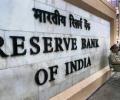
The CAD, which is the difference between inflow and outflow of foreign currency, 'widened from 5.4 per cent in Q2 (July-September) to a record high of 6.7 per cent of GDP in Q3, driven mainly by large trade deficit' RBI said in its report on Balance of Payments.

Government unveiled the much-awaited FTP for 2015-20 on April 1, 2015.
He exuded confidence that the Indian economy will grow at 5.3 per cent in 2013-14.

The widening of the CAD on a year-on-year basis was primarily on account of a higher trade deficit at $50 billion
The lower CAD was primarily on account of a decline in the trade deficit.

The Reserve Bank of India had taken steps to tighten liquidity in a bid to curb volatility in the forex market after the rupee fell to a record low of 61.21 to the dollar on July 8.

The deficit for April-June was at $21.8 billion or 4.9 per cent of GDP.
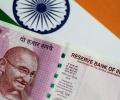
India's current account swung to a deficit for the first time in the current fiscal, with the gap coming at $1.7 billion or 0.2 per cent of the GDP in the December quarter. In the current fiscal, as the pandemic impacted trade, the current account had been in surplus in the previous two quarters, at $15.1 billion and $19 billion, respectively, as per the data on balance of payments released by the RBI on Wednesday. The critical measure of a country's external strength now stands at a surplus of 1.7 per cent of GDP for the first nine months of the fiscal year as against a deficit of 1.2 per cent in the year-ago period. In the December quarter, there was a rise in the merchandise trade deficit to $34.5 billion from $14.8 billion in the preceding quarter, and an increase in net investment income payments.
 © 2026 Rediff.com - Advertise with us - Disclaimer - Privacy Policy - Sitemap - Feedback - About us - Terms of use - Grievances