
UCO Bank mulls AT1 offering to raise Rs 1,000 cr.

The Reserve Bank of India on Friday cut short-term lending rate by 0.25 per cent.

State Bank of India (SBI) may carry out a planned Rs 10,000 crore sale of infrastructure bonds in the market this week, with the securities likely to be of 15-year maturity, sources told Business Standard. SBI, the country's largest bank, had last week said its board had approved the issuance of infrastructure bonds in the current fiscal year. It, however, had not mentioned the maturity of the bonds or when the sale would take place.

Breaking the streak of continuous fall in outstanding amounts, non-resident Indian (NRI) deposits rose for the first time in the financial year to $134.54 billion in October 2022. The figure was $133.67 billion in September. Reserve Bank of India (RBI) data showed that NRI deposits were in shrinking mode for the first six months of FY23. They fell to $133.67 billion in September from $139 billion in March.
All in all, the global economic recovery has been wavering as a result of rising crude oil and commodities prices and as a result, interest rate hike would further affect growth.

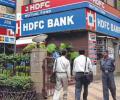
HDFC Bank, the country's largest private-sector lender, lost to competition wholesale loans of around Rs 50,000 crore after it increased interest rates in May, said Chief Financial Officer Srinivasan Vaidyanathan in an analyst call. "There were some customers who were offered lower rates by other market participants. "But we decided not to cut back on our rates," he said while addressing analysts after the announcement of the bank's Q1 earnings.
The Reserve Bank of India on Friday cut short-term lending rate by 0.25 per cent.
But there are challenges, observes Tamal Bandyopadhyay.
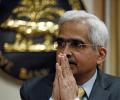
The Reserve Bank on Wednesday increased the benchmark lending rate by 40 basis points (bps) to 4.40 per cent in a bid to contain inflation, which has remained stubbornly above the target zone of 6 per cent for the last three months. The decision follows an unscheduled meeting of the Monetary Policy Committee (MPC), with all six members unanimously voting for a rate hike while maintaining the accommodative stance. While the inflation has remained above the targetted 6 per cent since January, RBI Governor Shaktikanta Das said the inflation print in April is also likely to be high.

Industry has been going through a phase of high interest rates, declining demand and insufficient working capital.

A series that will help clarify financial jargon and empower you to make your own financial decisions.

The RBI's reluctance to cut rates should be seen as a case of inability in the face of inflation.
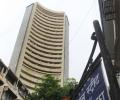
An action on the rate front is unlikely to figure in Rajan's plan for the moment.
RBI goes in for 50-basis point increase in two stages.

Observing that MSME sector plays an important role in the growth of the Indian economy, RBI said the restructuring of the borrower account has been extended by further one year to March 31, 2021.

RBI governor Raghuram Rajan says a cut in cash reserve ration will not at all impact lending rates.
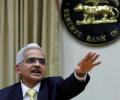
CII suggested the policy measures required to ease the tight liquidity situation by cutting CRR by at least 50 basis points.
The central bank has hiked however reverse repo rate by 0.25 per cent.

The RBI on Wednesday cautioned that while the Indian economy appears capable of weathering the deterioration in geopolitical conditions amid the ongoing Russia-Ukraine war, it faces headwinds from global spillovers from geopolitical tensions, elevated commodity prices and moderating external demand. The RBI, however, did not tinker with the GDP growth projection made in April. It had slashed the GDP growth projection for the fiscal 2022-23 to 7.2 per cent from its earlier forecast of 7.8 per cent.
Reserve Bank of India's move to cut cash reserve ratio has been welcomed by analysts.
The Reserve Bank of India has left bank rate and cash reserve ratio unchanged at 6 per cent and 4.5 per cent, respectively.

CRR stand at 5.5 per cent after a 50 basis points cut in January.
The rate cuts are expected to infuse Rs 80,000 crore into the banking system.
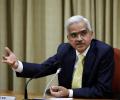
The Reserve Bank of India (RBI) on Friday decided to leave the benchmark interest rate unchanged at 4 per cent but maintained an accommodative stance, implying rate cuts in the future if need arises to support the economy hit by the Covid-19 pandemic.

Services sector activities improved further and touched a five-month high in April driven by a surge in incoming new work orders that boosted business activity and supported a renewed increase in employment, according to a survey. The seasonally adjusted S&P Global India Services PMI Business Activity Index jumped to 57.9 in April, from 53.6 in March, highlighting a sharp rate of expansion that was the fastest since last November amid mounting price pressures. For the ninth straight month, the services sector witnessed an expansion in output.
Liquidity is expected to remain comfortable this week, albeit the rate at which it is available may inch up rather than remaining below 1 per cent.

Bankers on Thursday said the status quo in the monetary stance of the Reserve Bank is largely on expected lines taken after considering the tight liquidity situation and overall cooling inflation numbers.

The Reserve Bank on Friday took steps towards normalisation of liquidity management to pre-pandemic levels, with the introduction of the standing deposit facility (SDF) as the basic tool to absorb excess liquidity, and narrowing the liquidity adjustment facility (LAF) to 0.50 per cent from the 0.90 per cent. Governor Shaktikanta Das said the SDF will be at 3.75 per cent, 0.25 per cent below the repo rate and 0.50 per cent lower than the marginal standing facility (MSF) which helps the banks with funds when required. The SDF has its origins in a 2018 amendment to the RBI Act and is an additional tool for absorbing liquidity without any collateral.
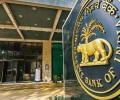
Talks of a merger between HDFC Bank and parent HDFC Ltd had gained steam nearly eight years ago, when the Reserve Bank of India allowed banks to issue long-term bonds to fund infrastructure and affordable housing. At that time, key executives at both entities denied any such proposal. And today, the merger has been officially announced by the two players.
The BSE Bank index was the worst performer among key indices with a steep fall of 463.96 points, or nearly 6.5 per cent at 6,749.78.

The Reserve Bank of India raises Cash Reserve Ratio by 75 basis points at 5.75 per cent. RBI, hwoever, has kept the repo and reverse repo rates unchanged at 4.75 per cent and 3.25 per cent, respectively.

MSS bonds are issued with the objective of providing the central bank with a stock of securities with which it can intervene in the market for managing liquidity. These securities are not issued to meet the government's expenditure.

The RBI has made serious attempts to improve fiscal deficit.

Here are the highlights of the monetary policy announced by RBI governor Shaktikanta Das on Friday.

India's current account deficit is expected to deteriorate in the current fiscal on account of costlier imports and tepid merchandise exports, according to the Finance Ministry's monthly economic review. The review released on Thursday by the ministry also said that global headwinds would continue to pose a downside risk to growth as crude oil and edibles, which have driven inflation in India, remain major imported components in the consumption basket. For the present, it said, "their global prices have softened, as fears of recession have dampened prices somewhat. This would weaken inflationary pressures in India and rein in inflation."

Equities went into a tailspin on Wednesday after the Reserve Bank surprised the market with a mid-cycle rate hike in a bid to tame soaring inflation.

SBI was the top gainer in the Sensex pack, rallying over 10 per cent, followed by Kotak Bank, Dr Reddy's, UltraTech Cement, ITC and HDFC Bank. On the other hand, Axis Bank, Bharti Airtel, ICICI Bank, Maruti and HCL Tech were among the laggards.
