
The domestic cigarette industry is expected to see a 6-8 per cent volume contraction next fiscal following the imposition of additional excise duties and increase in goods and services tax (GST) rates from February 1, Crisil Ratings said on Wednesday.

Bank lending to companies is expected to go up in the coming quarters because the difference in interest rates between corporate bonds and bank loans has narrowed. In addition, recent policy reforms by the Reserve Bank of India (RBI), including allowing domestic banks to do acquisition financing, are expected to give further support to corporate lending, analysts said.

Non-banking financial companies (NBFCs) such as Bajaj Finance, Shriram Finance, Muthoot Finance, and IIFL Finance have regained their growth momentum after losing market share to banks in the post-Covid period. The growth surge is being led by diversified lenders and gold-loan companies while development-finance institutions such as Power Finance Corporation (PFC), REC, and Housing & Urban Development Corporation (Hudco) continue to grow at a slower pace.

Two-wheeler sales volume is expected to grow 5-6 per cent this fiscal, while that of passenger vehicles to see a 2-3 per cent rise, following the GST rates rationalisation on automobiles, according to Crisil Ratings. The GST Council's decision to move to a two-rate structure of 5 per cent and 18 per cent, effective September 22, 2025, is a timely move that will revive demand for automobiles, Crisil Ratings said in a statement.

Credit quality of Indian corporate is expected to be stable in the second half of the current financial year (H2FY26), supported by easing monetary cycle, and declining inflation, coupled with income-tax relief and rationalisation of the goods and service tax (GST) rates, among others.

Ahead of the key meeting called by the steel ministry with the industry captains on Monday to discuss the impact of rising steel imports, companies have raised the issue of cheaper 'substandard' inflows from China, Vietnam, and South Korea, saying they are setting the benchmark for domestic prices and squeezing the profitability of Indian producers.

The imposition of a 100 per cent tariff by the US on imports of branded and patented pharmaceutical products starting October 1 may not significantly hurt Indian drug makers, with Sun Pharma being exposed to some headline risk but with limited earnings impact, according to analysts. Among Indian companies, only Sun Pharma has sizeable sales from patented drugs in the US (about 17 per cent of 2024-25 revenue), HSBC Global Investment Research said in a report.

CRISIL Ratings on Thursday placed the long-term bank facilities and debt instruments of Vedanta Limited under 'rating watch with negative implications', the agency said in a press statement. CRISIL said the ratings may also be downgraded if Vedanta is not able to bring down its end-of-year financial leverage to below 2.7 times through asset monetisation, which is to be completed by December this year.

India's 18 largest states, accounting for over 90 per cent of the country's gross state domestic product (GSDP), are likely to record a marginal uptick in revenue growth to 7-9 per cent this year, from 6.6 per cent clocked in 2024-25 (FY25), rating agency Crisil said in a report on Tuesday. This growth, slower than the decadal average of about 10 per cent, would lift these states' cumulative revenue to around Rs 40 trillion in FY26 from Rs 37.26 trillion in FY25.

Revenues from Bangladeshi patients have declined by 30% to 35% in 2024-2025. Bangladesh typically accounts for 70% to 75% of all medical visas issued by India.

The sweeping tariffs proposed across sectors by US President Donald Trump are scheduled to be imposed starting April 2, with most analysts worried about their impact on companies, and in turn the financial markets. Recently, the US administration signaled that it will impose sectoral tariffs on energy, pharmaceuticals, semiconductors, agriculture, copper, and lumber.

Backing embattled Adani Group, rating agency CRISIL Ratings on Friday said the conglomerate has sufficient liquidity and operational cash flows to meet debt obligations and committed capex and that there has been no negative actions so far by lenders and investors following the US indictment of group founder chairman. The Adani Group, which has the flexibility to reduce certain discretionary capital expenditure (capex) depending on developments in financial markets and future capital availability, has a healthy Ebitda and cash balance that reduces its dependence on external debt to sustain operations, it said in a bulletin.

Rating agency, Crisil, on Friday said that the proposed investment towards 3G auctions are unlikely to impact credit profiles of Crisil-rated telecom operators.

Credit-focused SIFs with lower minimum investment thresholds can provide a more practical option for investors with higher risk appetite, suggests Subodh Rai.

'With tuition fees for international students rising, education loans have become critical for bridging the gap between savings, scholarship, and full cost.'

Truck movements across the India-Bangladesh border are on the rise, with increasing rentals signalling a trade recovery between the two South Asian nations. Yet, geopolitical tension looms large, with Bangladesh now under an interim government for nearly two months.

The net leasing of Grade-A commercial office space in India will stagnate this financial year at 32-34 million square feet, with global uncertainties brewing caution among key tenant categories, according to the latest Crisil Ratings report. Major seven cities in India - Bengaluru, Chennai, Hyderabad, Kolkata, Mumbai Metropolitan Region (MMR), National Capital Region (NCR) and Pune - had Grade-A office space with an operational stock of around 705 million square feet as of March 2023. India's commercial office space is dominated by technology companies, with information technology (IT) and IT-enabled services (ITeS) companies occupying 42-45 per cent of the operational stock.

The prospective bidders of Haldiram Snacks Foods (HSFPL), a leading food firm, have sought clarity on the ownership of the brand as it is currently owned by different family factions. The Delhi and Nagpur families have decided to merge their operations and formed a joint venture to sell part of their stake. On the other hand, the Kolkata family runs its separate, independent operations. Bankers said prospective bidders of the company do not want any confusion over the brand in future. They have sought clarity over usage of the brand.

The Indian IT services sector is staring at a second consecutive year of muted revenue growth due to modest increase in tech spends in Europe and the US, a domestic rating agency said on Wednesday. Crisil Ratings said it expects the sector to grow at 5-7 per cent in FY25, after a growth of 6 per cent estimated to have been achieved in FY24. The overall industry size is pegged at $250 billion and it creates over 50 lakh direct jobs.

IT services firms' revenue growth in the fourth quarter will be affected by macro-driven headwinds, lower working-days, and the fact of the three-month period being low season. Analysts are expecting FY24 growth to be muted. Revenue growth will decline 600-700 basis points to 10-12 per cent for FY24, said a CRISIL Ratings report. The 10-12 per cent growth rate is a fall from the 18-20 per cent expected in FY23 and around 19 per cent growth in FY22, the highest in eight years, said the CRISIL Ratings report.
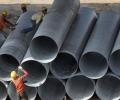
Strong demand in the domestic market, coupled with an increase in raw material prices, is pushing up steel prices. According to SteelMint, a market intelligence and price reporting firm, the list price of flat steel has seen an increase of Rs 750-2,000 per tonne for October deliveries. The long steel price witnessed an increase of Rs 1,500 per tonne towards the end of September.

Crisil Ratings on Wednesday projected India's GDP growth at 6.8 per cent in the next fiscal and said the country will become an upper middle-income nation by 2031 with the economy doubling to $7 trillion. In its India Outlook report, Crisil said the Indian economy will take support from domestic structural reforms and cyclical levers and can retain -- perhaps even improve -- its growth prospects to become the third largest economy by 2031. "After a better-than-expected 7.6 per cent this fiscal, India's real GDP growth will likely moderate to 6.8 per cent in fiscal 2025," said the Crisil India Outlook report.

Any government support or incentive to help exporters deal with high freight and insurance costs is unlikely.

Tyre stocks have been on a tear over the past six months, with average returns exceeding 45 per cent. Except for Apollo Tyres, which has seen a slight correction in the last month and a half, limiting its gains to 16 per cent, listed peers such as MRF, CEAT Tyres (formerly Cavi Elettrici e Affini Torino), and JK Tyre & Industries have delivered returns exceeding 30 per cent during this period. Production-related constraints and sluggish demand in Europe, where sales are expected to remain flat, coupled with high valuations, have contributed to Apollo Tyres' underperformance. The tyre sector's gains can be attributed to robust growth trends driven by the replacement market, which constitutes more than two-thirds of sales.

Domestic commercial vehicle sales volume is expected to grow 9-11 per cent in FY24 driven by medium and heavy commercial vehicles and an estimated economic growth of around 6 per cent, rating agency CRISIL said on Monday. Besides, an increased allocation to infrastructure spending in the Union Budget for next fiscal year will support demand, it said. This would be the third consecutive year of growth in the domestic CV industry, according to CRISIL.

The Reserve Bank of India's (RBI's) decision to withdraw the incremental cash reserve ratio (I-CRR) is expected to benefit banks during the festival season. They are likely to increase deposit rates by up to 25 basis points (bps) in select maturity buckets. The rise in demand for funds to cover tax payments and meet quarter-end business targets could influence rate decisions by banks, according to bankers and money market executives.

Following are comments from economists at leading financial institutions, banks and rating agencies on the interim Budget:
"We will raise Rs 300 crore via bonds of two-, three- and five-year tenures. This will be our maiden bond issuance and is part of our effort to widen funding sources," says Vimal Bhandari, executive vice-chairman and chief executive officer (CEO), Arka Fincap. The firm, a subsidiary of Kirloskar Oil, is only five years old and small (assets of around Rs 5,000 crore with an "AA" rating), but the response to this float will be closely watched: It would be the first by a non-banking finance company (NBFC) after Mint Road upped the risk weights on bank exposures to them by 25 percentage points. The move by the Reserve Bank of India (RBI) has caught NBFCs off guard even though the issue had been flagged by Governor Shaktikanta Das with their corner-room occupants (and that of banks) in July and August 2023 - on consumer credit and the dependency on bank borrowings.

Vedanta Limited (Vedanta) helping its parent and group holding company Vedanta Resources to deleverage its balance sheet has started to strain its balance sheet. Vedanta's gross debt (consolidated) was up 24.3 per cent year-on-year (YoY) in FY23 and reached a six-year high of Rs 66,628 crore by the end of March. Similarly, its net debt went up 20.3 per cent YoY to Rs 45,706 crore at the end of FY23, up from Rs 38,228 crore a year ago; it was the highest since FY20.

'Interim Budget has ignited the entrepreneurial spirit.'

Analysts are divided on their retail price inflation forecast, with some saying the first quarter numbers will overshoot the RBI target by as much as 60 bps while others are softer in their estimate. Consumer price inflation retreated from its 15-month peak of 7.4 per cent in July to 6.8 per cent in August, much lower than the market expectations, despite vegetable prices remaining elevated at 26.1 per cent. Food inflation eased to 9.9 per cent from 11.5 per cent, led by some cooling of inflation in vegetables, cereals, pulses and milk.

Bank credit is likely to grow at a four-year high of 11-12 per cent in fiscal 2023, on the back of better economic growth and budgetary support from the government, according to a report. In the fiscal ended March 2022, bank advances have likely grown at 9-10 per cent. "Healthy economic growth and budgetary support from the government should lift bank credit growth by 200-300 basis points to 11-12 per cent this fiscal," Crisil Ratings said in the report. The higher credit growth expectation is also supported by the improved resilience of the banking system, it added.

The duty hike on cigarettes by 16 per cent announced in the Union Budget 2023-24 would have a nominal impact of around 7-12 paise per stick across cigarette categories, according to experts. This upward revision in National Calamity Contingent Duty (NCCD) would have negligible impact on smokers and the companies could easily absorb the shock as it may not also have any resultant impact on margins, they said. Finance Minister Nirmala Sitharama in the Union Budget for 2023-24 on Wednesday proposed to revise and increase the duty on cigarettes to about 16 per cent.
Vedanta group chairman, Anil Agarwal, 69, is well known for his business journey from a scrap dealer from Bihar to a London-based globe-girdling metal and oil and gas conglomerate with revenues of $19 billion. Now his abilities to keep his group from over-leveraging itself will be put to the test. Over the years, Agarwal, now based in London, set up the conglomerate via acquiring iron ore producer Sesa Goa, Cairn's oil producing assets in India, and Electrosteel Steel.

Led by Trent, which hit its lifetime-high recently, apparel retailers have gained between 10 per cent and 36 per cent over the past three weeks. Given the network of physical stores, these stocks shall be major beneficiaries of the unlock theme, with most states doing away with Covid restrictions. Amid improving footfall, analysts expect the sector to post double-digit growth in FY23.

Global rating agency S&P on Tuesday said even though the US and the Euro zone are headed to recession, India is unlikely to face the impact given the "not so coupled" nature of its economy with the global economy. "Indian economy is a lot decoupled from the global economy than we normally think of, given its large domestic demand, even though you (India) are a net importer of energy. "But you have enough forex reserves on one hand and your companies have managed to maintain healthy balance sheets," Paul F Gruenwald, S&P global chief economist and managing director, told reporters in Mumbai.
Corporate India's credit quality showed a sharp improvement in the second half of FY22, but high input prices and withdrawal of pandemic-related relief measures can pose pressures in the new year, rating agencies said on Friday. Crisil Ratings, which rates a large number of financial sector entities, reported an improvement in the credit ratio -- the number of upgrades to downgrade -- to 5.04 times in the second half of this financial year, from the 2.96 per cent in the first half of the fiscal. It attributed the improvement to a sustained rebound in demand, which lifted revenues of most sectors to pre-pandemic levels and proactive relief measures by the government that cushioned the pandemic blow.

A vast majority of borrowers are in the essential services' supply chain with tiny and micro businesses, and this has sprung back.

On November 12, 2021, the Reserve Bank of India (RBI) decided to ring in uniformity in asset classification and income recognition across all lending institutions. Shadow banks, or non-banking financial companies (NBFCs), like commercial banks, are to test non-performing assets (NPAs) on a daily basis and upgrade them to "standard assets" only when interest and principal arrears are settled by borrowers. This is going to create all manner of headaches for shadow banks and their clientele. Says Y S Chakravarti, managing director and chief executive officer (CEO), Shriram City Union Finance: "NPA levels will go up, especially of small borrowers.

Crisil Ratings on Wednesday said a broad-based recovery is on for India Inc currently, and upgraded its credit quality outlook to 'positive' from the earlier 'cautiously optimistic'. The rating agency said the credit ratio, which illustrates the number of upgrades to downgrades, rose to over 2.5 times in the first four months of the fiscal, as compared to 1.33 times in the second half of FY21, it said in a statement. The rating agency said it has also done a study of 43 sectors, excluding the financial sector, accounting for 75 per cent of the overall Rs 36 lakh crore in outstanding debt, which shows that the current recovery is broad-based.
 © 2026 Rediff.com - Investor Information - Advertise with us - Disclaimer - Privacy Policy - Sitemap - Feedback - About us - Terms of use - Grievances