
Understanding tax residency rules and maintaining proper documentation is imperative to ensure smooth tax compliance.

Has Vijay Shekhar Sharma given up on the bank? For now, he seems to be on a save-OCL mission. The bank will face its logical end, observes Tamal Bandopadhyay.

For the time being, digital lending remains a grey area, notes Tamal Bandyopadhyay.

'People try to repay the BIGGEST LOAN first. Actually, you should repay the most expensive loan first.'

Ultimately, the choice between no-cost EMI and BNPL depends on an individual's financial situation, preferences, and ability to manage repayments responsibly.

'Most of the bot attacks have originated from outside India.' 'Our firewalls are resilient and withstood the attacks.'

As the new Tax Collection at Source (TCS) on foreign remittances is set to become applicable from October 1, travel agents' body TAAI has made a last-minute plea to the government, urging them to abolish the decision or defer its implementation until the next fiscal year to allow discussions on overseas tour packages. The government has raised the TCS on foreign remittances under the Liberalised Remittance Scheme (LRS) from 5 per cent to 20 per cent. This will be applicable to international travel, sending money abroad and other remittances.

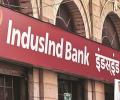
Despite a largely stable December quarter, investors booked profit in shares of IndusInd Bank (IIB) as an increase in slippages took them by surprise. Analysts, on their part, believe investors may, now, wait for actual delivery on slippage decline, potentially limiting near-term upside. "The management has indicated that corporate slippages (from legacy stressed book) have ended and inch up in consumer finance slippages was more one-off, and should meaningfully improve Q4FY24 onwards.

The Reserve Bank of India's (RBI's) move to ban Mastercard from issuing new cards for not complying with the local data storage guidelines may hit five private banks, a non-bank lender, and a major card-issuing company. The impact is expected to be felt for a few months as these players transition to other card networks. According to Nomura Research, RBL Bank, YES Bank, and Bajaj Finserv are the ones most impacted by the ban as all their credit card schemes are allied to Mastercard. Among others, IndusInd Bank, Axis Bank and ICICI Bank have 35-40 per cent of their credit card schemes tied to Mastercard, the report said.

Concerned over the practice of banks and Non-Banking Financial Companies (NBFCs) using penal interest as a revenue enhancement tool, the Reserve Bank on Friday came out with modified norms, under which lenders would be able to levy only "reasonable" penal charges in case of default in repayment of loans. The banks and other lending institutions will not be allowed to levy penal interest with effect from January 1, 2024, the RBI said in its notification on 'Fair Lending Practice-Penal Charges in Loan Accounts'. "Penalty, if charged, for non-compliance of material terms and conditions of loan contract by the borrower shall be treated as 'penal charges' and shall not be levied in the form of 'penal interest' that is added to the rate of interest charged on the advances," RBI said in a notification.

Why did the company zero in on RBL Bank to understand the business of banking? While the M&M investors heaved a sigh of relief, one gentleman must have been all smiles after this, RBL Bank MD and CEO R Subramaniakumar, notes Tamal Bandyopadhyay.

One can't run away from death so this is the time that YOU must create your own death file. P V Subramanyam explains what you must know about this most essential financial tool.

ICICI Bank reported good results for the October-December 2023 quarter (Q3), with 24 per cent year-on-year (Y-o-Y) growth in profit after tax (PAT). Net interest margin (NIM) dropped 10 bps quarter-on-quarter (Q-o-Q) to 4.43 per cent. Credit growth was at 19 per cent Y-o-Y (4 per cent Q-o-Q), while deposit growth was at 19 per cent Y-o-Y (3 per cent Q-o-Q).
In one of its recent announcements, the Reserve Bank of India announced that come August all online credit and debit transactions will need to go through one more step before they can be completed successfully.

The Reserve Bank on Thursday asked card companies not to issue unsolicited credit cards or upgrade an existing card without the explicit consent of the customer, failing which they will have to pay double the billed amount as penalty. It also asked card issuers and third-party agents not to resort to intimidation or harassment during recovery of dues from customers. In its master directions on credit card and debit card issuance, the RBI said "the issue of unsolicited cards/upgradation is strictly prohibited".

After the income tax department indicated that the Tamilnad Mercantile Bank (TMB) did not provide the complete details of transactions worth up to Rs 3,610 crore, sources told Business Standard that this was due to a technical glitch. The bank has now submitted all the required documents in the past few days. According to the Income Tax (I-T) department, TMB had not submitted a statement of financial transactions (SFT) pertaining to cash deposits of around Rs 2,700 crore involving more than 10,000 accounts.
'We are committed to achieving the targets we had outlined.'

During the trip, check your bank account and credit card statements regularly for unauthorised transactions.

The Reserve Bank of India's (RBI's) latest order on unsecured loans is set to hit the banking sector's growth in the near-term, cautioned analysts, as they see banks slowing down on aggressive retail lending. Besides, cost of funds for non-banking finance companies (NBFC) is expected to inch up as banks will pass on higher capital charge to NBFCs. "We believe the fallout of the RBI action will be mainly on growth, given the rising dependence on unsecured retail loans and lending to NBFCs for growth.

Key lending rate (repo) raised by 50 basis points to 4.9 per cent; 2nd increase in 5 weeks

New Year resolutions often focus on lofty ambitions, say, shedding 20 kg within six months, without considering processes. What we may be lacking is a concrete plan, observes Kumar Abishek.

Lenders in India, comprising banks and finance companies, anticipate robust growth in retail credit during the upcoming festival season, stretching from September to December 2023. This expectation is based on resilient demand, government initiatives, and elections in key states.


National Payments Corporation of India (NPCI) on Wednesday said there is no charge for the bank account to bank account-based UPI payments or normal UPI payments.

'Look not just at the interest rate but also the processing fee.'

The Reserve Bank on Thursday instructed banks and other financial institutions to ensure cross-border as well as domestic wire transfers contain complete information about the originator and beneficiary. The central bank has updated instructions in the Master Direction on Know Your Customer (KYC) related to wire transfers and also aligned the same with the relevant recommendation of the Financial Action Task Force (FATF). "All cross-border wire transfers shall be accompanied by accurate, complete, and meaningful originator and beneficiary information...," as per the updated instructions in the Master Direction.
With biometrics, payments may get easier and more secure.

Citibank on Wednesday joined the list of foreign banks that have exited retail banking business in India. Mumbai-based Axis Bank completed acquisition of Citigroup's consumer business for Rs 11,603 crore. Under the deal, Axis acquired consumer banking businesses of Citibank India, which includes credit cards, retail banking, wealth management and consumer loans.
Mayank Goyal, founder and CEO, moneyHOP, will answer queries related to how to best manage your money while travelling internationally.

Axis Bank's acquisition of Citibank's consumer finance business for Rs 12,325 crore - the second biggest deal in the Indian banking sector - is seen as a good deal at a good price. The acquisition enables Axis Bank to close the gap with competition in some key segments such as credit cards. At the same time, there are some key issues that are crucial for the deal's success, apart from the fact that it will take some time for Axis to reap the full harvest of its investment.

Lok Sabha on Friday passed the Finance Bill 2023 with 64 official amendments, including the one that seeks withdrawal of long-term tax benefits on certain categories of debt mutual funds and another for setting up the GST Appelate Tribunal. The Finance Bill that gives effect to tax proposals for fiscal year starting April 1 was passed without a discussion amidst ruckus by opposition members demanding a JPC (Joint Parliamentary Committee) probe into the allegations against the Adani group of companies. While moving the bill for passage and consideration, finance minister Nirmala Sitharaman also announced the setting up of a committee under finance secretary to look into pension issues of government employees.

'I ordered puffs, I got them packed, I went to the counter and that's when I actually got nervous because I had my credit card, I didn't have cash. I gave the guy my credit card and thought 'This is it, I am gone'. I actually had the security number on my phone ready to dial, like immediately if something happens I will call him straightaway.'

Come August 1, it will be compulsory to have a personal identification number (PIN)/password for all online credit and debit card transactions in the country.
The cost of acquiring new cardholders is quite low for domestic card issuers by international standards, but net credit losses are comparatively high, a study commissioned by the Indian Cards Council (ICC) revealed.

Sujata Ahlawat, Senior Vice President and Head of Direct-to-Consumer Interactive, TransUnion CIBIL, offers a quick glimpse into what a CIBIL Score is, the factors that impact it, and tips for maintaining a healthy score.
Unified Payments Interface (UPI) clocked over 6 billion transactions in July: the highest ever by India's flagship digital payments platform since its inception in 2016. UPI reported 6.28 billion transactions amounting to Rs 10.62 trillion, according to data released by the National Payments Corporation of India (NPCI), which operates the platform. Month-on-month, the volume of transactions was up 7.16 per cent and value increased 4.76 per cent.
 © 2026 Rediff.com - Investor Information - Advertise with us - Disclaimer - Privacy Policy - Sitemap - Feedback - About us - Terms of use - Grievances