
The Chandrayaan-2 mission has made the first-ever observation of the effects of the Sun's Coronal Mass Ejection (CME) on the Moon using its onboard scientific instruments. This observation would help understand the lunar exosphere and the impact of space weather on its surface.
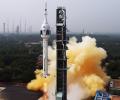
ISRO Chairman V Narayanan announces ambitious space program goals, including landing Indians on the Moon by 2040 and launching the 'Gaganyaan' mission in 2027. The agency is also working on a national space station and uncrewed missions.

According to ISRO officials, the spacecraft will be placed in a halo orbit around Lagrange point 1 (L1) of the Sun-Earth system, about 1.5 million km from the Earth. The L1 point is about one per cent of the total distance between the Earth and the Sun.

The Indian Space Research Organisation (ISRO) will perform the final manoeuvre on Saturday to inject Aditya-L1 spacecraft -- the first space-based Indian observatory to study the Sun -- into its final destination orbit, some 1.5 million kilometres from the Earth.

Aditya-L1, the first space-based Indian observatory to study the Sun, is getting ready for its launch soon, ISRO said on Monday.
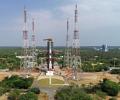
The Aditya-L1 mission carries seven scientific payloads to carry out the study.

The Northern Lights, also called Aurora Borealis, illuminated the night sky of Norway, Russia and Iceland.

The Lagrange point 1 (L1) of the Sun-Earth system is about 1.5 million km from the Earth. It is about one per cent of the total distance between the Earth and the Sun.
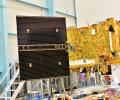
Aditya-L1 spacecraft is designed for providing remote observations of the solar corona and in situ observations of the solar wind at L1 (Sun-Earth Lagrangian point), which is about 1.5 million kilometres from the earth.

Scientists expect to get new information about the past, present and future of the Sun after analysing the data that will be collected by India's first solar mission Aditya-L1, scheduled to be launched by Indian Space Research Organisation (ISRO) on September 2.

Aditya-L1 will be launched by PSLV-C57 rocket on September 2 at 11:50 am. It carries seven payloads to study the Sun, four of which will observe the light from the Sun and the remaining three will measure insitu parameters of the plasma and magnetic fields.

In this process, millions and millions of tons of solar materials are thrown into the interplanetary space, he said, adding these CMEs can travel at a speed of approximately 3,000 km per second.
Days after landing on the Moon, India will aim for the Sun on Saturday with its maiden solar expedition, as ISRO's trusted PSLV will carry the Aditya L1 mission on a 125-day voyage to the Sun.

A satellite placed in the halo orbit around the first Lagrangian point (L1) of the Sun-Earth system has the major advantage of continuously viewing the Sun without any occultation/eclipses, the IIA said.

Shifting the focus to its next space odyssey after successfully placing a lander on the moon's uncharted South Pole region, the Indian Space Research Organisation (ISRO) chief S Somanath on Saturday said that the country's maiden solar mission Aditya-L1 is ready and will be launched in the first week of September.

The successful launch of the maiden solar mission of the Indian Space Research Organisation came on the heels of the historic lunar landing mission - Chandrayaan-3.

National Aeronautics and Space Administration's newest solar observatory has captured a colossal coronal mass ejection erupting from the sun in extraordinary detail. According to the space agency, during the time of the ejection observed on May 9, a curtain of solar material erupted outwards at speeds of 1.5 million miles per hour.

As India's first solar exploration satellite reached space, four Kerala public sector undertakings, including Keltron, have reason to be delighted as they too have contributed to this achievement by the country. Various products indigenously developed and manufactured by the four PSUs - Keltron, Steel and Industrial Forgings Limited (SIFL), Travancore Cochin Chemicals (TCC) and Kerala Automobiles Ltd (KAL) - have been used in the Aditya L1 mission. This milestone achieved by the PSUs was highlighted by state Industries Minister P Rajeev in a Facebook post.

Aditya-L1 is the first Indian space-based observatory that will study the Sun from a halo orbit around the first Sun-Earth Lagrangian point (L1), which is located roughly 1.5 million km from the Earth.

Aditya L1, the first space based Indian mission to study the Sun underwent the second earth-bound manoeuvre successfully, during the early hours on Tuesday, Indian Space Research Organisation (ISRO) said.

A strong follow-up solar flare, which cropped up on Friday, just days after the Sun launched the biggest coronal mass ejection seen in almost a decade, delivered a powerful radiation punch to Earth's magnetic field even though it was targetted away from our planet, a new study including Indian origin scientist has revealed.
A monster solar storm of charged particles that erupted two days ago on Thursday hit the Earth, which could disrupt power grids, satellite navigation and flights.

The Trans-Lagrangian Point 1 Insertion manoeuvre marks the beginning of the spacecraft's about 110-day trajectory to the destination around the L1 Lagrange point, a balanced gravitational location between the Earth and the Sun.
The magnetic observatory there recorded the geo-effect of the Coronal Mass Ejection of the 'extreme' solar flare that erupted from giant sunspot number 486, within 19 hours of its occurrence.
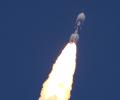
India's first solar mission, if successful, will showcase ISRO's ability to explore the cosmos, explains Kumar Abishek.

A NASA spacecraft has captured a solar filament which appears as a dark line snaked across the lower half of the sun.

The Royal Observatory Greenwich shortlisted 34 images for its Astronomy Photographer Of The Year 2023 competition from thousands of entries received from all over the world.

The Royal Observatory Greenwich has announced the shortlisted images of the 2022 Astronomy Photographer of the Year!

Celestial views of the Milky Way, Northern Lights, and comets hurtling through space are just some of the incredible images to have made the shortlist for the 2015 Insight Astronomy Photographer of the Year competition.
