
India's main inflation measure, the Consumer Price Index (CPI), is set for another major update, even though it has been in its current form for only about 15 years.

A new poll indicates that President Donald Trump's approval rating is suffering as economic anxieties and the rising cost of living weigh heavily on US voters, revealing deep political divides and widespread dissatisfaction with the government.

If the conflict continues for a prolonged period, State-run oil companies may have to review retail fuel prices accordingly.

Indian refiners are negotiating for additional crude cargoes from the US, Russia, and West Africa to ensure adequate supplies amid Middle East tensions. Refineries are maintaining normal processing rates and deferring maintenance to build reserves. The move comes as conflict impacts tanker movements through the Strait of Hormuz, a key energy transit route.

After a 25 basis point rate cut in December, the RBI on Friday decided to pause on the policy rate front amid geopolitical uncertainties.

India's retail inflation, which has stayed below the Reserve Bank of India's (RBI's) 4 per cent target in recent times, is likely to remain benign in the coming months, RBI Deputy Governor Poonam Gupta said in a speech, on Friday, which was uploaded on the central bank's website on Tuesday. Headline inflation dipped to multi-year lows of around 1.5-2.8 per cent in late 2025.

Gold prices fell by Rs 400 to Rs 1.6 lakh per 10 grams in the national capital on Thursday amid weak global trends and receding expectations of an interest rate cut by the US Federal Reserve.
Retail inflation stood at 2.75 per cent in January under the new series of All India Consumer Price Index (CPI), with 2024 as the base year, released on Thursday.

The IMF on Monday raised India's growth projection to 7.3 per cent for fiscal 2025-26, up 0.7 percentage point from its October forecast, on the back of better-than-expected performance of the economy. The Washington-headquartered multilateral lending agency has also revised India's Gross Domestic Product (GDP) growth forecast to 6.4 per cent for fiscal year 2026-27 beginning April 1, 2026, from its earlier estimate of 6.2 per cent.

Any reduction on purifiers would need consensus among state finance ministers.
Retail inflation rose to a three-month high of 1.33 per cent in December 2025 mainly due to higher prices of kitchen essentials, including vegetables and protein-rich items.

Shrugging off concerns over the depreciation of rupee, the RBI has cut interest rate by 25 basis points to 5.25 per cent in a bid to further bolster economic growth, which rose to a six-quarter high of 8.2 per cent in the second quarter of the current financial year.

Shrugging off concerns over the depreciation of rupee, the RBI has cut interest rate by 25 basis points to 5.25 per cent in a bid to further bolster economic growth, which rose to a six-quarter high of 8.2 per cent in the second quarter of the current financial year.

From the 30-Sensex firms, Bharat Electronics, Power Grid, Tata Motors Passenger Vehicles, Asian Paints, Reliance Industries, and Bajaj Finserv were among the biggest gainers. However, HCL Tech, Kotak Mahindra Bank, ICICI Bank, and Sun Pharma were the laggards.

Retail inflation inched up to 0.71 per cent in November on rising prices of vegetables, protein-rich items, and fuel, government data showed on Friday. The consumer price index (CPI)-based retail inflation had fallen to a record low of 0.25 per cent in October, mainly due to lower prices helped by GST rate cuts and a favourable base.

WPI inflation data, trading activity of foreign investors and global cues would dictate trends in the stock market this week, analysts said.
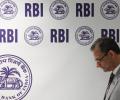
The core dilemma remains: Why provide further stimulus to an economy that is already booming at an 8 per cent growth rate? asks Rajeswari Sengupta.

Fitch Ratings on Thursday raised India's GDP growth forecast for the current fiscal to 7.4 per cent, from 6.9 per cent, on increased consumer spending and improved sentiment boosted by GST reforms.

Retail inflation slipped to a multi-year low of 0.25 per cent in October, driven by the impact of the GST rate cut and subdued prices of vegetables and fruits, government data showed on Wednesday.

Moody's Ratings on Tuesday said tax cuts in the current fiscal has dented India's revenue growth, leaving less scope for fiscal policy support for the economy.
Notwithstanding global headwinds, the Indian economy saw further momentum in October on the back of goods and services tax (GST) rate rationalisation and festival spending, as indicated by high-frequency indicators, the Reserve Bank of India's (RBI's) monthly State of the Economy report said.

President Donald Trump on Friday signed an executive order retroactively lowering tariffs on a range of agricultural imports, including beef, tomatoes, coffee and bananas, with the change taking effect from November 20, CNN reported.

The consumer price index (CPI)-based inflation hitting an all-time low in October would encourage the six-member monetary policy committee (MPC) of the Reserve Bank of India (RBI) to cut the policy repo rate in its upcoming December 3-5 meeting. However, the July-September GDP growth, expected to be above 7 per cent, may act as a deterrent.

Inflation data, quarterly earnings and global trends will be the major driving factors for stock markets this week, analysts said. Moreover, the trading activity of foreign investors would also influence the equity market trends.

Wholesale price inflation (WPI) fell to (-) 1 .21 per cent in October, driven by a decline in prices of food articles like pulses and vegetables, as well as lower fuel and manufactured items' prices, government data showed on Friday.

The best way for India to prepare is by preserving and strengthening the RBI's hard-won credibility, point out Rajeswari Sengupta and Vaishali Garga.

The Reserve Bank of India (RBI) on Wednesday kept its policy interest rate unchanged at 5.5 per cent for the second consecutive time, citing concerns over tariff uncertainties.

The Reserve Bank on Wednesday revised upward its growth estimates for the current fiscal year to 6.8 per cent and lowered its inflation projection to 2.6 per cent based on an above-normal monsoon and the rationalisation of GST rates.
Retail inflation slipped to 1.54 per cent in September from 2.07 per cent in the preceding month mainly due to subdued prices of food items, including vegetables and pulses, according to government data released on Monday. The consumer price index (CPI) based inflation was 5.49 per cent in September 2024.

Amazon India unveiled a dedicated marketplace section highlighting products with reduced tax burdens as the goods and services tax (GST) restructuring took effect on September 22, positioning the ecommerce giant to capitalise on lower consumer prices across electronics, appliances, and other categories. Its rival Flipkart, too, has rolled out its own GST-focused storefront, the GST Bachat Utsav, aimed at helping shoppers maximise benefits from the new tax rates across multiple categories.
Retail inflation slipped to an eight-year low of 1.55 per cent in July mainly due to subdued prices of food items, including vegetables and cereals, according to government data released on Tuesday.

Retail inflation in August rose slightly to 2.07 per cent from 1.61 per cent in the preceding month, mainly due to increase in prices of vegetables, meat and fish, according to a government data released on Friday.

While the economy will wait for a rate cut in December, the banking industry should be happy with the wave of liberalisation -- a big push for growth in bank credit, points out Tamal Bandyopadhyay.

As a protege of Shinzo Abe, Takaichi is expected to scale bilateral ties much higher. Trade and investment shall grow. People-to-people contacts shall be scaled up, points out Dr Rajaram Panda.

India's net revenues from the Goods and Services Tax (GST) rose at a three-month high pace of 10.7 per cent in August even as growth in gross collections slowed to 6.5 per cent from 7.5 per cent in the previous month, thanks to a nearly 20 per cent decline in refunds to taxpayers during the month.

Since items in the 12% category account for only about 5% of total GST, the additional boost to consumption may not be significant, points out M Govinda Rao.

Uncertainties over the impact of the United States' (US') tariffs on India, along with the ongoing transmission of past rate cuts, prompted the members of the Reserve Bank of India's Monetary Policy Committee (MPC) to maintain the status quo during the August meeting, the minutes showed. While some of the external members highlighted their concern over growth, the internal members cited the one-year headline inflation rate overshooting the 4 per cent target.

The appliance makers expect a good churn in the festive season, led by the government's proposal to reduce the GST slab on air-conditioners from the current 28 per cent to 18 per cent, which will reduce the price from Rs 1,500 to Rs 2,500 depending on the models.

The proposed reforms in goods and services tax (GST) announced by the government last week, coupled with the eighth pay commission dole-out, is likely to push consumption-driven stocks - such as air conditioners (ACs), select automobiles, fast-moving consumer goods (FMCG), retail, and counters of quick-service restaurants (QSRs) - into higher orbit over the next few months, believe analysts.

For the time being, the RBI is done with the cuts. A cut in October, which many are still predicting, is not certain. Of course, if growth nosedives, the script will be different, expects Tamal Bandyopadhyay.
 © 2026 Rediff.com - Investor Information - Advertise with us - Disclaimer - Privacy Policy - Sitemap - Feedback - About us - Terms of use - Grievances