
China has deployed 72 "robot employees" across Beijing's municipal parks to perform various tasks like cleaning, patrolling, guiding visitors, and pest control. This initiative is part of China's "Robot Plus" strategy, driven by an ageing population and labour shortages, and showcases the growing domestic service robot market. These AI-powered robots enhance efficiency and visitor experience in popular attractions like the Summer Palace and Zizhuyuan Park.

A survey conducted by Oracle and Future Workplace revealed that 82% employees think robots can do things better than their managers.

In a double-dose bid to boost growth and employment prospects, the Union Cabinet on Tuesday approved a Rs 2.07 trillion outlay for a research development and innovation (RDI) Scheme to fund private sector innovations, and an employment-linked incentive (ELI) to create over 35 million new jobs over the next two years.

Robotics is making inroads into HR, but will not replace the function any time soon, experts say.

For Make in India's success, Modi govt msut remove policy paralysis.
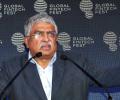
'Binary fission will happen -- startups will lead to more startups.'

An average of 30-40 per cent automation is standard across all big automobile plants in the country
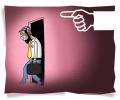
With automation taking place at a much faster pace across industries especially in the tech space, domestic software firms that employee over 16 million are set to slash headcounts by a massive 3 million by 2022, which will help them save a whopping $100 billion mostly in salaries annually, says a report. The domestic IT sector employs around 16 million, of them around 9 million are employed in low-skilled services and BPO roles, according to Nasscom. Of these 9 million low-skilled services and BPO roles, 30 per cent or around 3 million will be lost by 2022, principally driven by the impact of robot process automation or RPA. Roughly 0.7 million roles are expected to be replaced by RPA alone and the rest due to other technological upgrades and upskilling by the domestic IT players, while it the RPA will have the worst impact in the US with a loss of almost 1 million jobs, according to a Bank of America report on Wednesday.

Tokyo -- the songs Japan, Love In Tokyo and Sayonara from the 1966 Hindi film automatically pop up in the mind -- is buzzing and crowded like any other metropolis, discovers Deepa Gahlot. The modern apartment blocks are built cheek by jowl, so close together that one can open the window and borrow sugar from the neighbour in the next building. One of the fears of the Indian traveller is the unavailability of vegetarian food. Every city and town in Japan has an array of Indian restaurants that serve every variety of cuisine, right from Gujarati to Punjabi to Andhra and Kerala meals.

One indictment accuses Huawei of trying to steal trade secrets from T-Mobile, and of promising bonuses to employees who collected confidential information on competitors. A second indictment claims the company worked to skirt US sanctions on Iran.

These images prove we live in a wonderfully weird world.

Headline-grabbing is part of Terry Gou's business plan.

Thirty years after the massacre at Tiananmen Square, coerced collective amnesia envelops the Chinese nation about that horrific event. Claude Arpi glances back at how the student uprising could have changed the Middle Kingdom forever had the Chinese Communist party not traveled on the route of martial law.

Here's your weekly digest of photographs that prove that it's a mad, mad, mad, mad world out there!

Sadly, for hundreds of millions in India, that inequality from their birth and the utterly inadequate schooling and health care they receive thereafter mean that the lottery is stacked against them.

'The rupee has lost value against all other major Asian currencies, including that of Bangladesh and, of course, China.' 'Why should this be the case when the Indian economy has been growing faster than these economies, other than China?'

'You will see more and more people working independently -- starting beauty parlours, driving cars, etc.' This is what we call the gig economy.' 'The same people who have been laid off in India or are unable to get visas to work in the US may be part of this gig economy.' 'India needs billions of jobs, and it can only be created by self-employment or the gig economy.'

Has Make in India's mascot, the metal lion, begun to rust?

'Now is the time for India to course correct and for the government also to course correct,' says businessman Mangesh Khatri.

Thanks to technological support provided by BlinkIN, a Bengaluru-based intelligent visual-assistance company, engineers in Wuhan were able to remotely install air ventilation systems in two hospitals in Wuhan, the epicentre of the coronavirus pandemic, reports Peerzada Abrar.

'When an enemy country is looking for information to sabotage a system from a remote location, they can access your data, they can stop the functioning of our power plants, they can stop the functioning of critical systems in the network.' 'It is very important that we should have full control of everything in the network.' 'Most Indian companies buy from China only because of the kind of incentive they are getting.' 'By doing so, these Indian companies are exposing themselves to dangers in the coming years.'

An innovator creates intellectual property for a need no one knows exists, says Chandru Chawla.

The chipmaker also promised to hire more women

Starting as a maker of hydraulic pumps, the Bengaluru-based company graduated to components for automakers like BMW and Audi, and then Airbus and Boeing

It's crucial for Modi to make India an easier place to do business.

Vinod Kumar, Tata Communication CEO has amazing business strategies to enhance topline.

Most adult Indians should have access to bank deposits, credit and remittance facilities as well as insurance and mutual fund products in the next decade, and technology will play a big role in this transformation, says Tamal Bandyopadhyay.

In his penultimate State of the Union address, Barack Obama said that the economy is improving.
