
'It is nice that the banking system is in good shape.' 'It is a little early to call it too good because I think it was too bad in the past.'

Wholesale price inflation remained in the negative territory for the fourth month in a row in July at (-)1.36 per cent, even though prices of food items, especially vegetables, skyrocketed. The inflation, however, has inched up from (-)4.12 per cent recorded in June fuelled by 62.12 per cent rise in vegetable prices. In July last year, wholesale price index (WPI) was 14.07 per cent.

Liquidity in the banking system has slipped into a deficit for the first time in three weeks, prompting banks to borrow the largest quantum of funds from the Reserve Bank of India (RBI) in around a month and a half. The key catalyst for the sudden tightening in liquidity was due to outflows on account of advance tax payments, which occur towards the end of a quarter. Analysts also cited other factors such as a currency leakage and possible interventions by the RBI in the foreign exchange market, which contributed to the tighter liquidity conditions.

For the time being, digital lending remains a grey area, notes Tamal Bandyopadhyay.

The pilot project for central bank digital currency (CBDC) in the retail segment went live on Thursday with the Reserve Bank of India (RBI) issuing Rs 1.71 crore to four participating banks based on their indents. The central bank has identified four banks for the first phase of the pilot - State Bank of India, ICICI Bank, Yes Bank and IDFC First Bank - in four cities, Mumbai, New Delhi, Bengaluru and Bhubaneswar. The highest indent was received from one private sector bank.
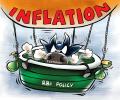
The Reserve Bank of India on Thursday marginally lowered its inflation projection for the current financial year to 5.1 per cent, as Governor Shaktikanta Das said the central bank's monetary policy actions are yielding the desired results. In April, the Reserve Bank had estimated the consumer price index (CPI) based retail inflation at 5.2 per cent during the fiscal 2023-24. CPI inflation fell sharply to 4.7 per cent in April 2023, from 6.4 per cent in February, on the back of favourable base effects, with softening observed across all the three major groups.
With retail inflation surprising on the upside, the six-member monetary policy committee (MPC) of the Reserve Bank of India (RBI) is expected to increase the repo rate by 35-50 basis points (bps) in the review scheduled for September 28-30. According to economists, the central bank will continue to focus on bringing inflation down even though economic growth has remained sluggish. Data released by the government on Monday showed that the consumer price index (CPI)-based inflation increased by 7 per cent year-on-year (YoY) in August, thus, staying above the upper tolerance limit of the central bank for all the eight months of 2022.

India's forex reserves dropped by $329 million to $578.45 billion for the week ended March 31, on decline in gold reserves, the RBI said on Friday. The forex kitty had risen handsomely in the previous two reporting weeks, and rose by $5.98 billion to $578.78 billion for the week ended March 24. For FY23, the overall kitty has dropped by $28.86 billion.

India's forex kitty rose by $12.80 billion to $572.80 billion in the week ended March 17, the Reserve Bank said on Friday. In the previous reporting week, the reserves had dropped by $2.39 billion to a three-month low of $560.00 billion. It can be noted that in October 2021, the country's forex kitty had reached an all-time high of $645 billion.

'There are occasions when the prices of individual items like food raise inflation; then supply-side measures must be taken.' 'But if there is continued inflation, it means liquidity is aggravating the situation.'

The Reserve Bank of India (RBI) has allowed the opening of nine special vostro accounts with two Indian lenders - Uco and IndusInd Bank - to facilitate overseas trade in rupee, Commerce Secretary Sunil Barthwal said on Tuesday. Apart from the domestic lenders, Russia's two largest banks - Sberbank and VTB Bank - are the first foreign lenders to have received approval from the central bank for settling international trade transactions in rupee. "Nine accounts have been opened. One each in Uco Bank, Sberbank, and VTB and six with IndusInd Bank. There are six different Russian banks who have opened special vostro account in IndusInd," Barthwal said.

Prime Minister Narendra Modi on Saturday announced the adoption of the New Delhi Leaders Declaration, a significant victory for India's G20 presidency that came amid increasing tensions and divergent views over the Ukraine conflict.

On the back of sound macroeconomic policies and softer commodity prices, India's growth momentum is likely to be sustained in 2023-24 in an atmosphere of easing inflationary pressures, said the Reserve Bank's annual report released on Tuesday. It, however, added that slowing global growth, protracted geopolitical tensions and a possible upsurge in financial market volatility following new stress events in the global financial system could pose downside risks to growth. "On the back of sound macroeconomic policies, softer commodity prices, a robust financial sector, a healthy corporate sector, continued fiscal policy thrust on quality of government expenditure, and new growth opportunities stemming from global realignment of supply chains, India's growth momentum is likely to be sustained in 2023-24 in an atmosphere of easing inflationary pressures," it said.

India's foreign exchange reserves dropped $325 million to $560.942 billion as of February 24, making it the fourth consecutive week of decline in the kitty, the Reserve Bank of India said on Friday. In the previous reporting week, the overall reserves had declined $5.68 billion to $561.267 billion. In October 2021, the forex kitty reached an all-time high of $645 billion.

'The market will focus on the fact that India does have strong earnings growth this year.'

Among Sensex shares, Bajaj Finserv fell the most by 4.08 per cent. Bajaj Finance declined by 3.01 per cent, Tata Steel by 2.2 per cent, Wipro by 2.09 per cent, Tata Motors by 1.96 per cent, IndusInd Bank by 1.9 per cent, SBI by 1.75 per cent, Tech Mahindra by 1.66 per cent and HCL Tech by 1.2 per cent. TCS, Infosys, Power Grid, Maruti, Reliance, HDFC twins, L&T, M&M, NTPC and Ultratech Cement were also among the losers.

Foreign flows into Indian equities are expected to pause in the short to medium term, say analysts. The outlook is influenced by multiple factors, including rising oil prices, actions from global central banks, climbing bond yields, and the dollar index gaining prominence. "Valuations appear rich with the markets at record highs.

Former Reserve Bank of India Governor Duvvuri Subbarao has said the central bank could lose control over money supply and inflation management if cryptocurrency is allowed in the country. Speaking at a webinar organised by the National Stock Exchange (NSE) and New York University (NYU) Stern School of Business, Rao also said India's case for issuing a central bank digital currency (CBDC) may not be strong as there are capital controls. "Crypto is backed by algorithms and there is fear that the central bank might lose control over money supply and inflation management.
Former RBI governor D Subbarao on Monday said there is a strong motivation for the central bank to launch a digital currency and cash is going to coexist with the new-age currency. Addressing an event virtually organised by economic think tank NCAER, Subbarao further said cybersecurity is also one of the downside risks of the Central Bank Digital Currency (CBDC). "There is a strong motivation for the RBI to launch CBDC... Cash is going to coexist with CBDC," he said.
The Reserve Bank on Thursday instructed banks and other financial institutions to ensure cross-border as well as domestic wire transfers contain complete information about the originator and beneficiary. The central bank has updated instructions in the Master Direction on Know Your Customer (KYC) related to wire transfers and also aligned the same with the relevant recommendation of the Financial Action Task Force (FATF). "All cross-border wire transfers shall be accompanied by accurate, complete, and meaningful originator and beneficiary information...," as per the updated instructions in the Master Direction.

The country's largest lender SBI on Saturday reported a 9.13 per cent rise in consolidated net profit to Rs 16,099.58 crore for the September quarter, weighed down by money it had to set aside for employees' impending wage and pension revisions. On a standalone basis, the State Bank of India (SBI) had a 8.03 per cent increase in the profit after tax for the reporting quarter at Rs 14,330 crore. However, the same was down 15.13 per cent compared to Rs 16,884 crore in the June quarter.

Investors are increasingly turning optimistic about shares of new-age companies. From broad-based 'sell' calls, analysts are giving thumbs up to Zomato, Paytm, and FSN e-Commerce Ventures-owned Nykaa as these companies have shifted focus to sustainable profits. The shares of Zomato hit a fresh 52-week high of Rs 126 apiece on the BSE on November 7, having rallied 15.4 per cent in one week.

The Indian rupee is expected to trade between 80 and 84 against dollar in the first three months of 2023 with support from overseas inflows though worsening current account deficit (CAD) and reduced interest rate differential between the US and India pose challenges. According to a Business Standard Poll of 10 participants, most said the rupee could gain strength in January due to foreign inflows, and the Reserve Bank of India (RBI) is not expected to allow the currency to depreciate ahead of the Union Budget scheduled on February 1. The rupee depreciated 10.15 per cent in 2022, its worst performance since 2013 as the war in Europe and the interest rate increase by the US Federal Reserve prompted investors to flee emerging markets.

RBI Governor Shaktikanta Das on Wednesday defended the Reserve Bank's handling of the price situation, saying acting prematurely on inflation would have exerted a heavy cost on the economy and citizens. Acknowledging that the inflation target has been missed, Das said the RBI decided to support the economy by not introducing a rate hike in face of a spike in inflation. "We prevented a 'complete collapse of the economy' by keeping rates lower and stayed away from premature tightening," Das said speaking at the annual FIBAC conference of bankers in Mumbai.

Reserve Bank Governor Shaktikanta Das on Wednesday said the decision to tweak policy rates was not in his hand as he himself is driven by the situation on the ground. In April, the Reserve Bank in a surprise move hit the pause button and decided to keep the key benchmark policy rate at 6.5 per cent. Prior to it, the Reserve Bank of India (RBI) was on a rate hiking spree, raising the repo rate by 250 basis points since May 2022.

After withdrawing record funds in 2021-22, foreign portfolio investors (FPIs) continued their sell-off in the last fiscal too and pulled out Rs 37,631 crore from Indian equities amid aggressive rate hikes by central banks globally. The outflow trend is likely to reverse in the current financial year since India has the best growth potential in the financial year 2023-24 (FY24), VK Vijayakumar, chief investment strategist at Geojit Financial Services, said. Market analysts believe that FPI flows in the current financial year would be decided by a host of factors, such as the US Federal Reserve's policy stance, oil prices movement and development in the geopolitical situation.

If the central banks act harshly now, the markets will crash and then rally. If they are hesitant, the pain will be prolonged, predicts Debashis Basu.

ITC, Sun Pharma, Maruti, M&M, Tata Motors, HCL Tech, Wipro, Infosys, HUL, Bharti Airtel and Reliance were among the major losers. Kotak Bank rose the most by 1.59 per cent, followed by IndusInd Bank, Bajaj Finance and Bajaj Finserv. L&T, SBI, TCS and HDFC Bank also closed higher.

The proposed Central Bank Digital Currency (CBDC) to be issued by the Reserve Bank will play a critical role in improving the speed of transactions and reducing the cost of cash, a Deloitte report said on Wednesday. The Reserve Bank of India is planning to come out with a central bank-backed digital currency, using blockchain technology in 2022-23. As a financial services innovation, CBDCs are likely to play a pivotal role in shaping the 'future of value transfer', the report said, adding that most central banks worldwide are now in various stages of their evaluation of launching their national digital currencies.

India should become a middle-income country and then push to make INR (rupee) a hard currency, and till then, it must promote the settlement of global trade in the local currency, think tank GTRI said on Sunday. Global Trade Research Initiative (GTRI) said that transforming a currency into a hard currency is a complex process that hinges on several pivotal factors. Firstly, economic stability is paramount; a country must exhibit low and stable inflation, consistent growth, and a balanced trade environment.
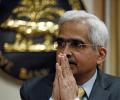
The RBI's rate-setting panel MPC on Monday began its three-day deliberation amid expectations of another round of hike in benchmark interest rates to contain inflation that continues to remain above the central bank's upper tolerance level. RBI Governor Shaktikanta Das will announce the decision of the Monetary Policy Committee after deliberations on Wednesday. Das has already indicated that there may another hike in the repo rate, though he refrained from quantifying it.

The US Federal Reserve on Wednesday (local time) raised interest rates by 75 basis points (bps) or three-quarters of a percentage point in the boldest move since 1994.
The Reserve Bank of India (RBI) will maintain the policy repo rate at 6.5 per cent during its upcoming June 8 announcement, considering the easing of retail inflation in April and the potential for further decline, indicating the effectiveness of previous policy rate actions, anticipate experts. Headed by Reserve Bank Governor Shaktikanta Das, a meeting of the six-member Monetary Policy Committee (MPC) is scheduled for June 6-8. The decision of the 43rd meeting of the MPC would be announced on Thursday, June 8.
India's foreign exchange reserves dropped by $1.49 billion to reach $575.27 billion as of February 3, snapping a three-week rising trend, RBI data showed on Friday. In the previous reporting week, the overall reserves had jumped by $3.03 billion to $576.76 billion. In October 2021, the country's forex kitty had reached an all-time high of $645 billion.

Debt management is going to be a worry for the Vedanta group until FY25 at least. However, the restructuring of business divisions in Vedanta India could lead to an unlocking of values. The group structure is fairly complex. Anil Agarwal-led Vedanta Resources (VRL), which is London-listed, has a lot of debt on the balance sheet. It will have to repay $1 billion in secured bonds by January 2024 and at least another $300 million in calendar 2024.
India's forex reserves dropped by $5.681 billion to $561.267 billion for the week ended February 17, the RBI said on Friday. This is the third consecutive week of a drop in the reserves after the $8.319 billion decrease in the previous reporting week to $566.948 billion. In October 2021, the country's forex kitty had reached an all-time high of $645 billion.

Crypto assets should not be granted official currency or legal tender status, the much-awaited synthesis paper by the International Monetary Fund (IMF) and Financial Stability Board (FSB) has said ahead of the G20 leadership summit under India's presidency. However, the report has argued against a blanket ban on activities linked to crypto assets, explaining that such a move can be costly as well as technically demanding to enforce. Central banks should avoid holding crypto assets in their official reserve as they pose a risk to monetary and global financial stability, according to the synthesis paper.

Higher discounts on crude oil offered by the United Arab Emirates (UAE) to wean India away from Russian crude may soon see Indian refiners ramping up purchases from the Gulf nation, officials at multiple refiners said. They also pointed to the recent agreement on trade settlement in national currencies signed between India and the UAE as a reason for this. "While discussions are underway, the UAE has offered discounts on crude, which will be more than that of the current level of Russian discounts.

Finance Minister Nirmala Sitharaman on Tuesday asked banks and other financial institutions to ensure that their customers must update nominees to help resolve the problem of unclaimed money in future. "I want the banking system, the financial ecosystem including the mutual funds, stock markets to keep in mind that when someone deals with his (customer's) money, the organisations will have to think about the future and ensure that customers nominate their heirs, give the name and address," Sitharaman said speaking at the Global Fintech Fest (GFF) in Mumbai. According to a report, the banking system alone has more than Rs 35,000 crore of unclaimed deposits, while the overall quantum of the unclaimed money is said to be more than Rs 1 lakh crore.

The Reserve Bank India's (RBI's) decision to ban the onboarding of new accounts on the "bob World" mobile digital platform led to a selloff in the Bank of Baroda (BoB) stock. The stock of the public sector bank dropped by around 3 per cent. The central bank cited "material supervisory concerns"; news reports claimed mobile numbers were randomly linked to accounts to purportedly inflate registrations on bob World.
