
Referring to the proposed new monetary policy framework, it said in the weeks ahead, government and RBI will work towards it.
.jpg)
Currently, the cash reserve ratio is pegged at a low of 4 per cent, while statutory liquidity ratio that includes securities such as government bonds, stands at 23 per cent, down from 25 per cent in 2010.
.jpg)
The worst performing Asian currency of the year so far hit a new life low of 61.80 rupees per dollar on Tuesday, breezing past a previous low of 61.21 hit on July 8. Central bank intervention helped the rupee recover, but by Wednesday it was sliding once again, to stand around 61.41 by 1.30 p.m.

RBI has, since January, cut its policy rate four times.

BofA-ML said the liquidity deficit is running higher than the forecasts because the RBI has suspended its bond buybacks or open market operations.

Home loans of up to Rs 75 lakh (Rs 7.5 million) would now be available to fresh borrowers at 10.10 per cent against the existing rate of 10.15 per cent, State Bank of India said in a statement.
.jpg)
BSE auto index surged 2%, capital goods, healthcare and oil & gas indices also up.
Better supply management and check on hoarding should be able to prevent food price spikes
The declining inflation and a negative industrial outlook have strengthened the case for RBI.

Bankers need to take a call on whether they will allow technology firms to run banks or banks themselves will turn into tech firms, says Tamal Bandyopadhyay.
CII suggested the policy measures required to ease the tight liquidity situation by cutting CRR by at least 50 basis points.


The headline HSBC India Purchasing Managers' Index -- a composite gauge designed to give a single-figure snapshot of manufacturing business conditions -- stood at 54.5 in December, up from 53.3 in the prior month.
With the revision, term deposit between 180-210 days less than Rs 1 crore (Rs 10 million) would now earn 7 per cent against existing 6.80 per cent, SBI said in a statement.

Delivering a public speech hours after the RBI launched a rescue act for Yes Bank on March 6, Governor Shaktikanta Das reiterated the RBI's affirmation to do whatever was needed to combat the coronavirus impact. On that day, India had only one confirmed COVID-19 infection, the World Health Organisation was five days off from declaring it as a pandemic and the financially debilitating lockdowns were not even on the horizon. Das' promise on efforts to mitigate COVID-19 impact appeared as a footnote in news reports from the event.

Financial services firm AnandRathi analysed the key points of the policy soon after it was announced.
.jpg)
Steps announced by new RBI Governor Raghuram Rajan could attract $10 billion of forex inflows in the next three months and this could be a material near-term positive for the rupee, which has lost 20 per cent since January, the London-based banking and financial services company said.

A reading below 50 means contraction in the sector.

On July 15, the Reserve Bank put in place measures to restore stability in the foreign exchange market, including raising the Marginal Standing Facility and bank rates to 10.25 per cent and restricting access by way of repos to Rs 75,000 crore (Rs 750 billion).

BSE Sensex on Monday closed nearly 34 points higher at 26,350.17 with gains in realty, power, FMCG and oil & gas stocks amid sustained buying by domestic institutional investors.

The rupee is expected to remain under pressure in the near term, given the strengthening of the dollar against major global currencies and widening of the trade deficit.

The industry urged the central bank to consider a rate even before the next monetary policy review on July 30.
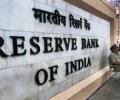
The Reserve Bank of India is likely to cut policy rates by 0.25 per cent and keep the cash reserve ratio unchanged at its policy review next week, on the back of slower-than-expected growth and more encouraging inflation readings, says a report by HSBC.
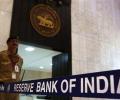
The agency said the move on liquidity will lead to an ease in the situation.

The gains will be gradual as the measure will be executed over 12 months or so.

The IL&FS management is also talking to its second-largest shareholder, Orix Corporation of Japan, to infuse more funds into the company - in case any shareholder backs out during the rights issue.


RBI is scheduled to announce mid-quarter review of monetary policy for 2013-14 on June 17.

Reserve Bank of India Governor Shaktikanta Das on Friday said the central bank will ensure adequate liquidity in the system to ease the financial stress caused by the Covid-19 pandemic. The central bank reduced the reverse repo rate -- the rate at which banks park their fund with the central bank -- by 25 basis points to 3.75 per cent.

The central bank has lowered its policy rate twice so far in 2015.

A CRR cut will help banks to reduce lending rates.

After Chakrabarty's exit there will be two vacancies for deputy governors in the central bank.

Corporate leaders said a stable government at the Centre will help boost infrastructure spend, address agricultural distress, and encouraging employment.

In the mid-quarter review on December 18, the Reserve Bank left key policy rates unchanged but said it will hike interest rates if inflation does not subside.

SBI, the country's largest lender, first announced a rate cut of 0.25 per cent in its home loan rates on Thursday, forcing HDFC, the second biggest home loan financier, to respond.
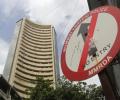
Nifty saw the biggest weekly gain since the first week of September and comfortably maintained its crucial 8250 levels in today's session
.jpg)
The rate cut, the industry chambers argued, could have given a positive signal to the manufacturing sector, which is undergoing difficult times.
.jpg)
The repo rate continues to be at 8 per cent while the cash reserve ratio has also been retained at 4 per cent despite inflation based on the Wholesale Price Index coming down to a 5-year low of 1.77 per cent in October.

The main reason was that CPI inflation would likely remain below 4 per cent till July.

Though valuations have moderated, they are still above average.
 © 2026 Rediff.com - Investor Information - Advertise with us - Disclaimer - Privacy Policy - Sitemap - Feedback - About us - Terms of use - Grievances