
In yet another move to close the regulatory gap between banks and shadow banks, the Reserve Bank of India (RBI) has mandated exposure limits to the non-banking finance companies, in line with commercial banks. In the large exposure framework released on Tuesday, the regulator capped aggregrate exposure of NBFCs which are in the upper layer toward one entity at 20 per cent of capital base. The limit can only be extended by another 5% with board's approval. For a particular borrower group, the cap is at 25 per cent, with additional 10 per cent if exposure is towards infrastructure.

However, financial flows to the economy remained constrained because of decline in the amount of equity finance raised from the capital markets and stress in the NBFC sector, Finance Minister Nirmala Sitharaman pointed out.

India may see a structural shift in supplies of crude oil with Russia emerging as a key source of fuels, a development that reduces New Delhi's dependence on West Asian oil, gives Indian refiners better bargaining power with price-setter Saudi Arabia, and improves overall energy security. The unexpected surge in supplies of Russian crude in the last few months, unthinkable until the war in Ukraine, may also deliver other unforeseen gains such as boosting exports of refined fuels to Europe, which historically has counted on Russian shipments. India has jumped on to the bandwagon of opportunistic buying of Russian crude but if calibrated carefully, Urals crude can be a long-term asset for India refiners.

Investments in Indian capital market through participatory notes (P-notes) dropped to Rs 94,826 crore till November-end after hitting 43-month high in the preceding month. P-notes are issued by registered foreign portfolio investors (FPIs) to overseas investors who wish to be a part of the Indian stock market without registering themselves directly. They, however, need to go through a due diligence process.

Of the total Rs 63,288 crore invested through the route till July, Rs 52,356 crore was invested in equities, Rs 10,429 crore in debt, Rs 250 crore in the hybrid securities and Rs 190 crore in derivatives segment.

Ramkrishna gave 'frequent, arbitrary and disproportionate' increase in compensation to Subramanian when there was no evidence of any performance evaluation being done for him and nor was there any evidence to satisfy the rating of A+ given to him for giving such high increment.

Foreign banks set the template in consumer banking in its infancy, but have almost vacated this booming space.

Investments by private equity and venture capital funds doubled to a record high of $9.5 billion in July mainly driven by higher investor interest in the e-commerce sector, a report said on Monday. Private equity (PE) and venture capital (VC) investments stood at $4.1 billion in the year-ago period. The activity was higher by 77 per cent when compared to June's $5.4 billion, the report on monthly PE/VC investment activity by industry lobby IVCA and consultancy firm EY said.

The value of P-note investments in Indian markets - equity, debt, hybrid securities and derivatives - stood at Rs 74,027 crore till August-end.
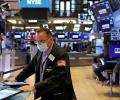
From March 3, investors in India will be able to trade in select US stocks through the NSE International Exchange (NSE IFSC), a wholly owned subsidiary of the National Stock Exchange (NSE). Investors can invest in NSE IFSC receipts on US stocks, which will be in the form of unsponsored depository receipts (DRs). For a start, this will include DRs of 50 US stocks such as Apple, Alphabet, Amazon, Tesla, Microsoft, Morgan Stanley, Nike, P&G, Coca-Cola, and Exxon Mobil. Indian retail investors will be able to transact on the NSE IFSC platform under the Liberalised Remittance Scheme (LRS) limits prescribed by the Reserve Bank of India (RBI), which currently stand at $250,000 per year.

Shyam Metalics and Energy (SMEL) will end the over two-month drought in the initial public offering (IPO) market. The steelmaker will launch its Rs 909-crore offering soon. SMEL has pruned its IPO size from Rs 1,107 crore, with the promoters deciding to offload shares worth Rs 252 crore as against Rs 452 crore planned earlier. The company has priced its IPO between Rs 303 to 306 per share.

Year 2021 was another great year for fund-raising through equities. A total of Rs 1.8 trillion was raised through initial public offerings (IPOs), qualified institutional placements (QIPs), and rights issues, against the Rs 1.7 trillion raised in the previous year. Funds raised through IPOs quadrupled, while those from rights issues and QIPs reduced.

The capital markets regulator exonerated former employees Subramanian Anand, Ravi Apte, and Umesh Jain, with respect to charges levelled against them.

Tech Mahindra was the top loser in the Sensex pack, shedding over 3 per cent, followed by NTPC, IndusInd Bank, Kotak Bank and Reliance Industries. NSE Nifty fell 185.60 points to 17,671.65.

On the Sensex chart, L&T, ONGC, HCL Tech, NTPC, Axis Bank and Infosys were major gainers. NSE Nifty ended with a gain of 18.10 points at 14,956.20.

Markets watchdog Sebi on Tuesday decided to tighten norms for utilisation of IPO proceeds by companies, introduce special situation funds to invest only in stressed assets and amend various regulations, including those on mutual funds and settlement proceedings. The board of Sebi, which met on Tuesday, also gave its nod for amending Foreign Portfolio Investor (FPI) regulations and introducing a provision for appointment or re-appointment of any person, including as a managing director or a whole time director or a manager, who was earlier rejected by the shareholders at a general meeting. Once the amended norms are in place, such appointments or re-appointments can only be done with the prior approval of the shareholders.

Overseas investors had put in a net sum of Rs 45,981 crore in March and Rs 11,182 crore in February in the capital markets

'Start-ups that generate a majority of their income in India are likely to opt for an Indian listing.'

RTGS is used to transfer large sums, the minimum amount being Rs 2 lakh. This mode is used primarily to facilitate trade and market transactions. The primary beneficiary would be the capital markets.

India Inc on Thursday pitched for continuation of reforms while ensuring tax and policy stability in the forthcoming Budget to prop up the economy hit hard by the COVID-19 pandemic. In the virtual pre-Budget consultation held with Finance Minister Nirmala Sitharaman, industry chambers said that government measures will help firmly entrench the nascent signs of recovery being currently seen in private investment. Capital expenditure by the government through enhanced infrastructure spending should in the meantime continue to support growth, CII president TV Narendran said.

Union Finance Minister Nirmala Sitharaman will on Monday meet chief ministers and state finance ministers to discuss measures to attract private investments to help boost the economy. Finance secretary T V Somanathan said the meeting comes in the backdrop of strong economic recovery post the two COVID waves, and the central government has made a big push in Capex. The focus of this interaction will be on state-level issues, opportunities and challenges, which will enable us to go to a higher trajectory of investment and growth, he said.

Shares of Indian Railway Catering and Tourism Corporation (IRCTC) hit a new high of Rs 4,512 after surging 8 per cent on the BSE in Wednesday's intra-day trade, on the back of heavy volumes, ahead of 1:5 stock split. The trading volumes on the counter more-than-doubled today, with a combined 7.02 million equity shares having changed hands on the NSE and BSE till 11:19 am. In the past one week, the stock of the state-owned travel support services company has rallied 20 per cent after the company on September 29, 2021, said that it has fixed October 29, 2021 as the record date, to ascertain the name of shareholders entitled for subdivision/split of equity shares of Rs 10 each into five (5) equity shares of face value of Rs 2 each.

'Investors should keep them on their radar and invest over a longer time frame, and expect some of these companies to bite the dust.'

India's first unicorn Zomato will make its stock market debut on Friday, marking a historic moment for the domestic capital market. As per initial schedule, Zomato's listing was to take place on July 27. However, investment banks managed to complete the share allotment and listing formalities ahead of the deadline. Under the Sebi framework, the timeline between IPO closing and listing has to be six working days. Zomato's IPO had closed on July 16.

SBI was the top gainer in the Sensex pack, rallying over 10 per cent, followed by Kotak Bank, Dr Reddy's, UltraTech Cement, ITC and HDFC Bank. On the other hand, Axis Bank, Bharti Airtel, ICICI Bank, Maruti and HCL Tech were among the laggards.
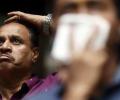
On the Sensex chart, HDFC, L&T, SBI, Axis Bank, Bajaj FinServ and HDFC Bank were major laggards - dropping up to 2.62 per cent. NSE Nifty closed with a loss of 164.85 points at 15,080.75.

'The markets have corrected almost 8-9 per cent from their highs, so one can accumulate quality stocks at reasonable prices.'

Private equity and venture capital investments more than halved to $3.6 billion in May 2021 when compared to the preceding April's $7.5 billion and a third lower than the year-ago period's $5.4 billion, a report said on Monday. However, on a year to date basis, the venture investments by these two categories of investors have doubled to $20 billion for the first five months of 2021, the report by industry lobby IVCA and consultancy firm EY said, stressing that investors continue to remain bullish. It can be noted that the country underwent the ravages of the second wave of the pandemic since April this year.

SBI was the top gainer in the Sensex pack, spurting over 2 per cent, followed by ICICI Bank, Nestle India, IndusInd Bank, M&M, Bajaj Auto and Maruti. NSE Nifty advanced 135.55 points to 14,819.05.

'It has taken us 15 years to get to where we are. It obviously doesn't happen overnight.'
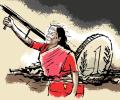
Finance Minister Nirmala Sitharaman will present the much-awaited 2022-23 Union Budget on February 1. While there has been strong recovery in some sectors, touch services like hospitality, tourism and leisure continue to suffer after two Covid-19 waves. Household savings have been hit due to increased spending on health care. Consumption has still not reached pre-pandemic levels.

Tata Steel was the top loser in the Sensex pack, shedding over 2 per cent, followed by Sun Pharma, ICICI Bank, SBI, Kotak Bank and Dr Reddy's. NSE Nifty dropped 151.75 points to 15,727.90.

Capital markets regulator Sebi on Monday came out with a framework for operationalising the gold exchange, wherein the yellow metal will be traded in the form of electronic gold receipts (EGRs). The stock exchange desirous of trading in EGRs may apply to Sebi for approval of trading in the new segment, the regulator said in a circular. The bourses can launch contracts with different denomination for trading or conversion of EGR into gold. Under the new framework, the entire transaction has been divided into three tranches-- creation of EGR; trading of EGR on stock exchange and conversion of EGR into physical gold.

On the Sensex chart, SBI was the top gainer, rallying around 4 per cent, followed by Bharti Airtel, Reliance Industries, HDFC Bank, ITC, Axis Bank and NTPC. NSE Nifty advanced 78.70 points to a fresh closing peak of 14,563.45.
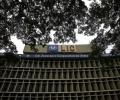
The government has reached out to investors to apprise them about Life Insurance Corporation of India's (LIC's) growth and prospects as it prepares for the country's largest initial public offering (IPO). Preliminary presentations have been made to inform investors on how the organisation is being restructured ahead of the IPO, along with its financials, so that the IPO process can be hastened once its embedded value is derived. "A detailed presentation has been made to investors, giving them details on how LIC is positioned beyond what is known. "This includes how LIC is being restructured ahead of the IPO, and investors are keen to know that," said an official. In the Finance Bill, 2021, the government had proposed a slew of changes to the LIC Act, 1956.

Kotak Bank was the top loser in the Sensex pack, shedding over 2 per cent, followed by ICICI Bank, PowerGrid, HDFC, IndusInd Bank and Axis Bank. NSE Nifty declined 45.75 points to 16,568.85.

A total of 49 companies raised Rs 81,615 crore in Samvat 2077, more than the preceding four years and almost double the amount raised in the previous year. Samvat 2078 appears even more promising with mega issues of Paytm and Life Insurance Corporation (LIC) of India. However, Paytm's record could be short-lived as state-owned LIC is planning to launch a Rs 1-trillion IPO by March 2022.
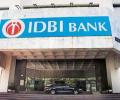
As many as seven firms, including JM Financial, Ernst and Young and Deloitte, have bid for managing the strategic sale of IDBI Bank. These firms would make a virtual presentation before the Department of Investment and Public Asset Management, which is handling the sale process, on August 10, according to a notice by DIPAM. The firms that have bid for acting as transaction advisor are Deloitte Touche Tohmatsu India LLP, Ernst and Young LLP, ICICI Securities, JM Financial Ltd, KPMG, RBSA Capital Advisors LLP and SBI Capital Markets.

Axis Bank was the top gainer in the Sensex pack, surging around 4 per cent, followed by M&M, HDFC Bank, ITC, SBI, ICICI Bank, Maruti, Kotak Bank and Sun Pharma. On the other hand, HDFC, Titan, Nestle India, Bharti Airtel, ONGC and Infosys were among the laggards.

Bajaj Finance was the top gainer in the Sensex pack, surging around 5 per cent, followed by Bajaj Finserv, HDFC, Tech Mahindra, HDFC Bank, UltraTech Cement and Tata Steel. On the other hand, HUL, Nestle India, ICICI Bank, Axis Bank, SBI, TCS and ITC were among the laggards.
 © 2026 Rediff.com - Investor Information - Advertise with us - Disclaimer - Privacy Policy - Sitemap - Feedback - About us - Terms of use - Grievances