
After a two-year lull, the deal pipeline in India's hospitality sector, which has witnessed a strong revival since the second wave of the pandemic receded, is running full. Family offices, high net-worth individuals (HNIs) and institutional investors are looking at the sector with renewed interest, according to investment and transaction advisory firms working on multiple deals. Most of them declined to divulge details of the deals for reasons of confidentiality. The cumulative debt of the tourism, hotels and restaurant sector rose 8.2 per cent year-on-year (YoY) to Rs 64,408 crore as of March 25, 2022 against Rs 59,519 crore on March 26, 2021, according to the Reserve Bank of India.

IndusInd Bank was the top gainer in the Sensex pack, rising nearly 6 per cent, followed by Axis Bank, SBI, Maruti, Tech Mahindra and Reliance Industries. NSE Nifty surged 183.70 points to close at 17,166.90.

'Russia was hit with sanctions yesterday, but these are not enough to get these foreign troops off our soil. Only through solidarity and determination can this be achieved'

Reliance Industries Ltd, the nation's most valuable company, on Thursday said it has raised $4 billion (around Rs 30,000 crore) in debt through the largest ever foreign currency bond issuance by an Indian entity. The oil-to-telecom conglomerate plans to use the proceeds of the three tranche issues to retire existing borrowings. The issue was "nearly 3 times oversubscribed with a peak order book aggregating around $11.5 billion," the company said in a statement. This is the largest ever foreign currency bond transaction in India, eclipsing ONGC Videsh Ltd's $2.2 billion US dollar bonds issue of 2014.

Telcos in Asia's emerging markets will face higher spectrum liabilities, but these essential costs are not subject to refinancing and have limited immediate impact on cash flows and liquidity, Moody's Investors Service said on Monday. The ratings of Asia-Pacific (APAC) telecom companies in emerging markets can tolerate the increased deferred spectrum liabilities at current levels, if these essential costs are the main driver of high debt or weaker leverage, Moody's Investors Service said in a new report. For emerging markets -- China, India, Indonesia, Malaysia and Philippines -- spectrum liabilities to gross debt will increase to more than 16 per cent in 2021 and 2022, from 11.6 per cent in 2020 and 9.3 per cent in 2018, assuming India completes its 5G spectrum auction in 2022, it added.

Capital markets regulator Sebi on Wednesday streamlined the payment of processing fee through the Unified Payments Interface (UPI) system for shares applied for and allotted during an initial public offering (IPO). In addition, the regulator has devised a new reporting format for capturing the data of all ASBA (Application Supported by Block Amount) applications unblocked by Self Certified Syndicate Banks (SCSBs) and their corresponding date of actual unblock. The new format has been put in place after reviewing the performance of SCSBs on timely unblocking of application amounts and feedback received from market intermediaries, Sebi said in a circular.

Rationalisation of income tax slabs, infrastructure status for digital services and incentives to hydrogen storage as well as fuel cell development were some of the suggestions made by various stakeholders at the pre-Budget consultation meeting convened by Finance Minister Nirmala Sitharaman. The customary pre-Budget consultation meetings were held with the finance minister virtually between December 15 and December 22, as per the finance ministry statement. More than 120 invitees representing seven stakeholder groups participated in eight meetings, scheduled during this period, it said.

Ultratech Cement was the top gainer in the Sensex pack, surging nearly 3 per cent, followed by M&M, Maruti, Tata Steel, TCS, L&T, SBI and HUL. NSE Nifty advanced 52.35 points to 18,308.10.

The rot is is not limited to Chitra Ramkrishna and the yogi, observed Debashis Basu.
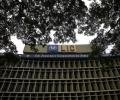
The government will launch the mega public offer of LIC by March and file draft papers with market regulator Sebi by the end of this month, an official said. Finance Minister Nirmala Sitharaman had last week reviewed the progress of the initial public offering (IPO) of Life Insurance Corporation (LIC) in a meeting with top officials of the ministry. The official said the September 2021 quarter financials of LIC are getting finalised as well as fund bifurcation is in progress.

The Securities and Exchange Board of India (Sebi) has mulled introduction of confidential initial public offering (IPO) filings and "pre-filing" of offer documents, a move aimed at giving issuers flexibility and alleviating concerns around privacy. Industry players said the concept, if implemented, would give a fillip to the domestic capital markets, ease the process and encourage more companies to go public. To be sure, the proposals are still at a discussion stage with Sebi just floating a consultation paper seeking public feedback.

HDFC Bank, the country's largest private-sector lender, lost to competition wholesale loans of around Rs 50,000 crore after it increased interest rates in May, said Chief Financial Officer Srinivasan Vaidyanathan in an analyst call. "There were some customers who were offered lower rates by other market participants. "But we decided not to cut back on our rates," he said while addressing analysts after the announcement of the bank's Q1 earnings.
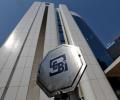
Sebi chief Ajay Tyagi on Wednesday said many companies are lacking on the disclosure front and asked such firms not to treat it as a check box exercise. Sebi rules primarily require listed firms to have two sets of disclosures - periodic disclosures where formats have been prescribed by the regulator; and disclosures of material events where certain events have been deemed as material and must be disclosed, and the others to be disclosed if considered by the company and its board to be material.

Fresh capital raised by companies by way of initial public offerings (IPOs) is set to hit a 14-year high, thanks mainly to Zomato's maiden offering. India Inc has raised about Rs 19,300 crore in fresh capital by maiden offerings, including the Rs 9,000 crore the food delivery company will raise this week, so far in 2021. The best year in terms of fresh fund-raise was 2007, when companies had raised Rs 32,102 crore. With Paytm planning to issue fresh shares worth Rs 12,000 crore, the domestic market looks set to surpass that tally this year.

Among the prominent gainers on the Sensex chart were Bajaj Finance, Bajaj FinServ, ICICI Bank, Axis bank, Tata Steel, IndusInd Bank and HDFC Bank -- rising as much as 3.50 per cent. NSE Nifty soared 271.65 points to settle at 17,625.70.

Richest Indian Gautam Adani's ports-to-power-to-cement conglomerate is "deeply overleveraged" with the group predominantly using debt to invest aggressively across existing as well as new businesses, CreditSights, a Fitch Group unit, said on Tuesday. In a report titled 'Adani Group: Deeply Overleveraged', CreditSights said, "In the worst-case scenario, overly ambitious debt-funded growth plans could eventually spiral into a massive debt trap, and possibly culminate into a distressed situation or default of one or more group companies." Starting out as a commodities trader in the late 1980s, the Adani group has diversified from mines, ports and power plants into airports, data centers and defence.

IndusInd Bank was the top gainer in the Sensex pack, spurting over 7 per cent, followed by ITC, SBI, Reliance Industries, Kotak Bank, ICICI Bank and Axis Bank. NSE Nifty surged 110.05 points to its new closing high of 17,629.50.
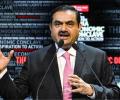
Gautambhai has shown that he has ability to withstand payment delays or vexatious court cases. That is where he is on a more comfortable wicket than many others. A revealing excerpt from R N Bhaskar's Gautam Adani: Reimagining Business in India and the World.
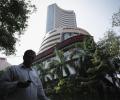
Tech Mahindra was the top loser in the Sensex pack, shedding over 2 per cent, followed by TCS, Maruti, Reliance, Sun Pharma and Infosys. NSE Nifty fell 16.10 points to 15,818.25.

ICICI Bank, HUL, HDFC Bank, M&M, Ultra Cement, IndusInd Bank and Tech Mahindra were among the losers in the Sensex pack. NSE Nifty slipped 13.95 points to 17,355.30.

State Bank of India was the top gainer in the Sensex pack, climbing nearly 2 per cent, followed by Tata Steel, L&T, Bajaj Finserv, Axis Bank, Bajaj Finance, M&M and ICICI Bank. NSE Nifty surged 112.15 points to 15,834.35.

Domestic capital market will see the launch of India's largest-ever initial public offering (IPO) next week. Life Insurance Corporation of India's (LIC's) landmark Rs 21,000-crore IPO will open for subscription on Wednesday. Here's a look at some unique features of this mega offering, which are not typically seen in other IPOs.

Tata Steel was the top gainer in the Sensex pack, climbing 2.11 per cent, followed by Infosys, HDFC Bank, HDFC, Kotak Bank, M&M and PowerGrid. NSE Nifty jumped 142.05 points to end at 17,605.85.

Jhunjhunwala passed away early on Sunday morning due to a cardiac arrest, a source in his newly set up airline said.

Investors continue to back-up equity mutual funds in June as such schemes attracted a net inflow of Rs 15,498 crore on strong flows from systematic investment plans despite volatility in the stock market and relentless selling by Foreign Portfolio Investors (FPIs). This also marked the 16th straight month of positive inflow in equity schemes. Inflows into equity mutual funds in June was lower compared to the net inflow of Rs 18,529 crore seen in May, data from the Association of Mutual Funds in India (AMFI) showed on Friday.

Titan was the top loser in the Sensex pack, shedding over 3 per cent, followed by M&M, HUL, Maruti, Asian Paints and IndusInd Bank. Nifty fell 91 points to 17,157.40.
Markets regulator Sebi is contemplating reforms in the IPO norms, especially on the book building, fixed price aspects and certain provisions pertaining to price band, its chief Ajay Tyagi said on Wednesday. Apart from initial public offer (IPO), the regulator is looking into further reforms on preferential issue front, Tyagi said at the FICCI's annual Capital Market Conference. He further said that the focus on review of equity fund raising norms will continue in the near future.

'If you look at the order books of capital equipment companies or money deployed on the ground, there is forward movement in terms of actual investment by the private sector.'

A 5% increase is expected due to additional interest on approval costs.

The World Bank has approved loans totalling $1.75 billion (about Rs 13,834.54 crore) to fund India's PM Ayushman Bharat scheme and private investment to boost the economic growth. Of the total loan, $1 billion will go towards the health sector, while the rest $750 million will be in the form of development policy loan (DPL) to fill the financing gaps through private sector investment in the economy. The World Bank Board of Executive Directors approved two complementary loans of $500 million each to support and enhance India's health sector.

India needs foreign exchange buffer reserves to insulate itself from exchange rate volatility as we have "no friends" for swap lines and Japan was the only country that helped during the taper tantrum in 2013, former RBI Governor Raghuram Rajan said on Tuesday. Participating in a virtual event organised by economic think tank NCAER, Rajan said during the taper tantrum in 2013, India asked for swap lines, and only country who helped was Japan. "We need this (foreign exchange) reserve buffer to insulate ourselves because we have no friends.
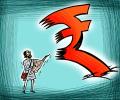
The rupee appreciated 7 paise to 79.74 against the US dollar in early trade on Thursday as a positive trend in domestic equities supported the local unit. However, a strong American currency overseas and forex outflows restricted the rupee's gain, dealers said. At the interbank foreign exchange, the rupee opened at 79.72 against the American dollar, then went lower to trade at 79.74 against the greenback in early deals, registering a gain of 7 paise over the last close.

Investments through participatory notes (P-notes) in the Indian capital market rose to Rs 91,658 crore at February-end, making it the highest level in 33 months, suggesting growing confidence of overseas investors. P-notes are issued by registered foreign portfolio investors (FPIs) to overseas investors who wish to be part of the Indian stock market without registering themselves directly. They, however, need to go through a due diligence process. According to Sebi data, the value of P-note investments in Indian markets -- equity, debt and hybrid securities - increased to Rs 91,658 crore in February-end from Rs 84,916 crore at January-end.

Experts say companies wanting to launch IPOs will have to scale back their expectations given the fall in valuations.

Seven companies, including lifestyle retail brand FabIndia and specialty chemical company Aether Industries, have received capital markets regulator Sebi's go-ahead to raise funds through initial share sales. Syrma SGS Technology, Asianet Satellite Communications, Sanathan Textiles, Capillary Technologies India and Harsha Engineers International too received the watchdog's nod to float Initial Public Offerings (IPOs). These companies, which filed their preliminary IPO papers with Sebi during December 2021 and February 2022, obtained observations during April 27-30, an update with the regulator showed on Monday.

NTPC was the top gainer in the Sensex pack, jumping over 7 per cent, followed by Bharti Airtel, Titan, HCL Tech, SBI, PowerGrid, TCS and IndusInd Bank. NSE Nifty climbed 139.45 points to its new closing high of 17,519.45.

COVID-19 forced people to work from home turned into the fuel for new demat accounts, observes Debashis Basu.

After a record run in FY2022, when the brokerage industry is set to report over 30 per cent topline growth at around Rs 28,000 crore, the industry is set for a tepid growth next fiscal even though the outlook is stable, says a rating agency report. The market has been on a song since June 2020 when the first wave of the pandemic ebbed and since then it has had record run with the stock indices more than doubling since the Covid-19 mayhem in March 2020 and scaled new life-time highs since then. The market frenzy was also visible in the massive number of new investors coming to the equity market, as exemplified in the more than trebling of the demat accounts since April 2020.

June was a memorable month for the 101-year-old Tamilnad Mercantile Bank (TMB). Last month, the Thoothukudi-based bank witnessed two new landmarks in a history in which the last three decades could easily qualify for a Kollywood blockbuster.

Three marquee exits accounted for nearly 60 per cent of the total exit value -- BillDesk's acquisition by PayU for $4.7 billion, Paytm's $2.5 billion initial public offering (IPO), and Zomato's public market debut of $1.3 billion.
 © 2026 Rediff.com - Investor Information - Advertise with us - Disclaimer - Privacy Policy - Sitemap - Feedback - About us - Terms of use - Grievances