
Tata Consultancy Services (TCS), the group's biggest cash generator, overtook Vedanta to become the highest dividend payer in India in FY23. The IT services major paid Rs 42,090 crore for FY23, up 167.4 per cent from Rs 15,738 crore for FY22. The 10 biggest payers together shelled out Rs 2.06 trillion for FY23, more than double the Rs 98,371 crore for FY22.

Suresh Prabhu on the priority being given to safety and the need for more funds for railways to move ahead.

Global funds, according to Christopher Wood, global head of equity strategy at Jefferies, are now beginning to pay more attention to India with the market now offering 30 companies with a market capitalisation over $25 billion.

Lenders of debt-ridden Jet Airways on Tuesday filed an appeal in the National Company Law Appellate Tribunal (NCLAT) against implementation of the resolution plan by the Jalan-Kalrock consortium, according to sources. The sources said the lenders have maintained that the condition precedent mentioned in the resolution plan of the consortium has not been met. And therefore, the plan is not valid. "The lenders want the plan to be circled back to the committee of creditors (CoC) for fresh consideration," the sources said.

The Union government's finances witnessed significant improvement in August after a stressful first four months of the current fiscal year. India's gross tax revenue, comprising both direct and indirect taxes, for the first five months of 2023-24 surged 16.5 per cent year-on-year (Y-o-Y) to Rs 11.8 trillion. During the April-July period, gross tax revenue increased by a mere 2.8 per cent compared to the Budget Estimate of 12.1 per cent growth for FY24.

'Geopolitical risks and their impact on oil prices, if any, are another concern for global markets, particularly for India.'

Bengaluru-based Prestige Estates Projects recently said it aims to double its annual residential sales bookings to Rs 25,000 crore by FY26 from its current markets and others such as Mumbai, Pune and National Capital Region (NCR). The company's chairman and managing director Irfan Razaq tells Raghavendra Kamath about his plans to achieve the target and outlook for the real estate market.

'As we expect the economy to continue to grow above the trend line, we expect capex decisions to be taken next year when there is more certainty about the cost of funding and the economy.'

Populism gains momentum during election periods, and this trend is evident in at least four states: Telangana, Rajasthan, Madhya Pradesh and Chhattisgarh.

Improved monsoon, solid fiscal performance, and capex push by the public and private sectors augurs well for India's macroeconomic stability and growth, the finance ministry's monthly economic review for June 2023 said. But the report said that while India's domestic fundamentals remain strong, negative cross-border spillovers and adverse global developments could act as a deterrent in achieving the high growth path this financial year. "An improved matching of aggregate supply and aggregate demand in the Indian economy underpins the progress made in the control of domestic inflation and the consequent strengthening of macroeconomic stability," the review said.

After withdrawing record funds in 2021-22, foreign portfolio investors (FPIs) continued their sell-off in the last fiscal too and pulled out Rs 37,631 crore from Indian equities amid aggressive rate hikes by central banks globally. The outflow trend is likely to reverse in the current financial year since India has the best growth potential in the financial year 2023-24 (FY24), VK Vijayakumar, chief investment strategist at Geojit Financial Services, said. Market analysts believe that FPI flows in the current financial year would be decided by a host of factors, such as the US Federal Reserve's policy stance, oil prices movement and development in the geopolitical situation.

'Midcap and smallcap indices are trading in the expensive zone.'

'We plan to add over 100,000 square kilometres every year, to reach an ambitious target of 500,000 square kilometres by 2025.'

Vedanta Ltd, which is planning to restart its copper plant in Tamil Nadu, is weighing the option to sell the unit at a valuation of up to Rs 4,500 crore, banking sources have said. The company had sought expressions of interest (EoIs) for the plant in June last year but did not get a good response as the unit was shut for the last five years. "The process has now restarted with the bankers reaching out to potential bidders," said a banker.

UPL, the country's largest agrochemical company, had a weak July-September quarter (Q2), reporting a sharp fall in revenues across geographies. Overall, the revenues were down 19 per cent on the back of lower agrochemical prices and inventory destocking. While the overall volumes were down 7 per cent, prices fell by 15 per cent. Volume decline in the European market was on the back of high channel inventory and product bans while in India the fall by 27 per cent was on account of muted demand for segments such as cotton and pulses.

There was an acceptable domestic performance in India but there continues to be concerns about the Europe business and that overshadows the local performance. The consolidated revenues for the Q2FY24 stood at Rs 55,682 crore with an operating profit of Rs 4,315 crore and an operating profit margin of 8 per cent.

French energy giant TotalEnergies SE's $300 million investment in clean energy projects of Adani Green Energy Ltd has taken the total investments poured in by global investors in India's largest renewable power producer to $1.63 billion or about Rs 14,000 crore, sources close to the company said. Last week, Total announced it will hold a 50 per cent stake in the new joint venture firm where Adani Green Energy Ltd (AGEL) will hold the rest. The joint venture will hold a portfolio of 1,050 MW, including 300 MW of already operational capacity, 500 MW under construction and 250 MW under-development assets with a blend of solar and wind power.
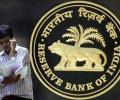
The Reserve Bank on Wednesday hiked key benchmark policy rate by 25 basis points to 6.5 per cent, citing sticky core inflation.

ONGC's January-March quarter results for the 2022-23 financial year (Q4FY23) indicated changes in the trends of the energy cycle as well as the impact of policy change in gas-pricing. The public sector oil and gas major reported standalone Ebitda (earnings before interest, tax, depreciation and amortisation) at Rs 16,340 crore, down 12 per cent year-on-year (YoY), and down 20 per cent quarter-on-quarter (QoQ). There was a net loss of Rs 250 crore due to exceptional items of Rs 9,240 crore for provisions related to the ongoing dispute regarding the applicability of service tax and goods and services tax on Royalty.

While prices sustaining lower levels is crucial, Govt actions are also a key monitorable given the forthcoming elections in 2024.

In the July to September quarter of 2023-24 (Q2FY24), Voltas' revenues grew by 29.7 per cent year-on-year (Y-o-Y), but the adjusted net profit was down by 63 per cent Y-o-Y. The revenues hit Rs 2,290 crore, led by growth in the Unitary Cooling Products segment (up 15.4 per cent Y-o-Y, and in the EMP (Electromechanical project) business (up 66.8 per cent Y-o-Y). The UCP revenue rose to Rs 1,200 crore in Q2FY24, driven by volume growth despite weak consumer spending - the three-year annual growth is 18 per cent.

UltraTech Cement's results for the fourth quarter results of the 2022-23 financial year (Q4FY23) were broadly in line with the Street estimates. The consolidated revenue, operating profit and net profit stood at Rs 18,700 crore, Rs 3,300 crore and Rs 1,670 crore, respectively, which were up 18 per cent, 8 per cent and 13 per cent YoY, respectively.

Maruti Suzuki India (MSIL) has ambitious plans to increase capacity. It is also seeking shareholders' approval for a complex swap transaction, which would acquire Suzuki Motor Gujarat (SMG), a subsidiary of Suzuki Motor Corporation (SMC) through a preferential offer. SMC already holds 56.37 per cent of MSIL's equity.

'If you are going to have only a handful of telecom players on whom the entire dream of Digital India rests, it's important they are financially sustainable.'

'We would love to have more players entering the market because that is how the business will grow.'

The finance ministry has cautioned that global and regional uncertainties and domestic disruptions may keep inflationary pressures elevated in the coming months, warranting "greater vigilance" by the government and the Reserve Bank of India (RBI). "Russia's decision to terminate the Black Sea grain deal, along with dry conditions in major wheat-growing areas, caused a price spike in cereals. Domestic factors like white fly disease and an uneven distribution of monsoon exerted pressure on vegetable prices in India," the ministry said in its latest Monthly Economic Report for July, released on Tuesday. However, the report maintained, the recent price surge in certain food items "is expected to be transitory". "Tomato prices are likely to decline with the arrival of fresh stocks by the end of August or early September.

The Adani group will be generating almost 90 percent of its Ebitda (earnings before interest, tax, depreciation, and amortisation) from infrastructure business by 2025 as compared to 83 per cent generated from these businesses currently, top company officials told bankers recently. Of the infrastructure business, 49 per cent of the profits are currently contributed by energy and utility, another 25 per cent by transport and rest by cement and logistics businesses. This will go up substantially as several new projects like Navi Mumbai airport and other projects get commissioned and contribute to the overall Ebitda pie, bankers were told.

During his first Union Budget in July 2014, former finance minister Arun Jaitley announced the setting up of an institution called 3P India, with an allocation of Rs 500 crore. The intention was to mainstream public-private partnerships (PPPs) in India. The plan was to bring together the capacities of the government and private sector to push PPP projects.

'We cannot leave our entire unorganised sector to the vagaries of market forces.'

Whether it was the MGNREGS or the NFSA or the Aadhaar-based DBT scheme for cash transfer, the Modi government has built on the basic architecture created by the Singh government. Policy makers in the Modi government, instead of discarding them as products of the previous political regime, worked on them, expanded their scope and reach, and used new tools to improve their performance, explains A K Bhattacharya.

TVS Motor Company has been one of the best-performing two-wheeler stocks in the current financial year (FY24), enriching investors with gains of 24 per cent. Among listed two-wheeler stocks, only Hero MotoCorp has done better in this period. New launches, market share gains, steady margins and expectations that its performance will continue in FY24 are expected to support TVS Motor's stock.

Following are the highlights of the Economic Survey 2022-23 tabled in Parliament on Tuesday

The power sector is always strongly correlated to economic activity and is receiving its share of investor attention as India's post-Covid-19 recovery continues. India's leading integrated power producer, the public sector undertaking (PSU) NTPC controls around 25 per cent of India's power capacity. It continues to increase installed capacity, in thermal as well as renewables (solar, wind, green hydrogen) and hydropower and pumped hydro, and also has backward integration into coal mining, and explored nuclear.

'Indian equity valuations, although not very expensive, are not cheap either.'

JP Morgan's decision last week to include Indian government bonds in its Government Bond Index-Emerging Markets (GBI-EM) index and the index suite from June 2024 may be a sort of blessing for India, as the move is estimated to result in an inflow of $25 billion of foreign portfolio investments into the country. The development comes at a time when the spread between the benchmark 10-year government of India bond and the 10-year US government bond has declined to its lowest level in more than 17 years. Low yield spreads make Indian bonds less attractive to foreign portfolio investors (FPIs).

Many CEOs said they plan to give special leave to women employees so as to encourage their participation in the workforce.

India's budget for the fiscal beginning April focuses on giving a boost to the ongoing economic recovery through a sharp increase in capex spending but is short on major growth-enhancing structural reform announcements, Fitch Ratings said Wednesday. The deficit targets present in the Union budget 2022-23 by Finance Minister Nirmala Sitharaman on Tuesday "are a bit higher than our forecasts when we affirmed India's 'BBB'/Negative sovereign rating in November," said Jeremy Zook, director and primary sovereign analyst for India, Fitch Ratings. While it was widely expected that the fiscal deficit will be lower than the targeted 6.8 per cent of the GDP in the current fiscal year ending March 31, 2022, Sitharaman put the number at 6.9 per cent.

The country's per capita income is likely to grow by close to 70 per cent to $4,000 by fiscal 2030 from $2,450 in fiscal 2023, helping it become a middle-income economy with $6-trillion GDP, more than half of which will be coming in from household consumption, says a research report. Per capita income/GDP has risen from $460 in fiscal 2001 to $1,413 in fiscal 2011 and further to $2,150 in fiscal 2021. The biggest growth driver will be external trade which may nearly double to $2.1 trillion by 2030 from $1.2 trillion in fiscal 2023 when the GDP printed in at $3.5 trillion, Standard Chartered Bank said in a weekend report which assumes a 10 per cent nominal GDP growth annually from now on.

Telecom infrastructure player Indus Towers has been largely ignored by investors with occasional bursts of trading when there's news flow. For example, the stock fell from Rs 188 (Jan 1, 2023) to Rs 135 (Jan 27) and then bounced back to Rs 165 in early February as the Government of India (GoI) converted Vodafone Idea's (Vi) debt into equity and Bharti Airtel pushed up its direct stake in Indus to 47.95 per cent. The cash-strapped Vi holds 21 per cent stake in Indus Towers and Indus also has substantial receivables to come in from Vi which is a negative overhang.

The government is confident of meeting the fiscal deficit target of 5.9 per cent of gross domestic product (GDP) and the nominal GDP target of 10.5 per cent despite pressure in the initial months of FY24, Economic Affairs secretary Ajay Seth told Business Standard. Normally the initial months of any financial year see proportionally a higher fiscal deficit because the expenditure is evenly paced while revenue picks up in the later months, he said. "This year the proportional fiscal deficit so far is much closer to the target than in most other years.
 © 2026 Rediff.com - Advertise with us - Disclaimer - Privacy Policy - Sitemap - Feedback - About us - Terms of use - Grievances