
Based on the panel's formula, the base price of domestic natural gas comes to around $7.4 per million British thermal unit (mBtu), but the pricing formula proposed by RIL, officials say, translates the price into $13-14 an mBtu.

Reliance Industries has opposed a move to make marketing margin charged by it and other sellers of domestically produced natural gas uniform, while giving gasimporters a free hand, saying that it would be a gross discrimination.
RIL gets $4.2 per million British thermal unit for the gas produced from its KG-D6 fields in the Bay of Bengal.

The Oil Ministry has proposed raising natural gas prices by at least 60 per cent, a move that will result in rise in urea as well as power costs.

RIL on June 15 wrote to Oil Ministry proposing to price natural gas it produces from the Krishna Godavari basin block in Bay of Bengal at a rate equivalent to price India pays for importing liquefied natural gas, official sources said.

Needed, it says, for covering its return and risks; also wants govt to stick to contract on output sharing
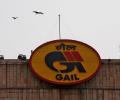
On February 24, when Vladimir Putin announced a military operation on Ukraine, few would have thought that Indian government-owned GAIL India would feel the impact. The tensions over gas supplies were essentially a Europe-Russia problem, related to the sanctions western economies imposed on Moscow. But the EU depends on Russian imports for 40 per cent of its gas stocks, an over-dependence that Russia has underlined with Kremlin-owned Gazprom cutting its supplies through the Nord Stream 1 pipeline to 20 per cent, citing maintenance issues.

Reliance Industries has strongly defended its decision to impose a marketing margin over-and-above the government-approved sale price for KG-D6 gas, saying the levy was to cover for the risk and cost associated with marketing of gas.
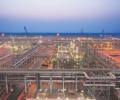
Oil regulator PNGRB on Monday approved the tariff that Mukesh Ambani-owned East-West pipeline will charge for transporting gas from Reliance Industries' eastern offshore KG-D6 fields to users.

The government on Thursday more than doubled the price of natural gas that is used to produce electricity, make fertilisers, turned into CNG and piped to household kitchens for cooking, on the back of a spike in global energy prices. The price of gas produced from old regulated fields, such as the nation's largest gas field of Bassein of ONGC, will rise to a record high of $6.10 per million British thermal unit (mmBtu) from the current $2.90 per mmBtu, according to the oil ministry's Petroleum Planning and Analysis Cell (PPAC). The new price, which is likely to result in a hike in CNG and piped cooking gas rates, will be for six months beginning April 1.

With domestic production of just over 140 million standard cubic meters per day meeting barely half the demand, India is importing 10 million tons of liquefied natural gas per annum and is looking at unconventional sources like shale gas.

The rates set would be excluding cess, transportation charge, marketing margin/service charge and taxes.

Anil Ambani's Reliance Natural Resources continued its attack on the government for allegedly favouring brother Mukesh Ambani's Reliance Industries Ltd on the sale price of gas from the Krishna Godavari D6 basin. At $4.2 per million British thermal unit (mBtu), the price fixed, there is a premium of more than 100 per cent over the gas available through the administered pricing mechanism, it said.

About 0.9 million standard cubic meters per day of gas produced from the fields lying in Bay of Bengal, off the Andhra Pradesh coast, is currently sold at $3.5 per million British thermal unit.
With the Mukesh Ambani-promoted Reliance Industries Ltd (RIL) planning to approach the Supreme Court, challenging a High Court order for selling gas at $2.34 per million British thermal unit (mBtu) to Reliance Natural Resources Ltd (RNRL), the chances of an agreement between the Ambani brothers by July 15 appear remote.
The gas price revision will add to the bottomline of the two public sector companies -- Oil and Natural Gas Corporation and Oil India Ltd -- and will also yield additional revenue for the central and state governments.

Natural gas produced from C-Series fields is sold to GAIL which further markets it to end users.

The government has raised the prices of natural gas by more than double to $4.20 per mmBtu, leading to a hike in power and fertiliser production costs. However, a hike in CNG rates will come into effect only from next week.
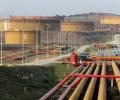
The length of the main trunk pipeline is 1,385 km from Kakinada to Bharuch and 75 km is the length of the spur lines.

Currently, gas imported in its liquefied form costs $5.7 per million British thermal units as against $1.82 per mmBtu for fuel produced from state-owned Oil and Natural Gas Corporation's fields and $4.2 per mmBtu for gas from Reliance Industries' KG-D6 field.

The government may subsidise costly imported gas by making users of cheaper domestic gas pay more under its unique plan to rationalise gas prices, a source in knowledge of the development said.
The Union petroleum ministry has proposed a 44 per cent increase in prices of natural gas sold under the administered price mechanism by state-owned Oil & Natural Gas Corporation and Oil India Ltd.
The high court is hearing a dispute between Mukesh Ambani-led Reliance Industries and Anil Ambani's Reliance Natural Resources over a gas sale agreement, in which the government has intervened. NTPC has filed a separate suit against RIL, seeking that RIL execute the contract of gas supply.

Replying to a calling-attention motion in Rajya Sabha, oil minister Murli Deora said the $4.2 per million British thermal unit price fixed for gas produced from KG-D6 fields of RIL was lower than the average of $5.51 per mmBtu charged by UK's BG-led consortium for Panna/Mukta and Tapti gas. It was also lower than the $4.3 per mmBtu price of gas produced from Cairn's Ravva Satellite fields and $4.75 per mmBtu for the UK firm's Lakshmi fields.
Anil Ambani-promoted Reliance Natural Resources has filed an affidavit in the Bombay High Court in the case involving Reliance Industries, refuting the petroleum ministry's stand that the government-approved price of $4.2/million metric British thermal unit (mmBtu) is the selling price of gas.

In a surprise move, oil regulator DGH has asked Reliance Industries to include the marketing margin the company charges on sale of natural gas from its field to the approved gas price for calculating the government's share from the project.
Reliance Power's plans are to set up a 7,480-Mw project, which will be the largest gas-fired power project at a single location in the world.
A division bench of Justices J N Patel and K K Tated said that the new agreement should be as per the memorandum of understanding between the Ambani brothers Mukesh and Anil. The MoU stipulates that RIL would supply 28 mmscmd of gas to RNRL for 17 years at the rate of $2.43 per million British Thermal Units.

The petroleum ministry has said Reliance Industries Ltd (RIL) is not right in seeking an out-of-turn rise in the price of natural gas produced from the KG-D6 fields and asserted the $4.205 per million British thermal unit (mBtu) rate will prevail unless pricing formula is changed.
According to sources, the government has provided a list of 20 companies to Reliance Industries for sale of gas as per the gas utilisation policy. Some of these companies include Nagarjuna Fertilizer & Chemicals, Chambal Fertilizers & Chemicals, Tata Fertilizers and Oswal Chemicals & Fertilizers among others.
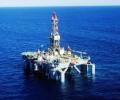
The state-run power utility NTPC Ltd has signed an agreement to buy gas from GAIL India for 10 years at a delivered price of close to $8 per million British thermal unit.

The Cairn-ONGC-Videocon consortium had last month written to the petroleum ministry seeking a 57 per cent hike in the Ravva Satellite field gas price citing provision in the Production Sharing Contract for the field.

State-run gas utility GAIL India Ltd buys 0.9 million standard cubic meters per day of output from Ravva Satellite fields at $4.30 per mmBtu. The new price sought by the Ravva consortium is 60 per cent more than the maximum price of $4.20 per mmBtu approved for RIL's KG-D6 fields for five years to March 2014.

Stoutly defending the hike in gas prices, Oil Minister M Veerappa Moily said the move would benefit the government in terms of revenue as many gas discoveries have been made by public sector companies rather than private sector.
.jpg)
On June 27, the Cabinet approved a new formula that uses weighted average of the price of LNG into India and average price at major gas hubs.
Reliance gets $4.215 per mmBtu for the gas it produces from KG-D6 fields off the Andhra coast. The price is fixed for the first five years of production. KG-D6 gas production began on April 2 and is slated to rise to 80 mmscmd by year-end, nearly doubling the nation's gas output.
Reliance Industries has put the cost of producing natural gas from its prolific Krishna Godavari basin fields at $2.9 per million British thermal unit and the firm will earn a pre-tax return of 13 per cent.
Petroleum minister Murli Deora discussed the idea of levy of $0.20 per million British thermal unit as cess on natural gas to mop up Rs 3,000 crore (Rs 30 billion) annually for laying down the gas pipeline network with CEOs of state-run firms. The brainstorming session called to chalk out the 100-day plan for the new government also decided on launching a new Scheme of Rural LPG Distributor (Gramin LPG Vitrak), petroleum secretary R S Pandey said.
UBS Investment Research in its latest report estimated that ONGC and GSPC may get at least $5.5 per million British thermal unit for natural gas they will pump out from their respective Krishna-Godavari basin blocks. RIL is to get a fixed price of $4.2 per mmBtu for gas it would produce from Dhirubhai-1 and 3 fields in KG-D6 block from December-January, for the next five years.
The government may levy a cess on domestically produced natural gas to fund construction of gas pipeline network, Petroleum Secretary R S Pandey said on Wednesday.
 © 2026 Rediff.com - Investor Information - Advertise with us - Disclaimer - Privacy Policy - Sitemap - Feedback - About us - Terms of use - Grievances