
Among the new entries, the largest by market capitalisation are LIC, Avenue Supermarts (DMart), Adani Green Energy, Zomato and Jio Financial Services.

Bajaj Housing Finance Ltd's impressive stock market debut has brought cheer to the 100-year-old Bajaj Group, but the conglomerate faces the prospect of Bajaj Finserv being removed from the benchmark Sensex index. According to market expectations, Trent, a Tata group-owned fashion retailer, is likely to replace Bajaj Finserv during the upcoming index rebalancing in December.

State Bank of India (SBI) and Housing Development Finance Corporation (HDFC) will see maximum inflows from passive trackers on account of the quarterly rebalancing exercise of the National Stock Exchange Nifty Bank Index. IndusInd Bank and AU Small Finance Bank could see maximum outflows. The rejig of the Nifty CPSE Index will result in inflows in Oil and Natural Gas Corporation, NTPC, and Coal India and maximum outflows in Bharat Electronics, according to Brian Freitas, a New Zealand-based analyst with Periscope Analytics.
HDFC Bank's latest shareholding data showed that the room for foreign investment has fallen just 5 basis points short of the threshold set by Morgan Stanley Capital International (MSCI) to fully include the stock in its indices. Currently, the index provider has applied an adjustment factor of 0.5 since the foreign room is less than 25 per cent. Removal of the adjustment factor will result in inflows of a massive $4.8 billion (Rs 40,000 crore) into HDFC Bank, according to Brian Freitas, a New Zealand-based analyst with Periscope Analytics.

Polycab India, Power Finance Corporation, Shriram Finance, and Union Bank of India appear poised to transition from the mid-cap to the large-cap category within the domestic mutual fund industry. Their market capitalisation (m-cap) now ranks among the top 100, which is the threshold for the large-cap universe defined by the Securities and Exchange Board of India.
With Housing Development Finance Corporation's (HDFC's) merger with HDFC Bank becoming effective on July 1, the merged entity is set to become the top weight in the benchmarks S&P BSE Sensex and the National Stock Exchange Nifty indices, dislodging the country's most valuable company, Reliance Industries (RIL), from its perch. HDFC will stop trading after July 13. At present, RIL has a weighting of close to 12 per cent in the Sensex and 10.3 per cent in the broad-based Nifty. Meanwhile, HDFC Bank and HDFC have weights of 9.9 per cent and 6.8 per cent in the Sensex and 8.8 per cent and 6 per cent in the Nifty, respectively.

The National Stock Exchange (NSE) Nifty Next 50 Index could undergo large-scale changes if the proposed tweaks to its computation methodology get implemented. In a discussion paper floated recently, NSE Indices, which owns and manages a portfolio of over 350 indices under the Nifty brand, proposed that only stocks that are traded in the futures and options (F&O) segment can be part of the index. Currently, as many as 11 non-F&O stocks are part of the Nifty Next 50 Index, which, as the name suggests, represents the next rung of large and liquid securities after the Nifty50.

Two firms belonging to the Adani group - India's most valued conglomerate - are part of the Nifty 50 index. The group, however, has no representation in the Sensex. And it could stay this way if a proposed index qualification rule change gets approved. Recently, Asia Index, a joint venture between S&P Dow Jones Indices and BSE responsible for index composition, floated a consultation paper where it proposed that a stock must have a derivative contract to be eligible for inclusion in the flagship 30-share Sensex index.
The 30-share bluechip index is rebalanced on a semi-annual basis with next rejig slated for June 18.
Foreign portfolio investors (FPIs) continue to cut their shareholding in both Housing Development Finance Corp (HDFC) and HDFC Bank. As per latest data, during the June 2022-23 quarter (Q1FY23), FPIs held 68.1 per cent and 65.96 per cent, respectively, in HDFC and HDFC Bank. Overseas shareholding is down 111/406 basis points (bps) and 260/412 bps on the quarter-on-quarter (QoQ)/year-to-date (YTD) basis in HDFC and HDFC Bank, respectively.
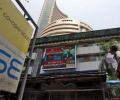
The BSE's arm Asia Index has announced Wipro will replace Bajaj Auto in the 30-share Sensex. The move is part of a semi-annual rebalancing exercise and will take effect when the market opens for trading on December 20. On account of the rejig, Wipro will see buying by passive funds to the tune of Rs1,300 crore, while Bajaj Auto will see selling of Rs 636 crore, estimate analysts.
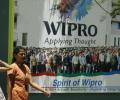
Technology firm Wipro has a "high probability" of getting included in the benchmark Sensex, while two-wheeler major Bajaj Auto is the "most likely" deletion candidate, according to an analysis done by Brian Freitas, an analyst at independent research provider Smartkarma. The changes to the index will be announced mid-November, and will become effective from December 17. The December review uses the 6-month average market capitalisation and trading turnover data between May 1 and October 31 to determine changes.

Zomato could get added to the MSCI and FTSE indices by the end of this year, while an entry to the Nifty or the Sensex would be challenging before the second half of 2022, said Brian Freitas, an analyst at independent research provider Smartkarma, in note. "With nearly the entire pre-IPO shares locked up for one year, the free float will be very low and the stock will need to move higher to around Rs 328 per share (4.3 times over possible IPO price of Rs 76) to be included in the Nifty index (with no change in the market cap of the smallest index constituent). "We can be reasonably certain that Zomato will not be included in the Nifty index till the September 2022 rebalance at the earliest," he said.
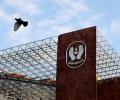
Life Insurance Corp of India (LIC), which is aiming to launch its initial public offering (IPO) next month, is set to alter the pecking order of top listed companies in the country. Depending upon where the government prices the IPO, the stock could end up becoming India's most valuable company on the first day and even get fast-tracked into global benchmark indices given its sheer size. According to market sources, LIC's IPO is targeting to mop up Rs 63,000 crore and Rs 75,000 crore.
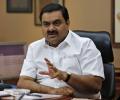
The clarification by the National Securities Depository (NSDL) - which is tasked with monitoring foreign portfolio investor (FPI) investment in domestic stocks - that the accounts of top investors in Adani group stocks remain 'active' has helped prevent a $500-million selloff of shares. Analysts said a freeze of the FPI accounts, as reported by some media outlets, could have prompted global index providers to cut weighting of four Adani group companies from their global indices. Brian Freitas, an analyst at independent research provider Smartkarma, said if the FPI accounts were indeed frozen, FTSE and MSCI would have reduced weighting of Adani group companies at the next rebalance, since it would have meant that the large part of the free float was not tradeable.
 © 2026 Rediff.com - Investor Information - Advertise with us - Disclaimer - Privacy Policy - Sitemap - Feedback - About us - Terms of use - Grievances