
Brokerages expect the company to continue outperforming in the auto segment, driven by launches and the strong trajectory of healthy bookings.

This would imply a 29 per cent year-on-year rise, significantly lower than growth rates seen in recent years.
'Sebi's move to cap brokerage charges will help investors by lowering the overall cost of investments.'

The consumer price index (CPI)-based inflation hitting an all-time low in October would encourage the six-member monetary policy committee (MPC) of the Reserve Bank of India (RBI) to cut the policy repo rate in its upcoming December 3-5 meeting. However, the July-September GDP growth, expected to be above 7 per cent, may act as a deterrent.
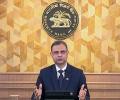
The weakening of inflation, prospects of economic growth, geopolitical uncertainty and comfortable system liquidity may result in the Reserve Bank of India's (RBI) Monetary Policy Committee (MPC) to cut the repo rate by another 25 basis points, opine top economists. They also said the external economic pressures like trade policies and others would require continued RBI's accommodative stance and policy support for the Indian industry to sustain the growth.

Wholesale price inflation extended upward momentum for the second straight month, recording at 0.83 per cent in December 2025, driven by an uptick in prices of food, non-food articles, and manufactured items on a month-on-month basis, government data showed on Wednesday. Wholesale Price Index (WPI)-based inflation returned to positive in December, after witnessing a deflationary trend in the previous two months.

The stock of automotive (auto) components major Bharat Forge has risen 14.6 per cent over the past month. Despite ongoing demand challenges, strong operating performance in the July-September quarter (Q3) of 2025-26 (FY26), a diversified revenue base, and expectations of a gradual recovery have lifted sentiment.

Strong domestic growth will continue to draw foreign investment into the Indian economy, Reserve Bank of India (RBI) Governor Sanjay Malhotra said on Tuesday. He said this was reflected in recent free trade agreements and investment commitments by large technology companies.

'Rate cut looks unlikely and there is reason to believe that the cycle is over.'

Notwithstanding global headwinds, the Indian economy saw further momentum in October on the back of goods and services tax (GST) rate rationalisation and festival spending, as indicated by high-frequency indicators, the Reserve Bank of India's (RBI's) monthly State of the Economy report said.

'In the last one year, we have added more than Rs 1.7 trillion, and we are on track.'

Foreign investors have pulled out Rs 11,820 crore ($1.3 billion) from Indian equities in the first week of this month, primarily driven by the sharp depreciation of the rupee. This sharp withdrawal follows a net outflow of Rs 3,765 crore in November, further pressuring markets.

The stock of the country's largest beer maker, United Breweries (UBBL), is trading at 25-month lows given multiple headwinds related to volumes, regulatory issues, and margin trajectory. After a muted second quarter (July-September) of 2025-26 (Q2FY26), brokerages also expect the company's Q3FY26 performance to be underwhelming.

Healthcare major Max Healthcare Institute delivered a healthy performance in the second quarter (July-September) of 2025-26 (Q2FY26). Strong patient volumes and average revenues not only boosted the top line but also aided the operating performance.

ICICI Bank delivered satisfactory results in the second quarter of 2025-26 (Q2FY26), sustaining return on assets (RoA) of around 2.3-2.4 per cent and improving asset quality. Provisions declined 26 per cent year-on-year (Y-o-Y) and 50 per cent quarter-on-quarter (Q-o-Q).

Private sector lender IDFC First Bank has lowered its savings account rates and introduced new slabs for small and medium balance categories, effective January 9, 2025, as per its website. The interest slabs and rates for higher balance accounts remain unchanged. Despite the revision, the bank continues to offer one of the highest savings account interest rates in the industry among mid-sized banks.
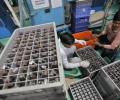
The automobile and auto-ancillary sector is expected to show strong Q3FY26 results, aided by festival-led demand, rationalisation in goods and services tax (GST) rates for select categories of vehicles, easing interest rates, and improving rural sentiment.
Retail inflation inched up to 0.71 per cent in November on rising prices of vegetables, protein-rich items, and fuel, government data showed on Friday. The consumer price index (CPI)-based retail inflation had fallen to a record low of 0.25 per cent in October, mainly due to lower prices helped by GST rate cuts and a favourable base.

The country's largest listed auto parts company by market capitalisation, Samvardhana Motherson International, reported a better than expected operating performance in the second quarter (July-September) of 2025-26 (Q2FY26). Though the global passenger vehicle (PV) market is facing multiple headwinds, the company is outperforming on the back of higher content per vehicle and market share gains.

Hindustan Unilever Ltd's (HUL's) second quarter 2025-26 (Q2FY26) consolidated revenue rose 2 per cent to Rs 16,250 crore, with low or flat volume growth. Demand remained stable but goods and services tax (GST) transition and prolonged monsoon hurt offtake.

The July-September quarter (Q2) performance of consumer electricals and durables major Havells India in 2025-26 (FY26) was broadly in line with Street estimates. While the top line was supported by robust growth in the wire and cable, switchgear, and lighting segments, the consumer durables segment restricted overall gains.

India's first maritime lender, state-owned Sagarmala Finance Corporation Ltd (SMFCL) hit the ground running with a Rs 4,300 crore disbursement announcement last Tuesday, within months of being registered as a non-banking financial company (NBFC) in June 2025.

The operating performance of the country's largest passenger carmakers, Maruti Suzuki India (MSIL) and Hyundai Motor India (HMIL), in the July-September quarter (Q2) of 2025-26 (FY26) outpaced brokerage expectations.

Wholesale price inflation (WPI) came in at (-) 0.32 per cent in November, driven by an uptick in prices of food articles like pulses and vegetables on a month-on-month basis, government data showed on Monday.

Shrugging off concerns over the depreciation of rupee, the RBI has cut interest rate by 25 basis points to 5.25 per cent in a bid to further bolster economic growth, which rose to a six-quarter high of 8.2 per cent in the second quarter of the current financial year.

Among the Sensex constituents, Eternal, Tata Steel, Kotak Mahindra Bank, UltraTech Cement, Maruti Suzuki India, Sun Pharmaceuticals, Tech Mahindra, HDFC Bank, Tata Motors Passenger Vehicles, Infosys, Trent, Mahindra & Mahindra, Reliance Industries and HCL Technologies were the gainers. However, Asian Paints, Bharti Airtel, Bajaj Finance, PowerGrid, Axis Bank, ICICI Bank and Titan were among the laggards.

As deposit growth lags credit expansion, Indian banks face shrinking low-cost Casa inflows, rising funding costs, and structural shifts driven by UPI, e-Kuber, and digital savings trends, points out Tamal Bandyopadhyay.

These losses increase insurance premiums for customers and reduce insurer margins on the other.

Packaged food major Nestle India posted better than expected September quarter results led by strong volume growth across its key segments. While there were margin pressures due to elevated raw material costs, there could be some relief with easing prices in the near term.

From the Sensex firms, State Bank of India, Bajaj Finserv, Bajaj Finance, Maruti, HCL Tech, Larsen & Toubro, Mahindra & Mahindra and Infosys were among the major winners. However, Hindustan Unilever, Eternal, Tata Motors Passenger Vehicles, and Sun Pharma were among the laggards.

Overall economic activity continued to hold up in November with demand conditions remaining robust, thanks to strengthening urban demand, but manufacturing and rural demand showed some signs of deceleration even as services remained strong, according to an article on the State of the Economy written by Reserve Bank of India (RBI) officials in the central bank's December bulletin.

Trent reported decent margins in the second quarter (July-September) of 2025-26 (Q2FY26) but growth moderated. Same store growth was low single-digits. Trent's revenue growth decelerated in Q2FY26 at 17 per cent year-on-year (Y-o-Y) while area additions were offset by decline in revenue per square foot (sq ft).

The government bond yield curve is likely to flatten in the financial year 2027 (FY27) as the Reserve Bank of India (RBI) is expected to ease supply pressure in the ultra-long segment. In FY26 so far, reduced investments by insurance companies and pension funds pushed up yields on ultra-long tenor securities, steepening the curve.
Even as the results of Siemens for the second quarter of 2025-26 (Q2FY26) were a mixed bag, the stock was the top gainer in the BSE 200 index, rising 4.92 per cent in trade. Most brokerages are neutral or positive on the company.

India, the world's fourth largest economy, is set to maintain the 'goldilocks' phase with tailwinds of good growth, low inflation and robust banking performance as well as reform initiatives poised to sustain the economic pace witnessed during 2025.

Following Axis Max Life Insurance's second-quarter results for 2025-26, Sumit Madan, managing director and chief executive officer of the company, speaks to Aathira Varier and Subrata Panda/Business Standard about growth aspirations, strategies to offset the impact of the input tax credit (ITC) withdrawal, reverse merger plans, and more.

The Reserve Bank of India (RBI) on Friday delivered a 25 basis point (bps) repo rate cut analysts expected, driven by the strong 8.2 per cent GDP growth in the September quarter. However, analysts do not expect a runaway market rally as the impact of US tariffs continues.

As the rupee remains under pressure due to several headwinds and the uncertainty around the India-US trade deal, the Reserve Bank of India (RBI) has been stepping in only to calm volatility, not to stop the fall.

The Adani group, which operates across multiple infrastructure sectors, with 12 listed entities in India and a combined market capitalisation of about $200 billion, remains "anchored by strong assets and robust cash flows", according to a Bank of America (BofA) report.

Ahmedabad-headquartered Zydus Lifesciences posted a 17 per cent year-on-year (Y-o-Y) rise in revenue from operations to Rs 6,123 crore, while the net profit increased by 38 per cent to Rs 1,258.6 crore aided by consistent performance in the US and India formulations businesses.
