
From the Sensex firms, Adani Ports, NTPC, Power Grid, HCL Tech, Tata Steel, Sun Pharma, Trent and Asian Paints were among the major gainers. However, Bharat Electronics, Eternal, Mahindra & Mahindra and Maruti were among the laggards.

'Bank has a robust capital adequacy base. Along with balance sheet preparation, the bank is focusing on strengthening risk management for the new regime.'

Indian corporate are increasingly shifting away from bank funding towards alternative sources, such as equity and bond markets, as their deleveraged balance sheets have improved their ability to raise equity at better valuations. Moreover, the 100 basis points (bps) rate cut by the Reserve Bank of India (RBI) has enabled them to access long-term funds from the debt capital market at cheaper rates.

Analysts at Morgan Stanley have updated their outlook for the Indian markets, and they now expect the Sensex to hit the 107,000 mark by December 2026 in a bull-case scenario, translating into an upside of 26 per cent from current levels.

Retail inflation slipped to 1.54 per cent in September from 2.07 per cent in the preceding month mainly due to subdued prices of food items, including vegetables and pulses, according to government data released on Monday. The consumer price index (CPI) based inflation was 5.49 per cent in September 2024.
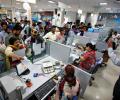
The Indian banking sector could be due for a rise in profitability after several quarters of net interest margin (NIM) compression. The Q2FY26 results suggest NIMs have bottomed out.

'Investors can consider staying invested in long duration products as there is a possibility of rate cuts in the near term.' Positive macros - lower inflation, high forex reserves and favourable demand-supply dynamics for government bonds - make a strong case for rate cuts from December, says Devang Shah, head of fixed income, Axis Mutual Fund. In an interview with Abhishek Kumar in Mumbai, Shah says this view may not hold true if commodity prices go up sharply.
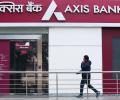
Axis Bank on Wednesday reported a 26 per cent decline in standalone net profit to Rs 5,089.64 crore annually for the quarter ended September 2025. The private sector lender posted a profit of Rs 6,917.57 crore for the July-September quarter in 2024-25.

From the Sensex firms, Bharti Airtel, Power Grid, Tech Mahindra, Infosys, Bajaj Finance and Reliance Industries were among the major laggards. However, Larsen & Toubro, Bharat Electronics, UltraTech Cement and Maruti were among the gainers.

Multiple tailwinds for the automobile sector, including a cut in goods and services tax (GST) rates, are keeping analysts bullish on auto stocks from a long-term perspective, even as they see the rally running its course in the near term.

Colgate-Palmolive India's September quarter (Q2FY26) performance has reinforced concerns among brokerages about the company's continued market challenges.

The rupee continued to face pressure in the first half of the current financial year (FY26), hitting fresh lows against the dollar, due to strengthening of the greenback, rising crude oil prices, and foreign outflows. Rupee has depreciated by 3.7 per cent so far in the current financial year after starting at a good note in April.

Global emerging market investors are sharply cutting back on India, making it the largest underweight market, as funds rotate into China, Hong Kong, and South Korea amid tariff shocks and valuation concerns.
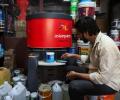
Asian Paints reported a good performance for the second quarter (July-September) of 2025-26 (Q2FY26), with some help from base effects, despite strong competition and extended monsoon. Volume grew in low double digits in the key domestic decorative paints, and value in that segment grew by 6 per cent. Ebitda (earnings before interest, taxes, depreciation, and amortisation) grew 21 per cent year-on-year (Y-o-Y), and PAT (profit after tax) grew 14 per cent. Asian Paints also defended market share better after several quarters where it had lost ground to Birla Opus.

The ministries of Road Transport & Highways and Railways have exceeded the national average capital expenditure (capex) by spending 63 per cent and 57 per cent of Budget estimates (BE), respectively, in the first half of 2025-26 (FY26). The total capital expenditure for April-September of FY26 stood at 52 per cent of the BE, according to the latest data by the Controller General of Accounts (CGA).

Pune-based two-wheeler major Bajaj Auto posted its highest ever quarterly revenue and profit after tax (PAT) in Q2FY26. Even as consolidated revenues were up 18.8 per cent year-on-year (Y-o-Y) to Rs 15,734.7 crore, PAT zoomed 53.2 per cent to Rs 2,122 crore.

Some public sector banks, including State Bank of India (SBI), Union Bank of India, Canara Bank, and Bank of India, are increasing the spread on home loans for new customers to protect margins.

Automotive (auto) stocks have been among the best performers in the BSE 200 index in recent months. More than half of the top 15 gainers over the past one, two, and three months have come from the sector.

The Reserve Bank of India (RBI) on Wednesday kept its policy interest rate unchanged at 5.5 per cent for the second consecutive time, citing concerns over tariff uncertainties.

The US' move to raise the tariff on most Indian goods to 50 per cent could drag India's GDP growth for FY26 by 35 to 60 basis points, according to various economists. One basis point (bp) is equal to 0.01 per cent.

'The DNA of Tata Consumer Products is all food and beverage.'

With the price of gold entering a strong bull run, gold-loan non-banking financial companies (NBFCs) are under the spotlight, even though their performance is not directly linked to gold price. Muthoot Finance outperformed in the April-June quarter (Q1) of 2025-26 (FY26), with its assets under management (AUM) growing 10 per cent quarter-on-quarter (Q-o-Q) and 42 per cent year-on-year (Y-o-Y), an improvement of 88 basis points (bps) Q-o-Q in net interest margin (NIM), and a fall in credit cost. Gold AUM rose 40 per cent Y-o-Y and 10 per cent Q-o-Q. The company recorded recoveries of 350 crore, including 100 crore from an asset reconstruction company (ARC), resulting in a 100-bp Q-o-Q yield increase.

GST Reform 2.0, which trims tax slabs from four to two, signals a push for demand-led growth, and together with recent income tax cuts, sets the stage for sustained economic growth, experts said. The Goods and Services Tax (GST) Council on September 3 approved an overhaul of the indirect tax regime by taxing essentials at 5 per cent and other goods at 18 per cent. A new 40 per cent tax will be applicable on luxury and sin items.

The July-September quarter (Q2) business update on revenue by FSN E-Commerce Ventures (Nykaa) was well received by most investors and the share price surged over 6 per cent, driven by one block deal. Even after Wednesday's minor dip, it was still higher at Rs 257.50 as compared to Monday's close of Rs 255.55.

Mahindra & Mahindra on Tuesday posted a 28 per cent year-on-year increase in its consolidated profit after tax to Rs 3,673 crore for the second quarter ended September 30, 2025, driven by robust performance of the farm sector, while also seeing the impact of the GST transition on the auto sector. The company reported a profit after tax (PAT) of Rs 2,867 crore for the July-September period of the last fiscal.

'Given the lag in transmission, further softening of lending rates may happen in the coming months.'

The country's largest listed gold jewellery maker, Titan Company, maintained its growth pace in the April-June quarter of 2025-26 (FY26).

State-owned insurer LIC on Thursday reported a 32 per cent jump in net profit to Rs 10,053 crore for the second quarter ended September 30, aided by a lower commission outgo. The country's biggest insurer had reported a net profit of Rs 7,621 crore in the year-ago period.
Among Sensex firms, Mahindra & Mahindra, Asian Paints, Infosys, Titan, Sun Pharma, Tata Consultancy Services, Tech Mahindra and Power Grid were the major laggards. However, Bajaj Finance, Eternal, UltraTech Cement and Reliance Industries were among the gainers.

HCLTech reported flat net income of Rs 4,235 crore in the second quarter of 2025-26 (Q2FY26) compared to last year, even as its revenue was up 10.7 per cent to Rs 31,492 crore helped by financial services and technology business verticals.

Home purchase affordability has improved in the first half of calendar year (CY) 2025, after the RBI reduced the repo rate by 100 basis points (bps), according to real estate consultancy Knight Frank India.

Among Sensex firms, Eternal, Sun Pharma, Infosys, HDFC Bank, HCL Tech, Hindustan Unilever, Power Grid, ITC and Adani Ports were the major gainers. However, Tata Motors, Trent, Bajaj Finance and Asian Paints were among the laggards.

The transmission of the February and April rate cuts is now complete, validating the central bank's monetary stance and contributing to a revival in credit growth, said Reserve Bank of India (RBI) Governor Sanjay Malhotra on Friday. "We now have preliminary figures for June credit rates, and we find that for new loans, the rates are lower by at least 50 basis points (bps)... within two months of our 50-bp cut, we are in June, and the whole of the monetary policy transmission has happened.

Given the stronger rural activity, and potential goods and services tax (GST) impact, investors are bullish on the two-wheeler (2W) segment. In August, dealers in the domestic market picked up 11 per cent more 2Ws year-on-year (Y-o-Y), despite only 2 per cent growth in retail registrations. This indicates inventory stocking ahead of the festival season. Export trends were good. TVS Motor and Royal Enfield may have gained domestic market share.

Two-wheeler sales volume is expected to grow 5-6 per cent this fiscal, while that of passenger vehicles to see a 2-3 per cent rise, following the GST rates rationalisation on automobiles, according to Crisil Ratings. The GST Council's decision to move to a two-rate structure of 5 per cent and 18 per cent, effective September 22, 2025, is a timely move that will revive demand for automobiles, Crisil Ratings said in a statement.

Among Sensex firms, Kotak Mahindra Bank, Larsen & Toubro, Mahindra & Mahindra, Maruti, Bharti Airtel and Tata Steel were the major gainers. However, Asian Paints and Bajaj Finance were the laggards.

Equity markets will keenly track outcome of the US Federal Reserve policy meeting this week amid heightened expectations of an interest rate cut along with WPI inflation data, analysts said. Any further development on the USndia trade front would also drive trends in the equity market, experts said.

Growth accelerated for Zomato operator Eternal in the second quarter of financial year 2026 (Q2FY26). Zomato's business to commerce (B2C) operations delivered a strong 57 per cent year-on-year (Y-o-Y) rise in net order value (NOV) to Rs 23,164 crore while consolidated revenue soared 183 per cent Y-o-Y (90 per cent Q-o-Q) to Rs 13,590 crore during the period, with like-for-like (LFL) growth of 65 per cent, and acceleration in the quick commerce (QC) segment, which recorded NOV growth of 137 per cent Y-o-Y (27 per cent Q-o-Q).

'The US reciprocal tariff has added another element of uncertainty and the central bank may prefer to wait and get further clarity.'

After a subdued first quarter of 2025-26 (Q1FY26), banks are now betting big on the festive season, rolling out attractive loan offers to boost credit growth in the second half of the current financial year (H2FY26) - a trend likely to be further accentuated by the second-order effects of the good services tax (GST) cuts.
