
'I think today RBI supervision is much sharper than what it was earlier.'

'Only the coming years will tell whether the government finds this an easy way of relieving itself from its fiscal constraints.'

The RBI raked in a massive net income gain from foreign exchange currency sales as a buffer for the rupee during tumultuous geopolitical upheavals last year owing to Russia's invasion of Ukraine.

While the fiscal year has just begun, any windfall surplus will be welcomed by the government as it bids to meet the fiscal deficit target of 5.9 per cent of GDP, amidst lack of clarity on exactly to what extent will recession in the West impact India's trade and tax collections.

Securities & Exchange Board of India (Sebi) Chairman C B Bhave has for the first time publicly backed the Bimal Jalan committee report on the working of capital market infrastructure institutions (MIIs). The report was placed in the public domain on November 24 and received scathing criticism from industry players.

Bimal Jalan cmmittee's recommendations must be viewed in the context of the lessons learnt from the trans-Atlantic financial crisis and the impact that distortions and mis-governance in the financial sector can have on the real economy. The report's focus on stability of markets is, therefore, important.

'The Jalan Committee has now provided very clear guidelines on how the (RBI's) balance sheet should be looked at, what kind of disclosures should be made, what are the principles on which the Contingency Risk Buffer should be maintained, what should be the revaluation reserves, and the market risk to the Contingency Risk Buffer.'

It is now clear that the revised takeover code and the Bimal Jalan committee report will not be implemented soon and in the same form, since the finance ministry wants to seek industry views on these two sets of recommendations this month, before the market regulator could take a decision.

At present, investors who can buy up to 15 per cent in a stock exchange include domestic banks and financial institutions, clearing corporations, depositories and stock exchanges.

India Post had applied for a bank licence under RBI guidelines issued on February 22, 2013.

The thinking at the Centre is that since the RBI has ramped up purchases of government bonds, the interest earned on them will be transferred to the exchequer as dividend.

The Reserve Bank on Friday approved the transfer of Rs 99,122 crore as surplus to the central government for the accounting period of nine months ended March 31.
A high-level panel led by former RBI governor Bimal Jalan, set up to decide the appropriate capital reserves that the central bank should maintain, on Wednesday finalised its report.

The central bank can directly print money and finance the government, but it should avoid doing so unless there is absolutely no alternative, former RBI governor D Subbarao on Wednesday said while pointing out that India is 'nowhere' near such a scenario. In an interview with PTI, Subbarao suggested that to deal with the second wave of COVID-19 induced slowdown in the economy, the government can consider Covid bonds as an option to raise borrowing, not in addition to budgeted borrowing, but as a part of that.

The Jalan panel has recommended to the RBI to keep shady entities out of banking licence race.

Subbarao said he would be "ok" if a sovereign bond issue in foreign currency is done once just to test the waters, but cautioned against using the instrument regularly.

Of the 40 CEOs polled from across the country, 60 per cent identified a fractured electoral mandate as a bigger risk than trade wars, volatile oil prices, and inflation.
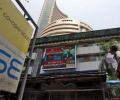
Rules for market infrastructure institutions such as stock exchanges, clearing corporations, and depositories have come under review by Sebi after five years.

The main difference of opinion between RBI and FinMin is over the transfer of the RBI's 'excess' capital reserves. The Jalan panel seeks to convince finance secretary Subhash Garg to soften his dissent note language. The move is aimed at maintaining the now-cordial relations between the RBI and the finance ministry.

Owing to Finance Minister Nirmala Sitharaman being new to her role, a number of crucial announcements in the Budget bore Garg's imprint, especially the decision to borrow in overseas markets, reduce the fiscal deficit as a percentage of gross domestic product, and resort to off-Budget borrowing to meet that target, says Arup Roychoudury.

Jayshree P Upadhyay ' Mumbai September 9, 2014 Last Updated at 22:50 IST Top Stocks to Buy in 2014 8-10 Best Stocks for 2014 per month Highly Accurate Calls, Free Trial stockaxis.com/Stocks-to-buy-in-2014 Ads by Google 3 Add to My Page RELATED NEWS Foreign investor cap in bourses may be raised Sebi sets foreign portfolio investor limit of 10% per firm Sebi move on FPI regime grounded No clarity yet on FPI regime Jaimini Bhagwati: Correcting tax and disclosure anomalies Karbonn Titanium S5 Plus Be 1st to own latest Android phone with Dual SIM, 8 MP Camera & more!www.karbonnmobiles.com/S5_Plus 1Cr Life Cover @ Rs 543* Compare Premium of 46 Insurers Buy Online and save upto 55%www.policybazaar.com/TermInsur_Rate Ads by Google In a move that could increase the stake of foreign investors in Indian stock exchanges, the government is considering a threefold increase in the single-investor investment ceiling. Currently,a foreign portfolio investor (FPI) investment in an exchange is capped at five per cent. The finance ministry has written to the regulatory authorities to increase the ceiling to 15 per cent, said sources. The proposal is said to have in-principle approval from the Securities and Exchange Board of India (Sebi) and the Reserve Bank of India (RBI). The move would bring the FPI investment limit in line with those for financial institutions such as insurance companies and banks. NEW POLICY IN THE WORKS Single foreign investor limit in exchanges to be revised from 5% to 15% Sebi and RBI have given in-principle approval to the proposal Government to amend foreign investment policy BSE has 8 foreign shareholders holding 31% stake NSE has close to 20 foreign shareholders holding 36% stake The government allowed the foreign investors to invest in stock exchanges in 2006, with an overall cap of 49 per cent. This latter cap is likely to be unchanged. BSE and the National Stock Exchange (NSE), the two large nationwide bourses, are likely to benefit from the increase in limits. BSE has eight foreign investors, which cumulatively own about 31 per cent in it. The shareholding of Deutsche Boerse Group and Singapore Exchange Ltd are a little below the five per cent ceiling. NSE has about 20 foreign shareholders, holding around 36 per cent. Cyprus' Gagil and Goldman Sachs own five per cent each; Citi Group has around two per cent. "The finance ministry has received representations stating that the present limit of five per cent is a deterrent in attracting long-term anchor and strategic foreign investors in stock exchanges. Following which, the ministry has sought comments from both Sebi and RBI," said a person privy to the matter. A higher foreign investor limit will not only encourage more investment in Indian bourses but help in exchange of technology and products, said exchange officials. "A five per cent limit on the shareholding of any single investor or investor group is too small to encourage them to take sufficient interest in growth of the exchange," said an official associated with one, asking not to be named. The regulator and the government are also mulling a change in the shareholding of clearing corporations, which could also see individual foreign investors' cap being increased to 15 per cent. Some sections of the market believe that allowing a single FPI to own 15 per cent in a exchange could be detrimental to having a diversified shareholding. The Bimal Jalan committee, in the previous review of ownership and governance of stock exchanges in 2010, had debated whether there was a need to revise the cap. It was in favour of having an anchor investor, such as a bank or financial institution, which would own up to 24 per cent. Read more on: Fpi ' Sebi ' Rbi ' Nse ' Foreign Investor ' Singapore Exchange ' Finance Ministry Read More Investors vie for shares of stock exchanges Pick-up in sentiment, volumes boost bourses' unlisted shares HDFC Life Click2Protect+ Get Lump Sum + Monthly Income Benefit* @ Affordable Rate. Buy Now hdfclife.com/Click2ProtectPlus Retirement Calculator Plan Your Retirement Online in 2Min Calculate & Compare Premium Here! policybazaar.com/Retirement Ads by Google Advertisements Get a freedom to choose your own plan. Click here to know more... Data transforming the match-making business. click here Open a free Trading & Demat A/c with Sharekhan Leadership and Corporate Accountability-India. Click here Great fares to Europe from INR 54,000* Amsterdam. Click here Start Investing with the best Broker in india Important Facts about Infant Hearing Screening Gifting Solutions. Make easy & perfect! Find out what converged solutions can do for you. Smart Cloud Virtualized Server Recovery. Learn more. The perfect drive the perfect style. Book a test drive 3 Add to My Page Back to Top Quick Links Go LATEST NEWSAll NewsIn this section Ebola threatening Liberia's existence, minister warns IS threatens to assassinate Twitter employees Motherson Sumi, Eicher Motors, TVS Motor gain inclusion in F&O segment ABG, Bharati Shipyard rallies on hopes of government sops Pre-market: Five stocks to watch out for in trade today US manufacturing industry pushes India for free trade Dollar gains on Fed outlook, hurts shares Wall St ends lower as Apple shares fall post launch Ukraine ceasefire 'mostly holding': US Flipkart launches third private label Citron News you can use Rss icon Errors to avoid when filing returns What is Gratuity? What are NEFT and RTGS? Check your Income Tax Credit credit status form-26AS online Saving capital gain tax on sale of property Calculate tax on your house property income How to Check your EPF Balance & status online Featured Videos iPhone killers? The biggest threats to Apple's dominance video Jaguar takes the battle to BMW video The 5 biggest IPOs in U.S. history video Here is the next-gen spy plane... a blimp video MOST POPULARReadSharedCommented Supreme Court reserves order on coal block allocations Apple launches Watch, two iPhones & Apple Pay Guj rains: Hundreds evacuated in Vadodara, Army on stand-by Neel Mukherjee's book in Man Booker shortlist Mumbai airport keeps airlines guessing on Airbus A380 parking bay Market News A fourth of mutual fund equity assets concentrated in 10 stocks ICICI Bank, HDFC Bank, Infosys, SBI and L&T among fund managers' preferred bets Den Networks: Investing in new growth avenues Its tie-up with Snapdeal to launch a shopping TV channel looks like a win-win deal Sensex, Nifty retreat from record highs on profit taking The BSE Sensex and Nifty fell on Tuesday from their record highs in the previous session as investors chose to book profits in recent ... High agri imports under govt lens Dept of commerce seeks ideas to curb import dependence for supply of commodities, writes to sector bodies MCX hopes FTIL stake sale will conclude by month-end The exchange's clarification came in the wake of FMC rejecting its demand to allow approvals for contracts for the March quarter of 2015.

The government planned to borrow 10-15 per cent of the total borrowing offshore. That works out to at least Rs 71,000 crore, or about $10.4 billion at Friday's exchange rate.

Exchanges have twin roles: commercial and regulatory.

In an interaction with Jash Kriplani, A Balasubramanian, managing director and chief executive officer, Aditya Birla Sun Life Asset Management Company, shares his optimism on what makes him believe that these cuts can help in addressing multiple issues plaguing the economy, without letting fiscal deficit pose any major risk.

The windfall from RBI may be used to trim borrowing, help fund Rs 3.3 lakh crore capex plan, capitalise banks and provide fiscal stimulus to some stressed sectors, experts and economists said.

The issue is likely to be discussed on Thursday at a meeting of Sebi's board, which would also be apprised of the impact of the Finance Ministry's decision for not agreeing to such a proposal from the capital markets regulator, sources said.
It could be a matter of concern that foreign shareholders of the NSE are registered in tax havens such as Mauritius and Cyprus.
 © 2026 Rediff.com - Advertise with us - Disclaimer - Privacy Policy - Sitemap - Feedback - About us - Terms of use - Grievances