
ONGC was the top loser in the Sensex pack, shedding around 5 per cent, followed by SBI, Axis Bank, ICICI Bank, Bajaj Auto and Maruti. On the other hand, IndusInd Bank, HUL, Dr Reddy's, NTPC and Reliance Industries were among the gainers.

The other prominent gainers were Tech Mahindra, HCL Technologies, Wipro, State Bank of India and Larsen & Toubro. Bajaj Finserv, Power Grid, UltraTech Cement and HDFC Bank were among the laggards.

Axis Bank, Tata Steel, Kotak Mahindra Bank, ICICI Bank, Tata Motors, and Bajaj Finance were among the other major laggards. Tata Consultancy Services, Reliance Industries, UltraTech Cement, Infosys, HCL Technologies, and Tech Mahindra were among the gainers.

Bajaj Finance, ICICI Bank, Bajaj Finserv, IndusInd Bank, Infosys, Kotak Mahindra Bank, Wipro, and Reliance Industries were among the other laggards. On the other hand, Larsen & Toubro, Hindustan Unilever, Power Grid, Asian Paints, Nestle and Mahindra & Mahindra were the major gainers.
.jpg)
According to market regulator Securities and Exchange Board of India, MF investments in banking stocks reached Rs 48,419 crore (Rs 484.19 billion) as on May 31, accounting for 21.59 per cent of their total equity assets under management (of Rs 2.24 lakh crore or Rs 2.24 trillion).

The combined market capitalisation of BSE-listed companies hit an all-time high of Rs 343.48 lakh crore on Monday, amid a rally in equities after the BJP registered victory in assembly polls in three Hindi heartland states. Following the sharp uptick in the market, investors became richer by over Rs 5.81 lakh crore on Monday. The 30-share BSE Sensex jumped 1,383.93 points, or 2.05 per cent, to close at a lifetime high of 68,865.12.
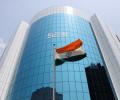
Only a fifth of foreign portfolio investors (FPIs) in breach of the market regulator-specified thresholds may need to provide enhanced disclosure on ultimate beneficiaries, thanks to exemptions being provided, according to people in the know. The ultimate beneficial ownership (UBO) disclosures, for FPIs with over 50 per cent holding in a single corporate group or over Rs 25,000 crore exposure to Indian assets, will be required from February 1. But, depending on their category, FPIs will have 10-30 working days to submit these granular details.

Equity benchmark Sensex tumbled over 273 points on Tuesday, tracking losses in index majors Reliance Industries, Dr Reddy's and Axis Bank amid a massive selloff in Chinese markets. Despite opening on a positive note, the 30-share BSE index turned red to end 273.51 points or 0.52 per cent lower at 52,578.76, while the broader NSE Nifty fell 78 points or 0.49 per cent to 15,746.45. Dr Reddy's was the top loser in the Sensex pack, plunging over 10 per cent, after the company reported s 36 per cent decline in consolidated net profit at Rs 380.4 crore for the quarter ended June 30, 2021, on account of higher expenses.

PSU bank stocks held the market's attention in morning trades on Tuesday as there's much anticipation that the Union Budget for 2003-04 may bring about the raising of foreign holding ceiling in these banks.

IndusInd Bank was the top laggard, tumbling over 7 per cent, followed by Bajaj Finance, M&M, Tech Mahindra, TCS and Tata Steel.

Banks, the biggest component of the Indian equity market, are now trading at a big discount to the benchmark indicesThe BSE Bankex index, which tracks the share price of the 10 top listed banks, is trading at a trailing price to earnings (P/E) multiple of 15.3X, nearly a 40 per cent discount to the BSE Sensex current P/E of 24.37X. This is the biggest valuation gap between the two indices in at least 10 years. Similarly, the BSE Bankex price to book ratio (P/B) of 2.22X is 40 per cent lower than the current Sensex P/B ratio of 3.61X.

Laggards yet, a number of smaller PSBs in the category have balance sheets which do not give much comfort.

SBI was the biggest loser in the Sensex pack, tumbling 3.29 per cent, followed by Tata Steel, ICICI Bank and Maruti, which shed up to 2.76 per cent.

Shares of the HDFC duo led the fall in the indices, shedding up to 2.94 per cent. IndusInd Bank, Axis Bank, Maruti, Bajaj Finserv, PowerGrid and SBI were among the other major laggards.
The benchmark National Stock Exchange Nifty has rallied 4 per cent, or 750 points, from this month's low to end at 19,732 on week ending November 17. Technical analysts say the market could consolidate around the current levels as it is nearing the resistance zone. "The near-term uptrend status of the market remains intact, but there is a possibility of some more consolidation or minor weakness for the Nifty in the next one to two sessions.

The NSE Nifty settled the day 38.85 points or 0.37 per cent lower at 10,500.90 after shuttling between 10,590.55 and 10,456.65, intra-day.
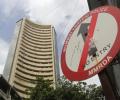
Nifty saw the biggest weekly gain since the first week of September and comfortably maintained its crucial 8250 levels in today's session

With the stock coming under pressure, the MF holding value could have dropped to Rs 50 billion, back-of-the-envelope calculations show.

'Such big falls are quite frequent these days, so do not try to time this market.' 'Use big dips to accumulate quality stocks.'

Yes Bank was the biggest gainer in the Sensex pack, climbing 4.08 per cent, followed by Tata Motors, ICICI Bank, Bajaj Auto, Coal India, Hero MotoCorp, HCL Tech, Vedanta, Sun Pharma, Axis Bank, Maruti, ITC, IndusInd Bank, TCS, HUL and SBI, rising up to 2.67 per cent.

The broader NSE Nifty reclaimed the key 10,000-mark and touched a high of 10,143.50 before finally settling at 10,130.65

SBI remains a favourite of most brokerages in the PSB segment.

On the Sensex chart, IndusInd Bank, SBI, Dr Reddy's, NTPC, ICICI Bank, HCL Tech and Bajaj FinServ emerged as major laggards.

Top gainers in the Sensex pack included Tata Steel, Kotak Bank, NTPC, HDFC twins, PowerGrid and ONGC, rising up to 4.60 per cent.

'To the believers of crypto regulations, I have only one question to ask, how will you regulate it?'
NTPC was the top gainer in the Sensex pack, rallying 3.44 per cent. Bharti Airtel, Bajaj Finance, TCS, HDFC twins, Yes Bank and RIL too gained up to 2.33 per cent.

ETFs function like a mutual fund scheme and have underlying assets of government-owned companies.

The stock of State Bank of India (SBI) may re-rate soon, believe analysts, if the lender manages to safeguard its net interest margin (NIM) going ahead. This, along with controlled credit costs, should aid the outlook of the stock which has been underperforming the markets for some time now. "We believe delivery of growth on guided lines, sustenance of NIMs near current levels, and controlled asset quality parameters aiding controlled credit costs should lead to strong profitability and drive re-rating of the stock," said analysts at JM Financial.

Among the Sensex stocks, Reliance Industries climbed the most by 3.11 per cent. Bajaj Finance, Titan, Axis Bank, ICICI Bank, Bajaj Finserv, IndusInd Bank, UltraTech Cement, Larsen & Toubro, HDFC Bank, HDFC and Kotak Mahindra Bank were among the other major winners. Power Grid, Hindustan Unilever, Tech Mahindra, Tata Consultancy Services, Infosys and Asian Paints were among the biggest laggards.

From the Sensex pack, Larsen & Toubro jumped 4.26 per cent to emerge as the biggest gainer, followed by IndusInd Bank, Tech Mahindra, State Bank of India, HCL Technologies, Power Grid, NTPC, Axis Bank, Kotak Mahindra Bank, HDFC Bank and Wipro. Mahindra & Mahindra, Infosys, UltraTech Cement and Hindustan Unilever were the major laggards.

Among the main gainers were Jio Financial Services which jumped 4.99 per cent, Tata Steel (2.09 per cent), Maruti Suzuki (1.87 per cent), M&M (1.31 per cent) and Infosys (1.19 per cent).

More than a dozen corporates, including big names such as Aditya Birla Group, M&M, L&T, as well as state-owned PFC, LIC and India Post, are likely to apply to the Reserve Bank for licence to open banks.

From the Sensex pack, IndusInd Bank, NTPC, Asian Paints, Hindustan Unilever, JSW Steel, Tech Mahindra, Bajaj Finance, Infosys, Wipro, ICICI Bank, Bajaj Finserv, HDFC Bank and Tata Motors were among the major laggards. HCL Technologies, Power Grid, Titan, Reliance Industries, UltraTech Cement, Tata Steel, State Bank of India and Mahindra & Mahindra were the gainers.

'If individual stocks start falling 25% to 30% or more, then I doubt how many of them will be able to withstand that (kind of selloff). That is when you'll see panic coming in.'

Analysts say domestic banks' dependence on local depositors insulates them from the crisis.

The rout in Adani Group stocks after US-based short seller Hindenburg Research released a report on January 24 has sparked a rebound in trading activity this month. The average daily trading volume (ADTV) for the cash segment (both NSE and BSE combined) so far in February stands at Rs 59,346 crore, and is around 15 per cent more than the previous month's tally of Rs 51,844 crore, which was the lowest in six months. The ADTV for the futures and options (F&O) segment rose to a record Rs 204 trillion (notional turnover) against Rs 202 trillion in January.
Laggards yet, a number of smaller PSBs in the category have balance sheets which do not give much comfort.
Overall, from a three- to five-year perspective, prospects of the Indian economy and consequently the banking sector are promising.

'Investors should not commit fresh money to these stocks right now, unless they can hold for the next three to four years.'

Investors became richer by over Rs 2.27 lakh crore on Monday as equities rebounded, with the BSE Sensex rallying over 1 per cent amid continuous foreign fund inflows and upbeat global markets. The 30-share BSE Sensex jumped 709.96 points or 1.16 per cent to settle at 61,764.25. During the day, it zoomed 799.9 points or 1.31 per cent to 61,854.19. Following the rally, the market capitalisation of BSE-listed firms jumped by Rs 2,27,794.46 crore to Rs 2,76,06,443.06 crore.
 © 2026 Rediff.com - Advertise with us - Disclaimer - Privacy Policy - Sitemap - Feedback - About us - Terms of use - Grievances