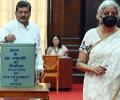
An overview of the past vice presidential elections in India, highlighting uncontested wins, multi-cornered fights, and notable candidates.

'Is it right and proper for the US authorities to allow people like Subrahmanya Swamy [sic] go round the country preaching murder, violence, overthrow of the duly elected Government of India?' A fascinating excerpt from Sugata Srinivasaraju's The Conscience Network: A Chronicle of Resistance to a Dictatorship.

Morarji Desai was 81 when he was elected prime minister and ruled India for two years, from March 1977 to July 1999.

Wing Commander Raveendran and flight steward Sargeant Iyer, though shaken and injured, managed to open the rear door of the aircraft and shouted for Prime Minister Morarji Desai and the passengers in the forward cabin to exit in haste since they suspected that fire would engulf the aircraft.

There may be those who could want to go slow, citing the large pendency of follow-up action and court cases that they would have to process and/or proceed with, before raiding more politicians, observes N Sathiya Moorthy.

He succeeded Fakruddin Ali Ahmed after his death in 1977.
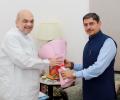
Given the politics behind it all, one possibility is for binding the governor to act according to the decisions of the state government and clarifying his position vis a vis bills and resolutions passed by the state assembly -- or, re-enacted if returned, points out N Sathiya Moorthy.

Gianiji had crafted his moves with the meticulous planning of a chess grandmaster. He did not know whether a checkmate was feasible, as his time was running out, but he wanted Rajiv Gandhi to smell the fear of loss. A fascinating excerpt from K C Singh's The Indian President: An Insider's Account of the Zail Singh Years.
 © 2026 Rediff.com - Advertise with us - Disclaimer - Privacy Policy - Sitemap - Feedback - About us - Terms of use - Grievances