
Automotive (auto) major Mahindra & Mahindra (M&M), which is readying to launch nine sport utility vehicles (internal combustion engine/ICE), seven Born Electric Vehicles (BEVs), and seven light commercial vehicles by 2030, has outlined an investment of Rs 27,000 crore in its auto business between 2024-25 (FY25) and 2026-27 (FY27). Over the next three years, the company will deploy Rs 37,000 crore, including its auto business, farm business (Rs 5,000 crore), and service business (Rs 5,000 crore).

'India needs many more job creators, both in manufacturing and services, to make it big.' 'For that, the red carpet must be rolled out fully and for all investors without holding back,' suggests Nivedita Mookerji.

Global capability centres (GCCs) are increasingly looking to tap into revenue opportunities from the Indian market, which is already a critical talent hub. While capturing the potential of the Indian market has been in the works over the past few years, it's only of late that companies are gaining momentum. India is home to more than 1,580 GCCs, with a total market size of $46 billion and growing at a compound annual growth rate (CAGR) of 11.4 per cent, according to a Nasscom-Zinnov report.

The Centre should provide a clear regulatory pathway that it will follow so that automobile companies can plan their investments and car launches accordingly, Venkatram Mamillapalle, managing director (MD) & chief executive officer (CEO), Renault India Operations, said on Tuesday. Renault is planning to launch five cars - including a B-plus segment sport utility vehicle (SUV), a C-segment SUV and an electric vehicle (EV) - in India in the next three years, he told reporters. In early 2022, the ministry of road transport and highways had announced that cars in India would be required to have six airbags from October 1, 2022.

BJP workers depend on Annamalai's popularity to emerge victorious. He has has made 100 promises to be fulfilled in 500 days and assurances include cleaning up rivers, an international airport and food vans named after former Chief Minister K Kamaraj.

The mutual fund (MF) industry had an action-packed 2023 as it tackled the scrapping of tax benefits for debt fund investors and surging flows into equity funds.

The Indian entrepreneurship success story will soon see one more company debuting on the public markets. Ola Electric, the electric vehicle (EV) company, has become the first such firm that has filed its draft red herring prospectus (DRHP) with the Securities and Exchange Board of India for its initial public offering (IPO). This is a fresh issue of equity shares of up to Rs 5,500 crore and an offer for sale (OFS) of more than 95 million equity shares at a face value of Rs 10.

'The risk is in not being invested and missing out on an upmove.'

From toys, footwear and furniture to insulated flasks, smart meters, and air coolers - the Central government over the last decade has mandated higher standards for production and imports of such items. Sample this: Till 2014, there were 14 Quality Control Orders (QCOs) covering 106 products. By the latest count, there are 156 QCOs on 672 products.

There has been a sharp recovery in the headline corporate earnings in the April-June 2023 quarter (Q1FY24), after a dismal showing by early bird companies. The combined net profit of the 983 listed companies that have declared their quarterly results, so far, was up 64.7 per cent year-on-year to record a high of Rs 2.68 trillion in the first quarter, but growth in earnings remained lopsided because most of the incremental gains came from a handful of companies. Moreover, the quarterly numbers showed a continued slowdown in revenue growth.

'Now that all the early adopters have the electric car, governments are backing down in some countries because they do not have the money to subsidise so much.'
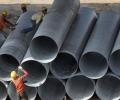
The festive season will mean business for the steel industry as it is the time when automotive and consumer appliance companies bump up demand to prepare for higher sales, experts have said. Ranjan Dhar, chief marketing officer at ArcelorMittal Nippon Steel India (AM/NS India), said that bookings by auto and consumer appliance industries are 20 per cent higher ahead of the festive season compared to last year. "While this could be for a couple of months, it could normalise later at approximately 10 per cent," he said.

Prices may go up because of higher energy costs, caused by the rise in shipping charges, with commercial vessels taking a longer route to avoid the troubled Red Sea region, the finance ministry said on Monday. Iran-backed Houthi rebels of Yemen are repeatedly attacking ships in the Red Sea. While the global economy is grappling with challenges such as sticky inflation, sluggish growth, and mounting fiscal pressure, India's external sector could face "potential risks" due to the ongoing geopolitical tensions, according to the finance ministry's report on the review of the Indian economy.

Tata Group remained India's largest business conglomerate in market capitalisation in calendar year 2023 while the Mukesh Ambani camp raced ahead of the Adani businesses to become the second-largest. The Tata companies ended 2023 with a combined group market capitalisation of Rs 28.68 trillion, up 35 per cent from the Rs 21.2 trillion at the end of December 2022. Ambani's group mcap is Rs 19.42 trillion at the end of CY23, up 10.7 per cent from the Rs 17.6 trillion a year ago.

April-June 2023 (Q1FY24) was a mixed quarter for India's top family-owned business groups. Three of the big five in terms of revenue reported a year-on-year (Y-o-Y) decline in combined net sales and two saw a Y-o-Y fall in net profits. Combined net sales of all listed companies in the five groups were up just 2.2 per cent Y-o-Y at Rs 6.6 trillion in the quarter, down sharply from the 10.3 per cent in the March 2023 quarter (Q4FY23) and 42.8 per cent in Q1FY23.


Auto industry volumes have grown by 2.5 per cent overall, led by domestic sales of three-wheelers, two-wheelers and passenger vehicles (PVs) in the first quarter of this financial year. Analysts predict an 18 per cent growth in revenues for automotive original equipment manufacturers (OEMs) and profit growth of 69 per cent year-on-year (YoY). However, on a sequential basis, a decline in revenues as well as earnings before interest, taxes, depreciation, and amortisation (Ebitda) margins is expected.

The Street's optimism on India's largest listed automotive maker by market capitalisation is not misplaced, given the robust wholesale performance in recent months and the strong 2023-24 (FY24) October-December (Q3) results.

India can become the number one automotive manufacturing hub in the world within five years, but auto companies need to enhance safety features to reduce deaths due to road accidents, Union Minister Nitin Gadkari said on Thursday. In his inaugural address at the Auto Expo 2023 here, the minister for road transport and highways asserted that the government's target is to reduce these accidents by 50 per cent before the end of 2024 while asking the auto industry to take suo moto action for road safety as the government doesn't want to make anything mandatory. Gadkari's sentiments were also echoed by Minister of Heavy Industries Mahendra Nath Pandey, who lamented that while India has only 1 per cent of the total overall vehicles, the country accounts for 11 per cent of the total global deaths due to road accidents.

With much sadness, so many of us woke up to the news that Vikram Kirloskar, vice-chairperson of Toyota Kirloskar Motor, had passed away late Tuesday. As I reminisce on the nearly 40 years I have known him, I can unequivocally say that he had such a rare and deep understanding and passion for automotive manufacturing that it would make Toyota, which pioneered the Toyota Way, proud. Many of us know Vikram as the man who brought the iconic Japanese carmaker Toyota to India. But few know the back story and hard work that went into creating a system of manufacturing that was everything Toyota could have hoped for and then some more because it was perfectly calibrated for manufacturing in India.

Of the 15 car manufacturing companies in India, eight have a market share of below 2 per cent, raising questions about their long-term future in a competitive market that has already seen Ford Motors and General Motors slam the door on India.

'From data on enquiries, we can build what we call a data lake or a data warehouse where data is classified into various cohorts and then we use AI and ML tools to predict demand down the line.'

If electric cars with a real range of more than 400 km are launched, the anxiety regarding the charging points will come down, and more people will buy EVs.

If you are planning to buy an electric car in the near future, it would be highly advisable to wait for these upcoming electric SUVs.

Posco Daewoo, the South Korean conglomerate whose Cielo sedan and Matiz hatchback were once the pride of Indian car owners, is looking to re-enter India. And its return journey is riding on plans to sell electric bikes and e-cycles. The company termed India's robust economic growth and surging consumer demand as reasons behind its comeback plans, saying they make India "one of the world's most promising consumer markets," according to Y S Choi, general manager, Posco Daewoo South Korea.

Passenger vehicles, motorcycles, bikes and commercial vehicles made their presence felt at the Munich Auto Show.

This year's edition, three years lost to the pandemic and scheduling, wore a distinctive shade of green, and, as would befit an era of technology shift from internal combustion engines to electric motors, had a clutch of high-technology exhibits and concepts. But the excitement of the expo's heyday was missing.

The US market has been a standout performer this year, with the benchmark Standard and Poor's 500 (or simply the S&P 500) gaining over 16 per cent during the first half of calendar year 2023 (CY23) in what was its best first-half show since 2019. By comparison, India's National Stock Exchange Nifty 500 has gained 6.4 per cent. On the surface, it appears that the US markets have done exceedingly well. However, a deeper analysis reveals the gains in the domestic market to be more well-spread.

'In FY23, PV sales are expected to end the year at a record 3.8 million units, up 26 per cent. In FY24, however, the industry is expecting 5-7 per cent volume growth'

Her reasoning is simple, "It's a Tata company. No shareholder will let go of this opportunity," she told Business Standard. When asked if the other reason for lining up for the IPO is the technology sector and the fact that the combination of Tata and tech is happening after almost two decades, she replied: "The name of the company and the group matter. Tata means stability and credibility," she added.

'Auto, pharma, and industrials have delivered well in the recent quarter, while businesses like quick-service restaurants, consumer staples, and durables have underperformed in volume growth.'

Passenger vehicle sales in India touched a record high of 41.08 lakh units in 2023, growing by 8.3 per cent over the previous year driven by SUVs, which accounted for almost half of the total dispatches from manufacturers to dealers. The record sales have been achieved despite an increase in the average price of vehicles to Rs 11.5 lakh last year as compared to Rs 10.58 lakh in 2022. Market leader Maruti Suzuki, Hyundai Motor India, Tata Motors and Toyota Kirloskar Motor reported their best-ever annual sales in 2023.

More and more women are making their presence felt in jobs related to sciences, technology, and engineering across organisations.

Corporate earnings got a big boost from the fall in commodity and energy prices in July-September 2023 (Q2FY24) despite a slowdown in revenue growth during the quarter. The combined net profits of 3,123 firms that have declared their results so far were up 38 per cent year-on-year (Y-o-Y) to Rs 3.07 trillion in Q2FY24, up from Rs 2.24 trillion a year ago. Earnings were, however, down 3.5 per cent on a sequential basis from Rs 3.18 trillion in April-June (Q1) FY24.

Retail sales of automobiles in the domestic market saw a 7.73 per cent year-on-year decline in October this year at 21,17,596 units, mainly due to dip in two-wheeler uptake with the inauspicious period of Shraddh affecting new purchases, the Federation of Automobile Dealers Associations (FADA) said on Monday. Retail sales of automobiles in the domestic market stood at 22,95,099 units in October 2022, FADA said in a statement. Two-wheeler retail sales were at 15,07,756 units last month, as against 17,25,043 units in the year-ago period, down 12.60 per cent, as per the latest data by FADA.

With sentiment for the automotive (auto) sector turning positive, stocks of two-wheeler auto majors have been hitting their 52-week highs. Hero MotoCorp, Bajaj Auto, TVS Motor Company, and Eicher Motors recently reached their yearly highs on strong sales in the festival season and the expectation of faster growth rates ahead. Since the start of this month, listed two-wheeler majors have delivered returns in the 12-17 per cent range, compared to the 7 per cent gains for the S&P BSE Auto Index and 3 per cent for the benchmark S&P BSE Sensex.
There was an acceptable domestic performance in India but there continues to be concerns about the Europe business and that overshadows the local performance. The consolidated revenues for the Q2FY24 stood at Rs 55,682 crore with an operating profit of Rs 4,315 crore and an operating profit margin of 8 per cent.

US auto major Ford Motor Co will shut its two manufacturing plants in India and will sell only imported vehicles in the country as part of a restructuring exercise, according to people aware of the development. The company, which invested about USD 2.5 billion at its Chennai (Tamil Nadu) and Sanand (Gujarat) plants, will stop selling vehicles such as the EcoSport, Figo and Aspire which are produced from these plants. Going ahead, it would only sell imported vehicles like Mustang in the country.
Households may be feeling the pinch of higher inflation but corporate India is enjoying record high margins and profits. The combined quarterly net profit of listed companies scaled a new high in the April-June 2023 quarter owing to a sharp rise in operating and net profit. The expansion in margins more than compensated for the slowdown in revenue growth, which slipped into single digits in Q1FY24 after a gap of nine quarters.

The Union Cabinet on Wednesday approved a Rs 26,058 crore production linked incentive (PLI) scheme for auto, auto-components and drone industry to enhance India's manufacturing capabilities, Union Minister Anurag Thakur said on Wednesday. The PLI scheme will incentivize the emergence of advanced automotive technologies' global supply chain in India.
