
This is part of the government's move to improve infrastructure.

Owing to the poor market conditions and tepid sentiments, the size of the show has shrunk compared to the last edition, which took place in 2018. A majority of the two-wheeler makers, and several car and commercial vehicle makers, have opted out of this year's show, which opens for the media on Wednesday.

The auto ancillary industry - one of the worst hit due to the labour exodus - will need at least three months to get its factories up and running.
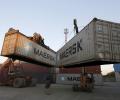
'Industry realises we cannot overly depend on imports from anywhere including China.'
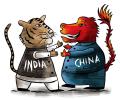
Indian auto and pharma industries import several critical components and raw materials from China.
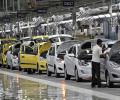
With the Indo-Pak dialogue in tatters and the respective armies exchanging fire across the Line of Control, an unexpected opportunity has presented itself for boosting trade between the two countries.

During the meeting with Finance Minister Nirmala Sitharaman, the auto industry broadly presented factors such as issues regarding availability and affordability of financing, increasing cost of acquisition of vehicles and change in axle load capacity for commercial vehicles that have hurt demand.

The move will primarily impact luxury car companies like Mercedes Benz, BMW, Audi and Volvo and bike brands like Triumph and Harley Davidson.

According to the order, all factories producing essential goods and services will remain operational at full capacity.
The Auto Component Manufacturers Association of India on Wednesday sought reduction in GST rate to a uniform level of 18 per cent for the entire automobile industry to stimulate demand and help save around 10 lakh jobs, which are at risk due to prolonged slowdown in vehicle sales.
.jpg)
According to industry body Society of Indian Automobile Manufacturers and Automotive Component Manufacturers Association of India, with demand continuing to be low and factories not operating at full scale, this may lead to temporary excess overheads.

'Right now, we are increasing production in anticipation of the demand during the festive season.' 'If the demand doesn't come back, all the production will languish in the factories.'

Mercedes Benz, BMW and Audi have sharply increased their sourcing from India.

Experts say while the increasing demand for a ban on Chinese goods might make for good optics, the reality is that India is still heavily dependent on that country in a wide range of industries like electronics, mobile devices, auto, pharma, telecom equipment, and fertilisers.
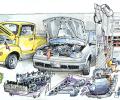
An increase in sales across all categories in the automobile industry, has made need for higher working capital inevitable.
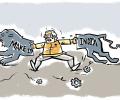
Work is underway in identifying global companies in sectors ranging from electronics, auto components and medical equipment to shift part of their existing or incremental manufacturing to India.

Apart from a pavilion of vintage cars, there will be a Bollywood corner

Paris-based international advisory firm Mazars predicts four per cent growth in India's automobile sector this financial year.

Apart from around 40 Japanese companies and five global vendors of MG Motor India, many other biggies are eyeing Gujarat for either greenfield opportunities or brownfield expansion.

Customers won't shift to electric cars until there is countrywide infrastructure for charging stations, which should be as spread out as petrol pumps now. Two, the price of the lithium ion battery, which constitutes 30 to 40 per cent of the cost of an electric car, has to fall substantially, so that the vehicle is as affordable as a gasoline one.

One can see the scale of recalls going up as the market expands.

Sanand has catapulted into the big league of automobile industry hubs.

Such allegations are unjustified, given that the CCI's remedies do not promote a free-for-all scheme.
 © 2026 Rediff.com - Advertise with us - Disclaimer - Privacy Policy - Sitemap - Feedback - About us - Terms of use - Grievances