
Base revisions are technical exercises, but history shows they can significantly reshape the narrative around India's growth performance.

Eight of the top 10 employers showed a double-digit growth in fixed capital. Only one out of 10 showed a double-digit addition in employment.

Of the total 29 major industry groups covered in the Annual Survey of Industries (ASI), 'manufacture of computer, electronic and optical products' has seen the highest growth in the number of people engaged between the pre-pandemic period (2019-20) and 2022-23. A Business Standard analysis of the latest ASI results has taken into consideration only industry groups having more than 1,000 operating factories. This industry group, which includes manufacture of electronic components, computer equipment, consumer electronics and optical instruments, among others, saw the total number of people engaged rise nearly 50 per cent to 425,000 from 283,000.
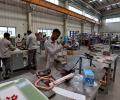
In a relatively rare occurrence, the growth in manufacturing jobs exceeded the pace of sector growth in 2022-23 (FY23). The number of persons engaged in the segment grew by 7.43 per cent in FY23, according to figures from the Annual Survey of Industries (ASI) released on September 30. The gross value added for the manufacturing sector grew by 4.24 per cent in current prices and declined by 2.2 per cent in real terms for FY23, according to earlier annual figures released by the government.

At a time when the government is nudging the private sector to ramp up its capital expenditure (capex), the Ministry of Statistics and Programme Implementation (MoSPI) is poised to kick-start the first-of-its-kind annual survey on the status of private sector capex from next month. "The inaugural edition of the annual exercise will start in October and will be completed by December. "The results will be made public by February next year," said Geeta Singh Rathore, director general, National Sample Survey Office (NSSO), at a data users' conference on Thursday.

Uttarakhand saw the sharpest decline (of 11 per cent) in the "total persons engaged" in manufacturing in the worst-hit pandemic year of 2020-21 as industrial units shut shop, according to the latest Annual Survey of Industries (ASI) data, released by the Ministry of Statistics and Programme Implementation (MoSPI). This was followed by the decline in the workforce in states such as Jharkhand (8.9 per cent), West Bengal (8.3 per cent), Kerala (8 per cent), and Karnataka (7.8 per cent). The "total persons engaged" in an enterprise is defined as the sum of directly employed workers, supervisory or managerial workers, and the unpaid family members who might be engaged in the enterprise.

Gujarat was the sixth-worst during the year, according to the Annual Survey of Industries data.

Bihar, Odisha and Chattisgarh had grown the most industrially in FY14.

The growth is particularly remarkable because it comes at levels higher than during the pre-Covid times, notes Mahesh Vyas.

The Annual Survey of Industry, carried out by the Ministry of Statistics and Programme Implementation for the year 2008-09 shows that the growth in Gross Value Addition in the manufacturing industry nearly halved to 10.59 per cent from 20.12 per cent in 2007-08.

The creation and maintenance of a business register and directory are expected to be an economic data framework for various needed statistical surveys, including the Annual Survey of Industries and others of the National Sample Survey Organisation.
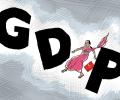
Though the ministry is considering 2017-18 as the new base year, no decision has been taken as the committees of experts are awaiting some more data before finalising their opinion.
Things seem to be getting worse on the wage front partly because there hasn't been much by way of new entry of businesses.
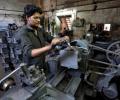
The fall in investment rate is not surprising. But putting it together with rising share of wages in GVA, it shows that the focus is more on productivity, rather than adding new capacity, says Pronab Sen, former chief statistician of India.

The panel finds 'discrepancy' in the Annual Survey of Industries data.
The CSO said that the first revised estimates for 2016-17 have been compiled using industry-wise/institution-wise detailed information instead of using the benchmark-indicator method employed at the time of release of Provisional Estimates on May 31, 2017.

The technical report of the NSSO has generated controversy following its observation that as much as 36 per cent units forming part of MCA-21 database, used in computing GDP, could not be either identifiable or traceable in the field.

Indian economy had grown at 6.6 per in 2013-14.
Subramanian's paper comes at a time when concerns have been raised in various quarters about the official economic growth numbers. The Economic Advisory Council-PM said the Base Year of India's income calculations were shifted to 2011-12 on the basis of recommendations of several committees with experts in national income accounting.
'Given that the economy is going through a slowdown, further downward revisions of the 2019-2020 growth estimates cannot be ruled out,' notes A K Bhattacharya.

'From the time India liberalised in the 1990s, the government has policies are for facilitating the growth of the manufacturing sector.' 'The policies were put in the hope that growth of the manufacturing sector will lead to increased employment,' points out Chidambaran G Iyer, Senior Fellow, Pahle India Foundation.

India Inc is automating and squeezing more output from its workers and so needs fewer of them, finds out IndiaSpend Team.

Indian economy had grown at decade low rate of 4.5 per cent in 2012-13. The economic growth in 2013-14 was 4.7 per cent.

This time there has been a rather peculiar criticism of the latest GDP numbers.

Recalibrating data of past years using 2011-12 as the base year instead of 2004-05, the Central Statistics Office estimated that India's GDP grew by 8.5% in the financial year 2010-11 and not at 10.3% as previously estimated.

Tamil Nadu now has India's lowest fertility rate - lower than Australia, Finland and Belgium - second best infant mortality and maternal mortality rate; records among the lowest crime rates against women and children; and has more factories and provides more industrial employment than any other Indian state.

As beneficiaries under Pradhan Mantri Rojgar Protsahan Yojna have to be EPF subscribers, these numbers indicate that the increase in EPFO payroll estimates is largely due to an increase in the beneficiaries registered under PMRPY.
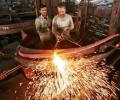
Only power generation grew faster in 2014 than in earlier years.

The GDP always has a base year, which defines the composition of the economy in that year. As the composition changes, the base year needs to be revised regularly. Abhishek Waghmare explains how that is done.

'Instead of doing reforms and restructuring, the present government is busy with the perception that everything is fine and the economy is hunky-dory.' 'Such hollow perceptions are very dangerous for the Indian economy in the long run.' 'The real risk to India is the lack of decent employment opportunities for youth in general and educated youth in particular.'

RE of GDP for 2015-16 show that the economy grew 7.9% in 2015-16, rather than the earlier estimate of 7.6 per cent.

De-scaling of businesses, job losses and subsequent impact on disposable incomes has created negative sentiment among traders, business owners and workers alike, says Abhishek Waghmare.

Electricity generation has outperformed the industrial production index for five months in a row this financial year, even as the broader economy is struggling to grow.
The Bill will make it tougher for workers to go on strike.

India grew at 7.6% in 2015-16 and at 7.2% in 2014-15.

'Everyone confuses GDP to be a measure of output, when it is actually a measure of income.'

The new numbers did not apparently pass consistency checks with production, inputs, or movements in the National Stock Exchange.

'The so-called economic reforms are for the rich.' 'The government should not facilitate and entertain this kind of lust for land by the capitalists.'
 © 2026 Rediff.com - Advertise with us - Disclaimer - Privacy Policy - Sitemap - Feedback - About us - Terms of use - Grievances