
Determining the direction of the dollar in Trump's America will be more critical for asset allocation than getting your call on interest rates right, says Akash Prakash.

'The pressure on relative performance and the feeling of being left out among many investors may also account for the belief among many that this has to be a technology stock bubble.' 'The feeling of a bubble is also reinforced by the extreme performance gap between growth and value investing.' 'While at first glance, one can only stand back awestruck by the wealth creation delivered by technology stocks globally. It does not seem at all like the internet bubble of 1999-2000, says Akash Prakash.

Indian IT giants are outstanding companies with great management teams, but they have been held hostage by their past success.

While demonetisation will benefit the organised sector, the government has to find a way to channel the upcoming revenue buoyancy towards job creation to balance out job losses in the informal sector, says Akash Prakash.

Most analysts had predicted a decline in real estate fixed asset investment.

As for structural reform, there are signs if one looks hard enough.

Even US equities are now back to end-2014 levels.

It is by now quite clear that in all likelihood the US Federal Reserve will hike interest rates in its next meeting in mid-December.

Expectations were probably too high from Narendra Modi.

The Chinese economy is not collapsing, it is shifting to different growth drivers which the old metrics used to judge China do not pick up.

If the economy gains momentum, that is a big positive for markets, given the strong macro of low inflation, falling rates, and a stable rupee, says Akash Prakash.

The clean-up process begun by the Reserve Bank of India runs the risk of spiralling out of control.

Elliott Capital's letter to Cognizant, detailing how the latter can reinvent itself, has many lessons for its India-listed peers like TCS and Infosys, says Akash Prakash.

History would indicate that a recession is not that far off.
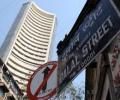
Markets are likely to go down, correct and stay subdued.
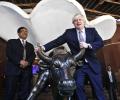
Finance minister Arun Jaitley has delivered a Arun Jaitley delivered a bold, far sighted budget

Most expect the Budget to be path-breaking.

Most expect these bubbles to break in short order and cause serious financial pain to anyone who's foolhardy enough to remain invested in financial assets.
.jpg)
Given the 18-day government shutdown in the US and the likelihood for continued wrangling between the Democrats and the Republicans, it now looks like tapering may be off the table till the first quarter of 2014.

Its time the RBI, govt pushes reforms to boost global investment
.jpg)
The catalyst is the run on emerging market equities, but many investors are just tired of waiting for India to get its act together.

The Indian government and RBI must keep foreign equity investors happy and avoid crushing growth expectations, notes Akash Prakash.

A new CBDT directive actively makes India-dedicated funds comparatively unattractive for institutional investors. It makes no sense, says Akash Prakash.

There are good reasons to believe that India is at the start of a long period of growth for equities.

Public sector banks' need for capital should be used to make fundamental reforms to their governance and management.

Emissions would still keep rising till 2030, and the path towards global warming would improve to 2.7c.

There is uncertainty in most investors' minds as to whether China is transitioning to a new growth model or simply collapsing.

China's domestic debt is a major concern.

The world economy's growth engine is slowing, but not collapsing.

We are entering a period of turbulence, but you can profit off that volatility.

Money will flow to Europe, Japan - and the emerging markets, including India.

Many macroeconomic forecasters have built predictive models on inflation, all of which highlight intense downward pressure on prices.

Some type of global shock adds to the allure of the dollar.

Strong equity flows from domestic institutions, not foreign inflows, will be the real driver of the expected bull rally

A stable dollar will at minimum reduce incremental cross-currency pain for Indian cos.

Money is being released and the government knows it will have to front-run private investment.

We still have time for this government to take action.

Faster normalisation of central-bank balance sheets will drive yields higher.

Modi government needs to focus more.
 © 2026 Rediff.com - Advertise with us - Disclaimer - Privacy Policy - Sitemap - Feedback - About us - Terms of use - Grievances