
'It is building the country's infrastructure, and delivering it very efficiently.'

Union Finance Minister Nirmala Sitharaman will on Monday meet chief ministers and state finance ministers to discuss measures to attract private investments to help boost the economy. Finance secretary T V Somanathan said the meeting comes in the backdrop of strong economic recovery post the two COVID waves, and the central government has made a big push in Capex. The focus of this interaction will be on state-level issues, opportunities and challenges, which will enable us to go to a higher trajectory of investment and growth, he said.

India Inc on Thursday pitched for continuation of reforms while ensuring tax and policy stability in the forthcoming Budget to prop up the economy hit hard by the COVID-19 pandemic. In the virtual pre-Budget consultation held with Finance Minister Nirmala Sitharaman, industry chambers said that government measures will help firmly entrench the nascent signs of recovery being currently seen in private investment. Capital expenditure by the government through enhanced infrastructure spending should in the meantime continue to support growth, CII president TV Narendran said.

At the customary post-Budget media interactions, Finance Minister Nirmala Sitharaman and her topmost bureaucrats touched upon a number of issues. The minister said the government taxing income from digital virtual assets did not give them legitimacy and that issue was being dealt separately in the planned cryptocurrency Bill. She also expressed confidence that the Budget targets were achievable.

In February, Maruti cut vehicle prices by between Rs 8,502 and Rs 30,984 across models after the excise duty reduction was announced.

Ajit Mishra, vice president, Research, Religare Broking, answers your queries.

Omkeshwar Singh, Head, Rank MF, a mutual fund investment platform, answers your queries.

Finance Minister Nirmala Sitharaman will present the much-awaited 2022-23 Union Budget on February 1. While there has been strong recovery in some sectors, touch services like hospitality, tourism and leisure continue to suffer after two Covid-19 waves. Household savings have been hit due to increased spending on health care. Consumption has still not reached pre-pandemic levels.
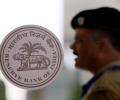
The Reserve Bank on Friday approved the transfer of Rs 99,122 crore as surplus to the central government for the accounting period of nine months ended March 31.
Maruti Suzuki and other Indian companies are bracing themselves for a slump in demand after a 13-year high inflation triggered fears of curbs on consumer spending and the central bank raising interest rates, thereby hurting India Inc's expansion plans. The annual wholesale price index -- the most watched index in the country to gauge rising prices -- rose to 11.05 per cent in the last 12 months ending June 7.
A drop in value of the rupee against the dollar and other major currencies may hurt Maruti Suzuki, the country's biggest producer of passenger cars, as it is slated to import as much as Rs 2,000 crore (Rs 20 billion) of auto parts in this financial year.
Maruti Udyog Ltd on Thursday said its two new plants for engine manufacturing and assembly line production will be operational by the end of the year.\n\n

The company, which sells every second car in the domestic market, said it expected production and sales to grow between 4 per cent and 8 per cent for the financial year started in April.

Even as good days continue to elude the economy at large, they seem to have arrived for Maruti Suzuki.

The long awaited product is likely to be launched early next year.

Despite a rise in input costs, leading car-makers refrain from hiking their price.

The MSI board has recommended a dividend of Rs 75 per share of face value Rs 5 for 2016-17 entailing a total outgo of Rs 2,726 crore inclusive of taxes

Amazon's fulfilment centres, which store products of hundreds of vendors selling on the American online major's platform, are being cited by Karnataka state government authorities as a primary concern in an ongoing tax dispute.

Good pay hikes, positive macroeconomic factors and the taming of inflation have had a positive effect on purchases

With swanky showrooms and VR-enabled sales platforms Maruti Suzuki, Tata Motors, and Skoda bet on shine and gloss,and place their faith in experiential branding.

Top carmakers, including Maruti Suzuki India, Hyundai and Honda, are expecting a spike in their sales following the implementation of 7th Pay Commission recommendations.

Though the intent has been hailed as good for the economy, teething problems remain with a five-rate structure for various goods and services

This trend is likely to gain pace with the new infrastructure cess on diesel vehicles.
Auto loan costs remain stubbornly high.

Although the markets could see a knee-jerk reaction, they rule out a sharp fall.
 © 2026 Rediff.com - Investor Information - Advertise with us - Disclaimer - Privacy Policy - Sitemap - Feedback - About us - Terms of use - Grievances