
Success of the Ministerial meeting depends on the WTO members putting together the broad contours of a deal by August.
The study paper by Melbourne-based think-tank Australia India Institute titled 'The G20: Challenges and opportunities Ahead', said following Prime Minister Narendra Modi's visit to the US and his talks with US President Barack Obama, India may finally sign the agreement.
Trade ministers from 162 WTO countries will gather in Kenya's capital from Dec. 15-18 to work on an agreement to liberalise global trade.

The Cabinet on Thursday approved the stand taken by India at the recently concluded WTO meeting in Bali which endorsed New Delhi's point of view with regard to food security plan and trade facilitation pact.

WTO's new director has said that the issue needs to be addressed in a positive manner.

Under the TFA, a proposal of developed countries, WTO members are negotiating ways to facilitate trade, simplify and harmonise customs rules and reduce transactions cost. Although India is willing to negotiate on TFA, it has raised few concerns over the proposed agreement.
The success of the Bali Ministerial meeting of the World Trade Organisation in the first week of December in 2013 will mean that in 2014 countries will identify areas for early conclusion so that within the next two years, the Doha Agenda of the WTO -- which has remained in a limbo for long -- can be concluded.

The fate of the ministerial conference was sealed after assistant US trade representative Sharon Bomer Lauritsen said permanent solution to the food stockholding issue was not acceptable to America.

Commerce secretary Sunil Barthwal is set to attend a two-day meeting from October 23 at the World Trade Organization (WTO) headquarters in Geneva, that would focus on finding solutions and giving the 'necessary political push' for at least some crucial global trade issues. Next week's meeting comes ahead of the WTO's 13th ministerial conference (MC13), scheduled in Abu Dhabi in February 2024. It will see participation of senior government officials from all WTO member nations.
The decision preceded long hours of tense negotiations and last minute hiccups from Argentina and Pakistan

Protectionist and exclusionary FTAs weaken multilateralism.
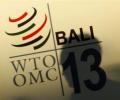
Refusing to budge from its tough stand on food security issues, India pressed for a fair and balanced outcome of the WTO ministerial meeting in Bali.

As hard bargains continue for the next four days at the picturesque tourist resort of Indonesia, the ministers., including from the influential developed countries will try and reach agreements on providing windows to the developing nations for their food security programmes and a pact to free the global trade from the procedural hassles at the customs.
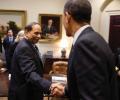
Ambassador Islam A'Isi' Siddiqui -- who recently resigned from his position as chief agricultural negotiator in the office of the United States trade representative -- has joined the Center for Strategic and International Studies as senior adviser on Global Food Security.
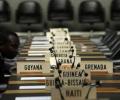
He conveyed India's position to visiting Director General of the Food and Agriculture Organization Jose Graziano da Silva whom he urged to take the lead in protecting the interests of the poor and farmers at the World Trade Organisation.
India will look to play a key role in the APEC, EU and Africa regions to increase its competitiveness.
This was a very strong position and was criticised by many, both from the developed and developing world.
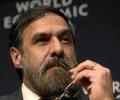
As Commerce and Industry Minister Anand Sharma ruled out any possibility of a compromise, whispers were already being heard of a possible collapse of the talks.
The Doha Round of talks of the World Trade Organisation (WTO) faces a new challenge and if some statements emanating after the General Council meeting on July 25 at Geneva are to be taken at face value, this could derail the process of trade liberalisation through a multilateral route for some time.
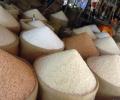
India believes rich nations should be away from farm subsidies.
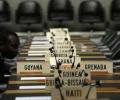
The differences between the rich and developing nations have always been at the core of the World Trade Organisation, set up in 1995 to facilitate greater trade flows across the world, and it came as a major breakthrough when the US and India reached a deal over food security issues in 2014.

This is the joint statement issued by the ministry of external affairs on the visit of US President Barack Obama to India.
 © 2026 Rediff.com - Advertise with us - Disclaimer - Privacy Policy - Sitemap - Feedback - About us - Terms of use - Grievances