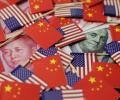
China on Friday said it is assessing whether to start trade talks with the US on tariff reductions following recent approaches by Washington, a move that would possibly ease the tit-for-tit tariff war between the world's two largest economies. "China is making assessments as the United States has recently reached out to convey messages to China through relevant parties many times, expressing hope to engage in talks with Beijing over tariff issues," the Chinese Commerce Ministry said in a statement in Beijing.
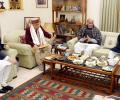
Bharatiya Janata Party President (and Health Minister) J P Nadda and two of his predecessors (Defence Minister) Rajnath Singh and (Home Minister) Amit Shah called on former BJP president (1991 to 1993) Dr Murli Manohar Joshi on his 91st birthday.
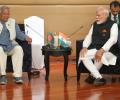
India has exempted Bangladeshi exports to Nepal and Bhutan as such trade facilitation is mandatory for landlocked countries under the framework of provisions of the World Trade Organisation (WTO).
'The answer is not for me to give. The answer either way has to be heard from the industry itself. Tell us why not if you are not doing it; tell us if you are doing it -- why should this question remain unanswered?'
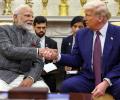
India should convert the Trump threat to an India opportunity, re-embracing a more liberal trade regime as a way of reviving manufacturing output and exports.
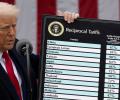
US President Donald Trump has proposed a deal to China that would see the sale of TikTok's US operations to an American buyer in exchange for a reduction in tariffs on Chinese exports to the US. The proposal comes amid a trade war between the two countries and follows China's retaliation of Trump's tariffs on Chinese goods. Trump has also said that tariffs are a powerful economic tool and that he is determined to ensure fair trade between the US and China.
'We may see even more restrictive policies during 2.0.'
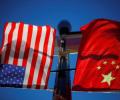
China has toned down its rhetoric on fighting a trade or any other type of war with the US, saying that no such wars should be fought because they cannot be won. Foreign Ministry spokesman Lin Jian responded to US Secretary of Defence Pete Hegseth's remarks that his country doesn't seek a war with China, but will rebuild the military and prepare for war. However, on Tuesday, Lin had said that China is ready to fight till the end if the US wants a trade war or any other type of war. Hegseth said on Wednesday that the US is not actively seeking conflict with China, but is rebuilding its military and establishing deterrence.
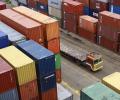
The US Trade Representative noted that India's average applied tariff rate stood at 17% per cent, the highest of any major world economy.

The EU is challenging the introduction of import duties on a wide range of ICT products, for instance mobile phones and components, base stations, integrated circuits and optical instruments
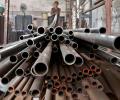
Domestic steel prices have seen an increase over the past couple of months in anticipation of a safeguard duty, but a looming global trade war is likely to weigh as threat of import rises and prospect of export flounders. Data from BigMint showed that in March 2025, hot rolled coil (HRC) prices ex-Mumbai increased by Rs 600 per tonne month-on-month (M-o-M), rising from Rs 48,400 per tonne in February to Rs 49,000 per tonne.

India and the US are engaged in Geneva, the WTO headquarters, to sort out the food stockpiling issue and end the stalemate.
'When Prime Minister Modi met President Trump, they agreed to initiate a bilateral trade dialogue.' 'It makes sense to give these negotiations a chance.'
The impact of Trump's announcement of increasing import tariffs will have negligible benefit for India not because of companies trying to shift from China to other countries or their supply chains being affected due to their Chinese operations but because of our faulty policies, explains Mudit Jain.
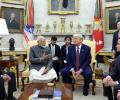
'No retaliatory tariffs now. You can retaliate after a few months.' 'Today, there is no need to retaliate because it is a question of long term benefits.'
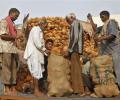
The decision preceded long hours of tense negotiations and last minute hiccups from Argentina and Pakistan

At the meeting of the 160-member World Trade Organisation in Geneva on Friday, India demanded a halt to the trade facilitation timetable till a permanent solution on public stockholding for food security is found.

Modi's Made in India dream takes a beating

The fate of the ministerial conference was sealed after assistant US trade representative Sharon Bomer Lauritsen said permanent solution to the food stockholding issue was not acceptable to America.

Developed nations want the WTO to discuss new issues.
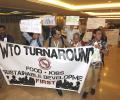
A permanent solution on food security is a must for for India.
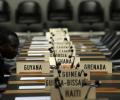
This was a very strong position and was criticised by many, both from the developed and developing world.

The proposals will be reviewed by the World Trade Organization's General Council.

Gearing up for Trump 2.0 era, Chinese President Xi Jinping on Tuesday cautioned there will be no winner in a tariff or tech wars between China and the United States and vowed that Beijing would firmly safeguard its interests.
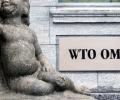
The agreement could substantially reduce transaction times and costs and would unlock new opportunities for both rich and poor countries.

For the first time in the last eight years, India would not have any representative for the post of deputy director general.
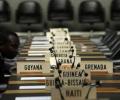
The WTO has fixed an external reference price (ERP) for rice at Rs 3.52 per kg

2016 will be the first time in 15 years that the ratio between trade growth and world GDP will fall below 1:1
Protectionist and exclusionary FTAs weaken multilateralism.

With Donald Trump all set to become US president, Indian exporters may face high customs duties for goods like automobiles, textiles and pharmaceuticals if the new US administration decides to pursue the 'America First' agenda, opined trade experts. Experts also said that Trump could also tighten H-1B visa rules, impacting costs and growth for Indian IT firms. Over 80 per cent of India's IT export earnings come from the US, making it vulnerable to changes in visa policies.

The United Kingdom extracted USD 64.82 trillion from India over a century of colonialism between 1765 and 1900 and USD 33.8 trillion of this went to the richest 10 per cent -- enough money to carpet London in notes of 50 British pound almost four times over.
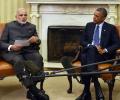
India's food security concern at WTO needs solution: Modi
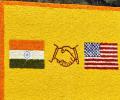
The Budget has given signals that India is sensitive to the US needs and willing to walk the extra mile, but if need be, we should respond in equal measure as a sovereign nation, notes Ajay Srivastava.

Commerce and Industry Minister Kamal Nath said he talked to WTO Director General Pascal Lamy and told him that this was not a text of convergence, but nevertheless forms the basis for further intensive negotiations to restart in September.

According to the final draft of the negotiating text circulated by WTO Director-General Roberto Azevedo among trade ministers of the 159 member countries on Wednesday night, on public stockholding for food security purposes, a developing country like India can provide subsidies for farm support even if those exceed the permissible 10 per cent cap.
So far, WTO members have jointly respected and honoured the Bali commitments.

The government said that far from targeting any US entity, the purpose was to ensure fairness, healthy competition, and to exercise the ability of governments to tax businesses having a nexus with the Indian market through digital operations.
.jpg)
Global goods trade will grow by 3.3 per cent this year, says WTO.

Addressing the food security concerns is important as India is still has 190 million hungry people, Cabinet Secretary Ajit Seth said at an event organised by a global think-tank The Club of Rome.
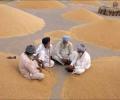
India is threatening to block the World Trade Organization (WTO)'s trade facilitation agreement (TFA) reached at Bali last year unless its agricultural policies are permanently excluded from multilateral scrutiny.
