The United States and the European Union have strongly criticised India's trade policies at the World Trade Organization review, highlighting concerns over high tariffs, quality-control orders (QCOs), and restrictions on digital trade and services, which they argue undermine India's economic openness.

India has initiated anti-dumping investigations into imports of Glycine from China, following a complaint by Avid Organics, alleging material injury to domestic manufacturers. Concurrently, a separate anti-circumvention probe has begun concerning CPVC resin from China and South Korea, suspected of being routed through Malaysia, Japan, and Thailand to avoid existing duties.

BRICS members have expressed 'serious concerns' over the unilateral imposition of trade and finance-related measures, including higher tariffs and non-tariff barriers, stating these actions distort trade and are inconsistent with WTO rules. The grouping also highlighted elevated risks to the global economic outlook due to geopolitical tensions, trade fragmentation, and protectionism.

Finance Minister Nirmala Sitharaman stated that negotiations for the India-US trade agreement have reached a 'plateau', indicating limited scope for further concessions from either side, while also highlighting the US's aim to reduce its trade deficit with India.

BRICS finance ministers and central bank governors have called for increased representation of emerging-market and developing economies in the IMF and World Bank, while also criticising unilateral tariffs and trade measures, as the expanded bloc aims to bolster financial cooperation amidst global fragmentation.

The BRICS grouping adopted a consensus joint declaration in New Delhi, successfully navigating differences on the West Asia conflict but notably omitting any direct mention of US strikes on Iran or Iranian military attacks on Gulf Arab nations. The declaration also criticised Israel's actions in Gaza and called for a concerted approach against terrorism.

Chinese President Xi Jinping addressed the BRICS summit, urging the bloc to play a significant role in achieving peace and tranquillity in West Asia and the Gulf region. He highlighted BRICS' growth over two decades, its efforts in tackling global challenges, and its steadfastness in safeguarding the interests of the Global South. Xi called for opposing the Cold War mentality, strengthening multilateralism, and promoting cooperation in emerging domains like AI, as China prepares to chair the next summit.

The BRICS summit in New Delhi brings together leaders from major emerging economies to address global challenges like trade disputes, geopolitical upheavals, and the economic impact of conflicts in Ukraine and West Asia. India, as chair, aims to position BRICS as an economic growth engine, focusing on the Global South's food, energy, and supply chain security. The summit also highlights the grouping's expansion and its growing influence in global governance.

'Wages have not risen. Rural wages have stagnated. The growth was 0.7 per cent last year. For casual and irregular labour, the wage growth is negative.'

India has launched anti-dumping investigations into imports of thermal paper, Biaxially Oriented Polyamide (BOPA) Film, and certain antioxidants from China, following complaints from domestic manufacturers alleging material injury due to cheap imports.

India has strongly refuted claims by the United States Trade Representative (USTR) regarding excess capacity in its steel and textile sectors, arguing that the nation's significantly low per capita consumption of these products contradicts such assertions, according to Amitabh Kumar, Additional Secretary in the Ministry of Commerce.
China has filed a complaint against India in the World Trade Organization (WTO) over New Delhi's subsidies for electric vehicles (EVs) and batteries. Commerce secretary Rajesh Agrawal said that the ministry will look at the detailed submissions made by China.

India has strongly condemned Pakistan's military airstrikes against Afghanistan, citing significant civilian casualties, and criticised its 'trade and transit terrorism' against Afghan traders, calling these actions blatant violations of international law and UN norms.
India's decision to reserve its rights to impose retaliatory duties on the US over imposition of tariffs on auto parts is a procedural move under the WTO agreement on safeguards and it will not affect ongoing negotiations on the proposed trade pact between the two countries, an official said. India on Friday proposed imposing retaliatory duties under the WTO (World Trade Organisation) norms against the US over American tariffs on imports of the country's auto parts in the name of safeguard measures.
American industry groups sought punitive tariffs on Indian goods at USTR hearings, while Indian officials defended the country's manufacturing growth as demand-led and WTO-compliant.
India on Friday proposed imposing retaliatory duties under the WTO (World Trade Organisation) norms against the US over American tariffs on automobile sector in the name of safeguard measures. "The proposed suspension of concessions or other obligations would take the form of an increase in tariffs on selected products originating in the United States," according to a notification of the WTO being circulated at the request of India.
This is the first case involving India and the US at the WTO after both sides decided to withdraw all seven pending cases at the WTO during the Biden administration.
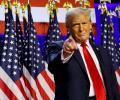
American President Donald Trump has announced imposing reciprocal tariffs on its major trading partners including China that levy higher import duties on goods shipped from the United States. He has already announced a 25 per cent duty on steel and aluminium imports, which will come into effect from March 12.

The Swadeshi Jagran Manch (SJM) is advocating for the termination of the moratorium on customs duties for electronically transmitted digital products, arguing that it hinders self-reliance, causes revenue losses, and restricts India's ability to tax emerging technologies like AI.

The US did not accept India's request for consultations under an agreement of the World Trade Organisation (WTO) concerning American tariffs on steel, aluminium, and related derivative products, Parliament was informed on Tuesday. The US has maintained that these measures were introduced on the grounds of national security, Minister of State for Commerce and Industry Jitin Prasada said in a written reply to the Lok Sabha.
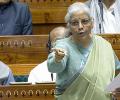
Finance Minister Nirmala Sitharaman launched a strong attack on Rahul Gandhi and the Congress party, accusing them of compromising India's interests on the world stage and selling out farmers and the poor during their time in power.
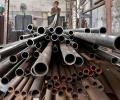
The US has informed the global trade body WTO that the decision to impose tariffs on steel and aluminium, was based on national security grounds and should not be considered as safeguard measures, according to a communication. The US shared this response with the World Trade Organisation (WTO) after India requested consultations under the WTO's Safeguards Agreement on April 11 with America.

The United States Trade Representative (USTR) office on Wednesday launched a sweeping investigation into manufacturing and industrial practices in 16 economies, including India, citing concerns over what it calls 'structural excess capacity' that could distort global trade. Announcing the move on a White House press call, Jamieson Greer said the probe would be conducted under Section 301 of the Trade Act of 1974, one of Washington, DC's most powerful trade enforcement tools.

India has completely protected the interests of its agriculture and dairy sector in the India-US trade agreement.

India has strongly condemned Pakistan's airstrikes on Afghanistan, calling them a flagrant violation of international law and hypocritical given the civilian casualties during Ramzan.

The first leg of the Budget session concluded with debates over the India-US trade deal and a former army chief's memoir, and will reassemble on March 9.

Taking Kharg would give the US control over virtually all of Iran's oil exports and thus provide significant leverage, notes Prem Panicker in his must read daily blog on the Gulf War. It would also put American troops within range of Iran's remaining missiles, drones, and artillery on a piece of real estate that is just eight square miles in size, and just 15 miles from the Iranian mainland.

In a world fractured by uncertainty, India stands out for its policy consistency, paired with sustained ambition, points out Pritam Banerjee.

India on Wednesday blocked an attempt by a group of WTO countries led by China to push an investment facilitation pact in the agenda of the ministerial conference here, a move which may ensure that the proposal is unlikely to be part of the final outcome document, an official said. The 13th Ministerial Conference (MC-13) of the World Trade Organisation (WTO) is underway. Commerce and Industry Minister Piyush Goyal, along with his team, is here for the meeting, which started on February 26.

'...but I would not like to put a timeline to it'

'We are now awaiting a response from the US; they have to get back to us.'
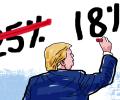
'Trump says India will buy over $500 billion of US goods.' 'At present, India's annual imports of goods and energy from the US are under $50 billion.' 'Reaching $500 billion would likely require more than 20 years, suggesting the figure refers to a long-term aspiration rather than a near-term commitment.'

India needs to increase the investment rate to 34-35 per cent from 31-32 per cent currently to achieve a growth rate of 7 per cent and above, said S Mahendra Dev, chairman, economic advisory council (EAC) to the Prime Minister, on Wednesday.
India told the UN Security Council that it calls for a pragmatic engagement with the Taliban, underlining that a focus on only punitive measures will ensure a 'business as usual' approach.
India has revised its proposal to impose retaliatory duties under the WTO (World Trade Organisation) norms against the US over American tariffs on steel and aluminium in view of the further hike in duty by the Trump administration. The US first imposed 25 per cent tariffs on imports of aluminium, steel and derivative articles on March 12.
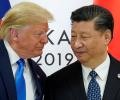
In a statement, the Chinese ministry of commerce said that it would file a lawsuit with the World Trade Organisation against the US for its "wrongful practice," the Global Times reported.

India and the US have settled the last trade dispute at the World Trade Organization (WTO) over poultry products, according to a joint statement released on Friday. With this, the two countries have mutually resolved all the seven pending trade disputes at the WTO. "The leaders lauded the settlement of the seventh and last outstanding WTO dispute between India and the United States.

Commerce secretary Sunil Barthwal is set to attend a two-day meeting from October 23 at the World Trade Organization (WTO) headquarters in Geneva, that would focus on finding solutions and giving the 'necessary political push' for at least some crucial global trade issues. Next week's meeting comes ahead of the WTO's 13th ministerial conference (MC13), scheduled in Abu Dhabi in February 2024. It will see participation of senior government officials from all WTO member nations.
The United States did not accept India's request for consultations under an agreement of the World Trade Organisation (WTO) concerning American tariffs on steel, aluminium, and related derivative products, Parliament was informed on Tuesday.
India's proposal to impose retaliatory import duty on certain US products in response to American tariffs on steel and aluminium could cast a shadow over ongoing negotiations for a trade agreement between the two countries, think tank GTRI said on Tuesday. The Global Trade Research Initiative (GTRI) said that if the US engages in consultations with India on the matter or withdraws tariffs, a resolution may be reached.
