
The value-added tax system proposed to be introduced from April 1, 2005 replacing the sales tax system, would be fine-tuned over time to free it from distortions, advisor to the finance ministry Parthasarathi Shome said on Monday.

A discussion paper by the empowered committee of state finance minister released today said taxes levied by the central government like excise, additional excise duty and various surcharges and cesses would be part of the GST.

BJP-ruled Maharashtra levies 46.52 per cent VAT (47.64 per cent in Mumbai) on petrol, the highest in the country.

Petrol and diesel prices on Wednesday were hiked by 25 paise per litre each, the third increase this week, propelling petrol price to cross Rs 100 per litre mark in more cities including Bhopal and Indore. Petrol and diesel prices are now at record high across the country, price notification of state-owned fuel retailers showed. In Delhi, petrol now comes for Rs 92.05 per litre and diesel is priced at Rs 82.61. This was the third increase in prices this week and seventh hike since May 4 when the state-owned oil firms ended an 18-hiatus in rate revision they observed during assembly elections in states like West Bengal.
The finance minister has labelled about 65 per cent of the fuel excise revenue as cess, including the restructured road and infrastructure cess
The government is considering to enact Service Tax Act and is likely to allow states to levy the tax on local items after nationwide value-added tax is introduced, a senior official of Central Board of Excise and Customs said on Thursday.\n\n\n\n
MSIL has been asked to suggest a new formula.
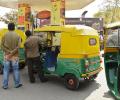
The Union Cabinet on Thursday approved a revision in the formula for pricing of natural gas and imposed cap or ceiling price to help cut CNG and piped cooking gas prices by up to 10 per cent. Natural gas produced from legacy or old fields, known as APM gas, will now be indexed to the price of imported crude oil instead of benchmarking it to gas prices in four surplus nations such as the US, Canada and Russia, Union I&B Miniser Anurag Thakur told reporters after a meeting of the Cabinet. APM gas will be priced at 10 per cent of the price of basket of crude oil that India imports (Indian basket of crude oil).
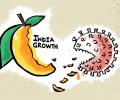
The economic growth may have slowed to 3.5 per cent in fourth quarter of 2021-22 from 5.4 per cent in the previous three-month period due to the impact of higher commodity prices on margins, decline in wheat yields and on higher base, Icra Ratings said on Monday. The agency said the hiccups in the recovery of the contact-intensive services attributable to the third wave of Covid-19 in the country may have also affected the economic growth in the quarter. Even the gross value added (GVA) at basic prices (at constant 2011-12 prices) in Q4 FY2022 seems to have eased to 2.7 per cent from 4.7 per cent in Q3 FY2022, it said.

It is time he stood up and assured the middle class that they can count on him as one of their own, says Dr Sudhir Bisht.
Amaresh Bagchi, the noted economist who formulated the idea of VAT, passed away. He was 77.

'If petro products are brought into GST, then there will be minor impact on the incidence of tax... and minor impact on prices. The price of petrol, diesel will continue to be driven by global factors'
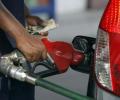
Higher oil prices, while not having an impact on Centre's revenues due to fixed tax rate, are pushing up states' sales tax revenue.
The Centre earned nearly Rs 8.02 lakh crore from taxes on petrol and diesel during the last three fiscal years, of which more than Rs 3.71 lakh crore was collected in FY21 alone, Finance Minister Nirmala Sitharaman informed Parliament on Tuesday. The minister was responding to queries on the hike in excise duty on petrol and diesel during last three years and the details of the revenue earned through various taxes on these fuels. The excise duty on petrol rose from Rs 19.48 per litre as on October 5, 2018 to Rs 27.90 a litre as on November 4, 2021.
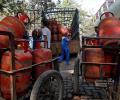
Cooking gas LPG price on Wednesday was hiked by Rs 50 per cylinder, the third increase in rates since May on firming international energy prices. Non-subsidised LPG now costs Rs 1,053 per 14.2-kg cylinder in the national capital, up from Rs 1,003 previously, according to a price notification of state-owned fuel retailers. Common households pay non-subsidised rates for the cooking gas they buy, after the government restricted subsidy to just poor beneficiaries who got connections under the Ujjwala scheme.
Finance Minister Nirmala Sitharaman on Monday ruled out a cut in excise duty on petrol and diesel to ease prices, which have touched an all-time high, saying payments in lieu of past subsidised fuel pose limitations. Petrol and diesel as well as cooking gas and kerosene were sold at subsidised rates during the previous Congress-led UPA government. Instead of paying for the subsidy to bring parity between the artificially suppressed retail selling price and the cost that had soared because of international rates crossing $100 per barrel, the then government issued oil bonds totalling Rs 1.34 lakh crore to the state-fuel retailers. These oil bonds and the interest thereon are being paid now.

China has scrapped tariffs and value-added taxes on core equipment, components, and raw materials imported and used in civilian high-tech projects.
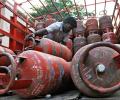
Cooking gas LPG price was on Thursday hiked by Rs 3.50 per cylinder, the second increase in rate this month following the firming of international energy rates. Non-subsidised LPG now costs Rs 1,003 per 14.2-kg cylinder in the national capital, up from Rs 999.50 previously, according to a price notification of state-owned fuel retailers. This is the second increase in LPG rate this month and the third in less than two months. The price was hiked by Rs 50 per cylinder on March 22 and again by the same quantum on May 7.
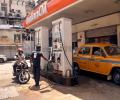
Petrol and diesel prices on Tuesday were hiked for the sixth time this month, propelling prices to cross the Rs 100-a-litre-mark in places from Nanded in Maharashtra to Rewa in Madhya Pradesh to Jaisalmer in Rajasthan. Petrol price was hiked by 27 paise a litre and diesel by 30 paise per litre, according to a price notification by state-owned fuel retailers. The increase took petrol and diesel prices to their highest-ever level across the country. In Delhi, petrol now comes for Rs 91.80 per litre and diesel is priced at Rs 82.36.
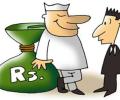
The bulk of states' revenue comes from the devolution from the Centre's divisible tax pool, GST, VAT on petroleum, and excise duty on alcohol.
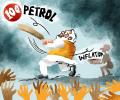
Petrol price on Friday scaled to Rs 102 per litre in some parts of Rajasthan and Madhya Pradesh after rates were raised for the fourth straight day after ending more than two-week-long hiatus during assembly elections in states like West Bengal. On Friday, petrol price was hiked by a steep 29 paise per litre and diesel by 31 paise a litre, according to a price notification by state-owned fuel retailers. This took the price of petrol in Delhi to Rs 91.27 per litre and that of diesel to Rs 81.73.
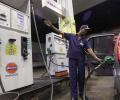
Sitharaman raised excise duty and road and infrastructure cess on the auto fuels by Rs 2 per litre each to raise over Rs 28,000 crore.
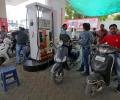
More than a week after state-owned oil firms ended a 19-day pre-Karnataka poll hiatus on revising fuel prices, petrol and diesel rates have touched record highs.

'The mohabbat Shah Rukh Khan gives out on screen is very important in today's times.'

The Delhi high court on Monday sought the Centre's stand on a PIL to declare that bigamy or polygamy by a Muslim husband in the absence of prior written consent of the existing wife or wives and arrangements for her accommodation and maintenance is unconstitutional and illegal.
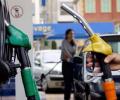
More than a week after the state-owned oil firms ended a 19-day pre-Karnataka poll hiatus on revising fuel prices, petrol and diesel rates have touched record highs.
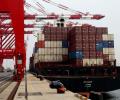
In 2016, almost two-thirds of Indian imports that appear to be most at risk for some degree of potential revenues losses are imports from just one country, China, which was by far India's largest source of imports in that year
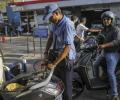
A one rupee per litre cut in taxes would result in revenues being hit by Rs 30,000 crore on an annualised basis.
The trader's association, CAIT, which has called for a 3-day nationwide strike from Wednesday, has decided to present a petition to President APJ Abdul Kalam opposing the service tax levied on traders and the proposed value added tax from April 1, 20

This could have led to communal tension which the prompt arrests of three accused averted, the police said in a release.
