
For most of us, the abject terror of a month ago in Mumbai is difficult to understand. But, as we seek answers and action, I believe we cannot stop looking at the good amongst us. The good in Mumbai, which I learnt as a 20-year-old, was that Mumbai is for all and does not delineate by any thread that separates us. And thus, my respite comes by not visiting just my temple but by everyone else's.

Hitesh Harisinghani/Rediff.com take us on a tour inside the iconic BrihanMumbai Municipal Corporation headquarters, opened for the first time ever for tourists.
Mahesh Vijapurkar laments the decay and decline of India's premier city.
If the city runs, it is thanks to the people who brave every odd. The city has to thank the people, not its governors for its survival, says Mahesh Vijapurkar.
The city needs simple solutions, which look at each problem not in isolation, but as part of a totality called a city, its people, and their needs, says Mahesh Vijapurkar.

The school was run on strict Gandhian lines, with stress on students doing things themselves. Physical comforts were minimal, in keeping with the relatively backward geographical area. But it had a staff of teachers dedicated to educating their students, not just imparting them book-learning, remembers Shreekant Sambrani.
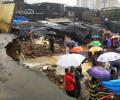
The injured -- 130 -- cannot go back to work nor do they have homes to return to. Many of them refuse to leave the hospital while some of their relatives sleep in the hospital corridors. Apart from their physical injuries, the trauma of seeing their family members swept away haunts them as does the loss of all their possessions. But the BJP-Sena government remains indifferent to this human crisis.

As the political battle for the future of Maharashtra's political quinquennial future nears its electoral conclusion, Shreekant Sambrani looks at the intertwining nature of national and regional interests and the place for and value of inclusiveness in electoral politics.
