
88 per cent of individual traders lost money during FY26. Until we recognise gambling dressed up as option buying for what it is, we will keep treating the wrong disease, asserts Harsh Roongta.
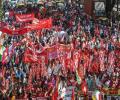
'Major unions should be included. If this goes on, decision-making will become heavily one-sided and we will be forced to continue our strikes.'

Prime Minister Narendra Modi and Russian President Vladimir Putin held extensive discussions to strengthen bilateral trade, defence, and energy cooperation, while also addressing the ongoing Ukraine conflict and exploring avenues for peace and resolution, with Modi reiterating India's call for dialogue and diplomacy.

Indian benchmark indices, Sensex and Nifty, saw an early rebound after significant losses, driven by value buying, though elevated oil prices and anticipation of the US Federal Reserve's policy decision tempered gains. Track Sensex, Nifty on September 16.

Bank credit to industry in India surged by 20 per cent year-on-year in July, significantly accelerating from the previous year, driven by strong expansion in sectors like engineering, gems and jewellery, and petroleum-related industries, according to the Reserve Bank of India (RBI). However, growth in gold loans, while still expanding, saw a sharp moderation.
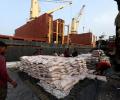
India's exports saw a significant increase of 26.12 per cent to USD 43.81 billion in August, leading to a narrowed trade deficit of USD 26.86 billion, driven by strong demand from key global markets and diverse sectors.

Indian benchmark indices, Sensex and Nifty, traded flat in early deals due to elevated crude oil prices exceeding USD 100 per barrel and persistent geopolitical tensions, which subdued investor risk appetite.

India's total goods trade with BRICS nations more than doubled from FY21 to FY26, reaching USD 417.5 billion, but a significant surge in imports, particularly from China and Russia, has caused India's trade deficit with the bloc to more than triple, reaching USD 226.1 billion.

Russian President Vladimir Putin has proposed a new investment platform, based on the New Development Bank (NDB), to fund projects in trade, infrastructure, logistics, and technology across BRICS nations, emphasising that the grouping's expanding economic cooperation is not 'against anyone' but aims to advance members' national interests.

The US-Canada trade war has escalated sharply, with US President Donald Trump on Monday announcing that tariffs on Canadian cars, trucks, automotive parts and steel imports will be raised to 50 percent from January 2027, following the collapse of trade negotiations between Washington and Ottawa last week.
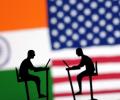
A Parliamentary Standing Committee on Commerce has urged the Indian government to swiftly conclude the proposed India-US Bilateral Trade Agreement (BTA), while ensuring India's interests are protected, recommending complete exemption for key export products like generic medicines and smartphones from future US tariff increases.

A trade body in Jharkhand, FJCCI, has urged the Union Finance Minister to withdraw the proposed 0.4% Merchant Discount Rate (MDR) on UPI transactions above Rs 2,000 for merchants. The body argues that this charge will significantly increase operating costs for businesses, especially MSMEs and retailers, who rely on the current zero-MDR regime for digital payments.

J R D Tata, chairman of the Tata group from 1938 to 1991, said that whenever he had to make a difficult decision, he would ask himself, what will be good for India, and what will be good for the Tatas. If he had a doubt, he would decide in favour of India. In the long run, it would turn out well for the Tatas too, he said, points out Arun Maira.

India has stated its commitment to protecting its economic interests and ensuring energy security after the US House of Representatives passed a bill allowing the US President to impose tariffs of up to 100 per cent on countries, including India and China, for purchasing Russian crude oil. The Ministry of External Affairs affirmed India's resolve to maintain diversified energy sourcing and has articulated its concerns to US interlocutors regarding the bill's potential implications.

US President Donald Trump has threatened the European Union with "very heavy tariffs" if he perceives their actions as hostile, specifically in response to Canada's efforts to deepen economic and strategic ties with the EU. This comes as European Commission President Ursula von der Leyen invited Canada to become the EU's first "associate member" to strengthen resilience amid global trade uncertainties and US trade policies.

'It is a blunt and dangerous attempt to pressure India to sign BTA on one-sided terms.'

Foreign institutional investors have withdrawn nearly $40 billion from Indian equities in the last two years and, according to Bernstein analysts, have 'little reason' to invest for the long-term, though they may 'return to trade'. The brokerage highlights challenges such as struggling large-caps, disruption from new technologies, and difficulties accessing small- and mid-caps (SMIDs) at an institutional scale.
India is waiting for assurance from the US on comparative advantage over other economies under the deal.

Western Australia Premier Roger Cook emphasised cricket's pivotal role in enhancing India-Australia relations, fostering business development, economic ties, and trade. He highlighted the upcoming Big Bash League match in Chennai and the opening of the University of Western Australia campus in Mumbai as key initiatives strengthening bilateral cooperation and cultural exchange.

India's proposal to link BRICS payment systems, including central-bank digital currencies (CBDCs), was notably absent from the grouping's New Delhi Declaration, despite being a key agenda item for India's chairmanship. This omission leaves the 16-year effort for trade in local currencies without a settled payment architecture, with the declaration only 'acknowledging' the work of the BRICS Payment Task Force.

Indian equity benchmark indices Sensex and Nifty rebounded sharply in early trade, with the Sensex jumping over 530 points, tracking a broad-based rally in Asian markets after four consecutive days of decline.

Iranian President Masoud Pezeshkian urged BRICS nations to expand trade in national currencies and build an inclusive global economic framework. He criticised "unilateral sanctions" by Western powers, stating they make emerging economies vulnerable and impact global food security. Pezeshkian emphasised BRICS' role in creating a balanced world order and highlighted Iran's geopolitical and energy capacities for cooperation.
Indian stock market investors are closely monitoring crude oil prices, geopolitical developments in West Asia, and the implications of the US Sanctioning Russia and Iran Act, which could impose tariffs on countries, including India, that purchase Russian crude.

'The large number of tariff lines in the 90-99 per cent band highlights how deeply embedded Chinese sourcing has become in India's electronics imports.'

Indian stock market benchmark indices Sensex and Nifty recorded their second consecutive day of decline, with the Sensex dropping 555.23 points and the Nifty falling 144.05 points, primarily due to rising crude oil prices and ongoing US-Iran hostilities in West Asia.

India's IT Ministry sources state the country will not slow down its Artificial Intelligence development, distinguishing its focus on people-centric applications from global concerns over frontier models. The government acknowledges AI safety risks and is tightening incident reporting norms, with IT Minister Ashwini Vaishnaw emphasising regulation for user safety.

US President Donald Trump is expected to sign the Lindsey O. Graham Sanctioning Russia and Iran Act of 2026 later on Friday (local time). A White House official confirmed the development to ANI without revealing further details.

The United States and India are on the verge of finalising a landmark bilateral trade deal, aiming to boost trade to USD 500 billion by 2030, according to US Deputy Assistant Secretary of State Bethany Poulos Morrison. The agreement seeks to open India's 1.4 billion-strong market to American goods on reciprocal terms, with ongoing high-level discussions to recalibrate the pact after recent changes in US tariff policy.

'Regulations give a particular minimum amount of shares to be given in the OFS or IPO -- without which one cannot do the IPO.' 'We got that number on the day of filing of updated DRHP -- sufficient for us to go live with the IPO.'
Commerce Secretary Rajesh Agarwal highlighted the critical need for India to diversify its services exports beyond the dominant IT/ITeS and professional services sectors. Speaking at the Global Fintech Fest 2026, he emphasised the vast potential in the global financial services market, where India currently holds a small share, and stressed how fintech solutions, like UPI, can drive growth, reduce remittance costs, and support MSME trade finance, ultimately leading to sustainable economic expansion.

The Reserve Bank of India (RBI) maintained its key policy rates for the fourth consecutive time, keeping the repo rate at 5.25 per cent, while the benchmark BSE Sensex closed 152 points higher in a volatile session, recovering from an intraday dip.
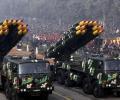
Global brokerage Jefferies forecasts a double-digit compound annual growth rate (CAGR) for India's defence spending, estimating a cumulative domestic opportunity of over $60 billion across four years, driven by geopolitical tensions and the government's indigenisation push.
India may press for an automatic review mechanism in its proposed interim trade deal with the United States (US), mirroring a sunset clause introduced by the European Parliament in its trade agreement with Washington, people aware of the negotiations said. The European Parliament last week approved the EU-US trade deal but inserted a sunset clause requiring the arrangement to expire on December 31, 2029, unless both sides agree to extend it.

Indian benchmark indices, Sensex and Nifty, ended marginally lower after recovering from sharp intraday losses, driven by cooling crude oil prices and buying interest in HDFC Bank and IT sector stocks.

Russia remains India's biggest fertiliser supplier, with imports rising nearly 40 per cent in 2025.

For India, the goal is not simply to host another grand diplomatic gathering. It is to prove that a diverse coalition of emerging powers can still deliver.

A member of the National Traders' Welfare Board (NTWB) has urged the central government to withdraw its decision to impose a 0.4 per cent Merchant Discount Rate (MDR) on UPI transactions exceeding Rs 2,000, effective from October 15. He warned that the new charge, which will be borne by merchants, could negatively impact business growth and lead to higher prices, contradicting the government's 'ease of doing business' policy.

Indian benchmark indices Sensex and Nifty experienced a significant slump in early trade, mirroring a bearish trend in global equities, as escalating conflict in West Asia drove up crude oil prices and intensified investor concerns.

One of the important topics of discussion between the two leaders is expected to be the Northern Sea Route and the Chennai-Vladivostok Maritime Corridor.

Smallcap funds topped the net inflow chart for the second consecutive month, as investors poured record Rs 7,973 crore into one of the best-performing MF categories.
