
Jain currently heads RAW's Aviation Research Centre (ARC), which deals with aerial surveillance, among others.

As part of the deradicalisation strategy, the army, with the cooperation of the Union Territory administration, has undertaken a series of initiatives.

Some developments of recent months have highlighted the need for a tight control over electronic snooping by intelligence and security agencies, writes security expert B Raman.

The Jammu and Kashmir police on Monday said they have arrested five 'hybrid' terrorists of the proscribed Lashkar-e-Tayiba outfit, three of whom were allegedly involved in the killing of a sarpanch in Baramulla district last month.
Notwithstanding repeated denials by the army, security agencies in Jammu and Kashmir have reported that nearly 35 to 40 terrorists have entered the Kashmir Valley but were holed up in higher reaches only due to extra layer of security by police and para-military forces.
Intercepts of communication between terrorist groups have suggested this.
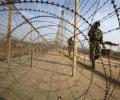
The field intelligence units of the Army coupled with inputs comprising HUMINT (human intelligence) and TECHINT (technical intelligence) indicate that around 300 terrorists, mainly of the banned Hizbul Mujahideen and Lashker-e-Taiba (LeT), are waiting across the border to sneak in, officials said, citing reports from Srinagar collated in the national capital.

'The government must covertly eliminate the leaders of terrorist organisations abroad so as to eliminate the problem at its roots,' recommends Brigadier Gurmeet Kanwal (retd).

How far did the existing air of permissiveness may have contributed to those like the Indian Mujahideen targeting Tamil Nadu for setting up base, is a question that the state's law and order machinery would have to ask itself, and stall them on the track and for good, says N Sathiya Moorthy
