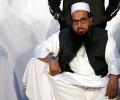
Pakistan's Punjab government has warned citizens against providing charity to banned organizations such as Jaish-e-Mohammad (JeM) and Lashkar-e-Taiba (LeT), stating that those who do so will face terrorism charges.

Former premier Yousuf Raza Gilani's son Ali Haider, kidnapped by gunmen while campaigning for Pakistan's landmark elections, had received threats from the banned Lashkar-e-Jhangvi and Sipah-e-Sahaba.

Abdul Rehman, a member of the Sipah-e-Sahaba, his son and two businessmen were arrested during a raid by police in Jhang district of Punjab province. The car used in the suicide bombing on Monday belonged to Rehman and he had registered a complaint with police about its theft on February 15.
Police in Pakistan's populous province of Punjab have detained over 50 people in a crackdown on the banned Lashkar-e-Jhangvi and Sipah-e-Sahaba Pakistan that was launched in the wake of terror attacks on the minority Shia community. The crackdown has focused on the southern part of Punjab, where several militant groups like the LeJ and Jaish-e-Mohammed have strongholds and support bases.
Once highly secretive, Pakistani hardline militant groups like Jamat-ud-Dawa and the pro Al Qaeda Sipah-e-Sahaba are plugging into western social networking sites like Facebook to expand their reach.
Officials of the home and prisons departments of Punjab province and the local police force were quoted by the Daily Times newspaper as saying that there would be a "gradual" release of the detainees in the next few days
They were arrested from a mosque in Lahore, the Daily Times newspaper quoted sources as saying on Sunday.

He was the chief of the hardline political party Jamiat Ulema-i-Islam-Sami.

A senior Pakistani Shia leader was shot dead in Lahore on Monday prompting several members of the minority sect to hold a sit-in outside the Punjab Governor's house to protest against the brutal murder.

Eleven people died in sectarian violence in Pakistan's largest city today, taking the overall death toll in two days to 18 as unrest spiralled out of control on the eve of the Islamic holy month of Muharram.

United States officials have identified Pakistan as a base of operations or target for numerous armed and non state militant groups, some of which have existed since the 1980s, the independent Congressional Research Service said in the report.

The madrassa in Akora Khattak in Nowshera district of the province is known for having several top Afghan Taliban leaders among its alumni, including former Taliban chief Mullah Omar who received an honorary doctorate from the seminary.

Malik Ishaq, dreaded chief of banned Lashkar-e-Jhangvi that has carried out attacks on minority Shias and the mastermind of the assault on the Sri Lankan cricket team in 2009, has been released after 3 years in jail with the Pakistan government not seeking an extension of his detention.
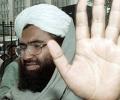
Pakistan has failed to take concrete action to keep a lid on banned militant outfits like Hafiz Saeed-led Lashkar-e-Tayiba and Jaish-e-Mohammad which continuously resurface under new names challenging the government's authority, a media report said on Wednesday.

Other blasphemy cases were also registered against them in various cities, including Karachi and Islamabad.
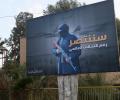
Exclusive documents obtained by the Pakistan daily The News and from law enforcement officials tasked with the responsibility of eradicating the 'Daesh' in Balochistan and Sindh revealed that the terror group has also spread its tentacles into tribal dominant Khyber-Pakhtunkhwa province as they have been recruiting young Afghans living in refugee camps.

No one has taken responsibility for the attack.

'The fact that a rural Kashmiri boy was brainwashed into killing himself and others means there is an active programme that exists which does such recruiting and there will potentially be other such individuals out there,' warns Aakar Patel.
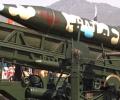
It currently has between 140 and 150 nuclear weapons in its control and stockpiled around 200 to 300 kilogram of plutonium.
