
You have to grow, and grow fast - that's the DNA of the JSW group, chairman Sajjan Jindal said as JSW Cement made its debut on the stock market mid-August. The remark captured not just the moment but also the momentum of JSW's growth story.

The profitability of industry is under stress and needs to be addressed by encouraging investments in the supply side infrastructure.

A team of doctors led by Dr Seshagiri Rao, head of cardiology at the Nizam's Institute of Medical Sciences (Nims), conducted the angioplasty. Angioplasty is a technique in which the obstructed blood vessel is widened. According to Dr Rao, two stents have been put in. His condition is stable.

Last fortnight, State Bank of India Chairman C S Setty lifted the veil on a subject long spoken of in corporate corridors: Why can't our banks finance mergers and acquisitions (M&As)? Change is in the air: Indian Banks' Association (of which Setty is the chairman) is to "make a formal request" to Mint Road to make way for it. Thus far the exclusive turf of foreign banks even though its funding remains offshore - as in, it's not on these entities rupee-book (and a few select shadow banks) - a most lucrative segment in the investment banking suite, M&As, will be homeward-bound.

The country's leading steel producers have devised a new strategy to pass on rising raw material costs to the end users without raising prices. Companies are now levying raw material surcharges while keeping the base price unchanged.
Sajjan Jindal-led JSW Group is not planning to cancel the Rs 100 crore (Rs 1 billion) order given to Maytas Infrastructure, run by promoters of fraud-hit Satyam Computers, as it is "happy" with the progress made by the firm on construction of two township projects.
Steel prices have come down by around 40 per cent since July this year. At present, prices of hot-rolled coil are ruling at Rs 30,000-32,000 a tonne. Ispat Industries director (finance) Anil Sureka said ex-factory prices of hot rolled coils were even lower.
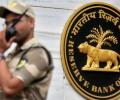
CEOs have complained that high interest rates have blocked their investment decisions. At the same time, customers are also deferring their purchases for new consumer durables, cars, and homes.
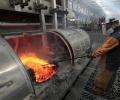
In the domestic segment, demand is currently led by rural markets, oil and gas, LPG and B2C segments like roofing and sheeting.

From inflation, central bank shifts focus to rupee stability and capital flows.

'Enterprises have become more demanding in terms of their productivity expectation from their employees.'

Together, the top 10 business groups reported a pre-tax loss of Rs 19,342 crore during the January-March 2020 quarter, as against a profit before tax of around Rs 48,500 crore in the year-ago period and Rs 39,600 crore during the December quarter. While Vedanta was the worst hit. others included Aditya Birla, Bharti, Adani, Mahindra, and Tata.
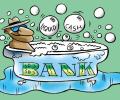
There is a dearth of talent in the Indian banking industry. A testimony to this is the two new CEOs in the private sector -- Sandeep Bakhshi in ICICI Bank Ltd and Amitabh Chaudhry in AXIS Bank Ltd -- have come from the insurance sector, says Tamal Bandyopadhyay.
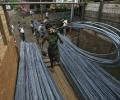
The country imported 9.31 million tonnes (mt) of steel in FY15.

Ajit Mishra, vice president, Research, Religare Broking, answers your queries:
