
Markets regulator Sebi has ordered the attachment of bank and demat accounts as well as mutual fund holdings of Videocon Group founder Venugopal Dhoot to recover dues totalling Rs 5.16 lakh. The latest decision has been taken after Dhoot failed to pay the fine imposed on him in March by Sebi for not making disclosures about his interest in Supreme Energy as well as for not disclosing that Quality Techno Advisors Pvt Ltd (QTAPL) and Credential Finance Ltd (CFL) were related parties with respect to certain transactions. In an attachment notice on Monday, Sebi said the pending dues of Rs 5.16 lakh include the initial fine of Rs 5 lakh, interest of Rs 15,000 and a recovery cost of Rs 1,000.

SBI Capital, Axis Capital, GMR Holdings, United Breweries, Alpic Finance (a Cipla group unit), Saradha Realty, United Bank of India and Trident India are among the prominent entities named in the list.

'Understand how wedding expenses fit into your overall financial situation.' 'Evaluate how different levels of spending will impact other goals like retirement, travel, or housing.'

'Splitting must result in tangible benefits for the customer, otherwise it will only mean more work for them in maintaining the policy and for their nominees.'

New regime places more limits on unregulated foreign entities
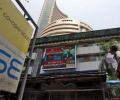
Rules for market infrastructure institutions such as stock exchanges, clearing corporations, and depositories have come under review by Sebi after five years.

Infosys said it is also "aware of a securities class action lawsuit" that has been filed against the company in a federal court in the US, based on the generalised allegations in the anonymous complaints. The company intends to defend itself vigorously in such a lawsuit.

The decision to quiz Sinha, as also former Sebi Chairman M Damodaran, was taken after examination of another former Sebi chief C B Bhave earlier this month, during which the agency sleuths were told that public interest was involved in grant of licence to MCX-SX to trade in currency derivatives.
Sebi on Tuesday restrained two Brightcom Group officials, M Suresh Kumar Reddy and Narayan Raju, from holding any managerial position in the company or its subsidiaries until further orders. Reddy is the promoter-cum-chairman and MD of Brightcom Group Ltd (BGL) while Raju is the chief financial officer. Besides, the regulator also banned Reddy from the securities market until further orders.

Using mantras from the Bhagavad Gita, Vatsal Ramaiya explains how you can conquer your home loan debt and unlock a world of financial freedom and peace of mind.

Leading brokers are expected to increase brokerage rates in the coming weeks, as they navigate a series of regulatory changes that are expected to squeeze profitability. According to industry sources, top brokers may soon begin charging for equity trades and raise the flat fees for intra-day and derivatives trading by 10-30 per cent. Several smaller players have already hiked their brokerage charges, signalling a potential end to the zero-brokerage era that has drawn millions of new investors into the stock market and fuelled active trading.

The ongoing weakness in the broader equity market is likely to weigh on primary market investor participation ahead, which has already begun showing signs of fatigue, analysts said. The spillover effect, they say, will continue as long as the midcap and smallcap segments remain volatile. "The effect will be felt in the IPO market. The subscription levels have come down in the last few days and recent 4-5 IPOs have not done well.

The stock market regulator's definition of large, mid, and small-cap companies has irked mutual fund managers, reports Samie Modak.

The proposal has been discussed by Sebi's Committee on Rationalisation of Financial Resources, which favours setting up such a fund.

Ola Electric, the SoftBank-backed electric vehicle (EV) maker, is likely to pursue a valuation of approximately $4.5 billion in its upcoming initial public offering (IPO), marking about 18 per cent decrease from its last funding round valuation of around $5.5 billion, according to industry sources. The Bhavish Aggarwal-founded firm aims to file for the IPO by next month, according to people familiar with the matter. "The strategy is to price the IPO attractively for investors, fostering long-term growth and wealth creation," said a source.

In a nearly 10-year-old case, Sebi on March 24 had banned Reliance Industries and 12 others from equity derivatives trading for one year, while accusing RIL of making 'unlawful gains'.

Market regulator also announces measures for mutual funds sector.
Sebi's stewardship code for mutual funds and alternative investment funds lays down six principles to improve corporate governance standards in their investee companies, reports Jash Kriplani.

Long-term tax-saving FDs can also be considered after the PPF limit has been exhausted.

The Securities and Exchange Board of India (Sebi) plans to roll out a new regulatory framework for registrar and transfer agents (RTAs) - the market intermediaries responsible for the record-keeping of bondholders and shareholders after a company offers securities to the public. The markets regulator, sources said, is considering a multifold increase in net-worth requirement, a move that may dissuade companies from having in-house RTAs for record-keeping. At present, the minimum net worth required for RTAs is Rs 50 lakh and Rs 25 lakh in categories I and II, respectively.

Sebi has asked exchanges to appoint independent auditors to conduct forensic audit of these firms for verification, including their credentials/financials.

Within Sebi, the chairman should hold an umbrella for both young and old employees, says Somasekhar Sundaresan.

Sebi had directed some of these companies to wind up their unregistered schemes and repay investors.

Do not keep a large portion of your long-term portfolio in FDs.

Under U K Sinha, Sebi became a pan-India organisation with local offices in 16 cities

A little over 2,400 BSE-listed stocks ended with gains in April amid a sharp rebound in the broader markets from the March lows. This was the highest number of stocks that rose during a calendar month, as per data provided on BSE's website. The previous high was 2,322 gainers recorded in January.

Sebi also approved new delisting rules.

The Securities and Exchange Board of India's (Sebi's) technical advisory committee has been mandated to probe the trading halt at National Stock Exchange (NSE) and fix accountability. The committee after a detailed examination would send its findings and recommendations to whole-time member Madbhi Puri Buch, to decide the future course of action, said two people in the know. The panel, which is currently chaired by Ashok Jhunjhunwala of IIT Madras, is learnt to have sought an explanation over two key issues from NSE: One on the effectiveness of interoperability as it was unable to migrate the trading positions; the other on laxity in switching it to the disaster recovery site.

The new powers are aimed at making Sebi more effective in protecting investor interest and helping it to better regulate the market.

The IPO of state-owned steel maker RINL is scheduled to hit the markets in the current fiscal, and the Cabinet has already accorded its approval for the stake sale.

Sebi has decided to lay out strict timelines for completion of actions.

Stock exchanges are expanding the buffet of index derivatives even as the number of stocks permitted to trade in this space, generating an average daily turnover of Rs 450 trillion, is shrinking. This week, the National Stock Exchange (NSE) started issuing futures and options (F&O) contracts based on the Nifty Next 50 Index, bringing the total count of index derivatives to five.

Technical analyst will not be able to give contrary recommendations regarding a company

The Ministry of Finance's Directorate of Enforcement should also be made a part of the state-level coordination panels,

'The markets will correct, and they are bound to correct. The boom will turn into bust.' 'When this bust happens, people would lose like they have lost in the past.' 'Whatever you have made possibly in the last couple of years, you may lose in a couple of weeks. That's very much possible.'

Besides bank accounts, Sebi has also in various proceedings ordered depositories, NSDL and CDSL, to attach the demat securities accounts of the erring entities.
These websites may shut shop soon.

The National Stock Exchange (NSE) and BSE on Tuesday said they will conduct a special trading session in the equity and equity derivative segments on May 18 to check their preparedness for handling major disruptions or failure at the primary site. The special live trading session will have an intra-day switchover from the Primary Site (PR) to the Disaster Recovery (DR) site.

Sebi directs freezing of all demat accounts not linked to Aadhaar by December 31

Violation of provisions of Sebi Act, Securities Contracts regulation, Prohibition of Fraudulent Trade (PFTUP) norms were not observed in respect of these 114 entities.
