
'When I look at India's relative valuations, these are by far the lowest I have seen in my 35-year career.' 'The relative 12-month trailing performance is among the weakest I have seen, and foreign investor positioning is at a 16-17 year low.'

'The next phase of India's IPO cycle will be defined by quality, pricing discipline and investor selectivity.'

'The problem is not just slower growth, but also the quality of growth.'

The domestic initial public offering (IPO) market is experiencing a significant surge, fuelled by the financialisation of savings, digital ease of investing, and expanding participation from both retail and institutional investors, investment bankers said on Wednesday.
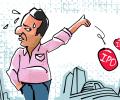
India's equity markets may have expanded rapidly, but initial public offerings (IPOs) are increasingly becoming exit vehicles for early investors rather than as engines for raising long-term capital, a shift that undermines the spirit of public markets, Chief Economic Advisor V Anantha Nageswaran warned on Monday at a CII event.

'If we want to pivot meaningfully from a services-driven economy to a technology and manufacturing-led one.'

'...aggressive pricing amid volatility, but these are exceptions.'

'Foreign capital will continue to come directly into India, but companies have realised that GIFT City is a more cost-efficient way of channelling funds.'

'Sebi's measures are necessary to align the derivatives market with its underlying cash market, as the current disconnect is unsustainable.'

'Listing of scaled Indian subsidiaries of multinational corporations as well as of Indian conglomerates continues to remain a key theme for IPOs in India.'

The gap between market capitalisation of Hong Kong and India has dwindled significantly. At present, India's market cap stands at approximately $4.3 trillion, while Hong Kong's is around $4.7 trillion. In the depths of the Covid-19 crisis in March 2020, Hong Kong's market cap, at $4.6 trillion, was 3.44 times larger than India's.
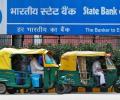
State Bank of India (SBI), the largest lender in the country, has launched a share sale to institutional investors to raise upto Rs 25,000 crore, the biggest qualified institutional placement (QIP) so far by an Indian firm, and has set a floor price of Rs 811.05, which is at a 2.5 per cent discount on Wednesday's closing price.

Slide in the rupee, surging oil prices, and rising bond yields have triggered the latest fall in the market.

The year may see BSE listing, Sensex @ 25000 and end of gold rally among others.

All the countries in the top 10 have seen a decline in market value.

The US market has been a standout performer this year, with the benchmark Standard and Poor's 500 (or simply the S&P 500) gaining over 16 per cent during the first half of calendar year 2023 (CY23) in what was its best first-half show since 2019. By comparison, India's National Stock Exchange Nifty 500 has gained 6.4 per cent. On the surface, it appears that the US markets have done exceedingly well. However, a deeper analysis reveals the gains in the domestic market to be more well-spread.

Shares of Life Insurance Corporation (LIC) of India hit fresh record lows amid sustained decline in Adani Group stocks. Its stock finished at Rs 567.8, down 2.9 per cent over its previous close. The state-owned insurer's market value is now down Rs 2.4 trillion, or 40 per cent, compared to initial public offering levels.
A surge in foreign inflows is seen as the major reason behind the latest market surge.
'BSE has facilitated nearly Rs 35 trillion in capital raising across multiple segments.'

'Stay disciplined, and remain invested.' 'Volatile times are the best to invest in structural opportunities at the right price.'

'India represents one of the top opportunities with robust growth, solid fundamentals, and openness to foreign investment.'

'The shifts in US involvement in global conflicts and geopolitical alliances could introduce uncertainties.'
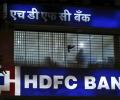
India now has three companies in the global top 100 list in terms of market value: Reliance Industries (RIL) ranks 72, Tata Consultancy Services (TCS) is at 86 and HDFC Bank at 99.

'While Indian markets are indeed not inexpensive, the valuations of largecap stocks are still a considerable distance from being overstretched.'

If the war in the Israel-Gaza region escalates into a larger West Asian conflict, it could pose problems.

The value of the ace investor's personal holdings rose by just 2%.

'China is struggling to get out of its property bubble.' 'Japan took 35 years to walk out of its equity bubble.' 'Bubbles can be difficult to forecast.'

'The idea is to invest where there is opportunity.'

Aaron Low, principal, Lumen Advisors says in 2017 developed nations will outdo emerging ones.

Sundararaman Ramamurthy has been an interesting choice for the publicly-listed BSE, which has seen its chief move to bigger rival -- the National Stock Exchange (NSE) -- in July. Having spent nearly two decades at the country's largest bourse, Ramamurthy is among the early architects of NSE and understands all the cogs of the exchange wheel like only a few others in the country. Just like NSE's core team, which includes its founder RH Patil, the 59-year-old Ramamurthy has worked at the Industrial Development Bank of India (IDBI) before moving to NSE in 1995.

French investment bank BNP Paribas said India's earnings growth potential is around 14-15 per cent

'We emphasise the importance of not basing investment decisions solely on electoral outcomes.' 'Instead, focusing on investing in high-quality businesses capable of prospering regardless of the political landscape is paramount.'

'A key reason for the strong interest in IPOs has been an increased focus on profitability and reasonable pricing of deals.'

The Softbank-backed company has set a price band of Rs 72 to Rs 76 per share for the maiden share sale and is expected to test the appetite for new-age loss-making companies.

Through anchor allotment, a firm can demonstrate the demand for shares by getting marquee investors on board.

'We are the best market in an emerging market crisis and this has been the case since 1997-98.'

'Investors should put their money in stocks where the margin of safety is high.'
The answer to that depends on whether the globe is able to contain the virus spread, says Samie Modak.

T'I am not going to buy small- or mid-cap stocks at very high valuations if it doesn't make sense for the investors.'

'Our preference remains for the less-expensive industrial stocks, which are showing good earnings momentum.'
