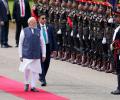
'Granting the country's highest civilian honour to Prime Minister Modi was surprising as it indicated the government was going out of its way to have India as a close partner.'

Sajith Premadasa, the 55-year-old leader of Sri Lanka's principal opposition party Samagi Jana Balawegaya, said on Tuesday that he was withdrawing from the race of President to provide support to Alahapperuma.

Parliament met for a brief special session on Saturday to announce the vacancy in the presidency following the resignation of Rajapaksa.

During the 13-minute special session, Dhammika Dassanayake, ecretary general of Parliament, announced the vacancy for the post of president.

Sri Lanka's new Finance Minister Ali Sabry on Tuesday resigned, a day after President Gotabaya Rajapaksa appointed him after sacking his brother Basil Rajapaksa amidst the island nation's worst economic crisis.

The 225-member Parliament will elect the new president by a secret vote on July 20, Speaker Mahinda Yapa Abeywardena said on Friday.

Joins Rajapaksa's newly-formed Sri Lanka People's Party
The dissidents, led by former president Sirisena's Sri Lanka Freedom Party, would leave the ruling Sri Lanka Podujana Peramuna coalition with its 14 Members of Parliament, party sources said after their meeting with the President on Monday.

Unofficial results indicate that the SLPP would comfortably win at least 17 out of the 22 districts on offer.

Mahinda Rajapaksa completed 50 years of parliamentary politics in July this year. He was elected as a Member of Parliament at the young age of 24 in 1970. He has since been elected president twice and has been appointed prime minister thrice.
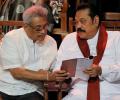
Gota has to decide if he could order elder brother Mahinda's arrest as the agent provocateur of Monday's violence. Then he has to prepare for an interim government, in which no one would now want to become a cabinet minister leave alone prime minister, explains N Sathiya Moorthy.

Sri Lanka's main Opposition party Samagi Jana Balawegaya (SJB) on Tuesday handed over to the parliamentary Speaker motions of no-confidence against the Sri Lanka Podujana Peramuna (SLPP) coalition government and embattled President Gotabaya Rajapaksa, even as the government announced the appointment of a cabinet sub-committee to look into the proposal for a new Constitution.

This is the first appointment made by President Wickremesinghe on his first day in office.

The Sri Lankan Parliament is all set to elect the successor to Gotabaya Rajapaksa in a three-way presidential contest on Wednesday, following a high-voltage political drama which saw the former president fleeing the country and resigning after a popular uprising against his government for mismanaging the economy.

The ex-president returned to Sri Lanka on a Singapore Airlines flight.
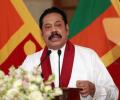
Sri Lankan Prime Minister Mahinda Rajapaksa resigned on Monday, hours after his supporters attacked anti-government protesters outside embattled President Gotabaya Rajapaksa's office, leaving at least 78 people injured and prompting authorities to impose a nationwide curfew and deploy army troops in the capital.

India has once again pressed for the devolution of powers to the provinces under the 13th amendment (13A) of the Sri Lankan constitution and the system of provincial councils as a meaningful step towards better representation of the island's Tamil minority.
A Sri Lankan court on Friday named former president Maithripala Sirisena as a suspect in the 2019 Easter bombings in which 270 people, including 11 Indians, were killed.

The SLPP, led by prime minister Mahinda Rajapaksa, has won in 145 constituencies, bagging a total of 150 seats with its allies, a two-thirds majority in the 225-member Parliament, according to the results announced by the election commission.
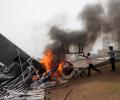
Earlier it was claimed that the MP committed suicide by shooting himself after he opened fire at two members of the group which had surrounded his vehicle on Monday.
Rajapaksa's move signalled that he would contest the snap polls, to be held on January 5, under his own party banner and not that of Sirisena's SLFP.

On May 9, violence erupted in Sri Lanka after supporters of the 76-year-old former premier attacked peaceful anti-government protesters demanding his ouster over the country's worst economic crisis that led to acute shortages of staple food, fuel and power.

Rajapaksa fled the country and resigned last month in the face of a popular uprising against his government for mismanaging the island nation's economy.

Sri Lanka's Acting President Ranil Wickremesinghe on Monday imposed emergency giving him sweeping powers ahead of the key election on July 20 to pick a new President as he urged the political parties to put aside differences and form an all-party government, with the Opposition dubbing his decision as an 'undemocratic draconian act'.

There have been growing calls for President Rajapaksa's resignation over the past few weeks over his government's mishandling of Sri Lanka's worsening economic crisis.
The order was also imposed on parliamentarians Johnston Fernando, Pavithra Wanniarachchi, Sanjeewa Edirimanne, Kanchana Jayaratne, Rohitha Abeygunawardena, C B Ratnayake, Sampath Athukorala, Renuka Perera, Sanath Nishantha, Senior DIG Deshabandu Thennakoon among others.

Mahinda Rajapaksa, along with his wife and family, fled his official residence -- Temple Trees -- and took shelter at the naval base in Trincomalee.

After nearly two days of political deadlock, the stakeholders are engaged in prolonged talks to try and appoint a successor to Mahinda Rajapaksa.

The Sri Lankan government has appointed an advisory committee comprising eminent economic and fiscal experts to provide guidance on addressing the current debt crisis and engaging with the International Monetary Fund (IMF) and other lenders as the country struggles to combat the unprecedented shortage of foreign reserves.

Ranil Wickremesinghe was on Wednesday elected as Sri Lanka's new President by Parliament, in a rare move that could provide continuity for ongoing discussions with the International Monetary Fund for a bailout for the cash-strapped nation but a development likely to anger anti-government protesters who have been demanding his resignation from office for weeks.

'India has given assistance that we required, otherwise we would not have been able to survive this far.'

The violence occurred following reports on Monday that Mahinda Rajapksa may offer to stand down as Prime Minister.

Democratic Left Front politician Nanayakkara was among the 42 members who declared independence in Parliament from the ruling Sri Lanka Podujana Peramuna (SLPP) coalition.

Sri Lanka's main Opposition parties on Sunday agreed to form an all-party interim government after the anticipated resignation of President Gotabaya Rajapaksa on Wednesday, following unprecedented political turmoil that forced him and Prime Minister Ranil Wickremesinghe to offer their resignations over the mishandling of the nation's crippling economic crisis.

A former Liberation Tigers of Tamil Eelam child soldier-turned-politician was acquitted by a court in Sri Lanka on Wednesday in the 2005 murder case of a senior ethnic Tamil lawmaker at the height of the country's bloody civil war.
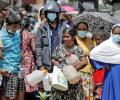
New Delhi has a chance to rid itself of its image as the bully in the subcontinent by helping a neighbour tackle problems that India, for once, has no role in creating. It should grab the opportunity with both hands, suggests Aditi Phadnis.

President Gotabaya Rajapaksa on Monday fired Basil Rajapaksa from his post and invited the Opposition parties to join a unity Cabinet to tackle the raging public anger against the hardships caused by the economic crisis.

Sri Lanka's embattled President Gotabaya Rajapaksa, under immense pressure from the public and the Opposition to quit over the island nation's worst economic crisis, said on Thursday that the abolition of the executive presidency, a move that will curb his powers, will be considered by Parliament.
President Rajapaksa and Prime Minister Rajapaksa will transform Sri Lanka's political landscape after Thursday's electoral triumph, predicts N Sathiya Moorthy, veteran Colombo watcher.

From Sri Lanka's most popular political family to its most despised -- going by the voices on the streets calling for the Rajapaksas' ouster -- what went wrong for the clan? Veteran Sri Lanka watcher N Sathiya Moorthy offers an insight.
