
A little over 2,400 BSE-listed stocks ended with gains in April amid a sharp rebound in the broader markets from the March lows. This was the highest number of stocks that rose during a calendar month, as per data provided on BSE's website. The previous high was 2,322 gainers recorded in January.

Violation of provisions of Sebi Act, Securities Contracts regulation, Prohibition of Fraudulent Trade (PFTUP) norms were not observed in respect of these 114 entities.

Stock exchanges are expanding the buffet of index derivatives even as the number of stocks permitted to trade in this space, generating an average daily turnover of Rs 450 trillion, is shrinking. This week, the National Stock Exchange (NSE) started issuing futures and options (F&O) contracts based on the Nifty Next 50 Index, bringing the total count of index derivatives to five.

'The markets will correct, and they are bound to correct. The boom will turn into bust.' 'When this bust happens, people would lose like they have lost in the past.' 'Whatever you have made possibly in the last couple of years, you may lose in a couple of weeks. That's very much possible.'

The National Stock Exchange (NSE) and BSE on Tuesday said they will conduct a special trading session in the equity and equity derivative segments on May 18 to check their preparedness for handling major disruptions or failure at the primary site. The special live trading session will have an intra-day switchover from the Primary Site (PR) to the Disaster Recovery (DR) site.

The aggrieved investors of National Spot Exchange (NSEL) have moved the Securities and Exchange Board of India (Sebi) against Financial Technologies (FTIL), the listed promoter.

Revenue dept says changes in I-T Act require Parliament nod; new regime to wait till Budget in June-July 2014.

Investors may have to wait a little longer for Unified Payments Interface (UPI)-based block mechanism in the secondary market even as the market regulator has set the effective launch date as January 1, 2024. Several brokerage firms said they may take a few months more to implement it. Investors will be able to register for this facility only if the stock broker has opted for the UPI block facility.

Decision to outsource its investor helpline comes within weeks of Sebi deciding to rope in third-party agencies for processing and maintenance of investor grievances.

The agency has done five advertisements so far.

Electric two-wheeler company Ola Electric Mobility will float its initial public offering (IPO) on August 2, and a significant part of the proceeds will be used for capacity expansion of its cell manufacturing plant and revving up R&D. The initial share sale will conclude on August 6, and the bidding for anchor investors will open for a day on August 1, according to the red herring prospectus (RHP).

The second-longest serving chairman introduced quite a few measures for the primary market and implemented a new corporate governance framework.

Regulator believes Jet Airways deal triggers open offer
Senior officials in the MF industry say while the finance ministry and regulators communicate regularly, this is one of the very few instances in many years where an issue between the two has come out into the open.

BSE (formerly Bombay Stock Exchange) has seen its market share go past the critical 20 per cent mark in the derivatives segment, intensifying its battle with bigger rival - the National Stock Exchange (NSE) - which, less than a year ago, had a monopoly in this space. In April, the average daily trading volume (ADTV) for BSE stood at Rs 89 trillion, accounting for 20.6 per cent of the overall ADTV of Rs 432 trillion (based on notional volumes for options).

Unable to verify or trace a large number of bondholders in Sahara refund case, Sebi has begun a process to consult the business conglomerate for verifying the genuineness of such investors.

Sebi has asked clearing houses to establish separate funds for all segments of the market including equity, debt and currency.

Are you a first-time IPO investor? Even if IPOs appear attractive with expectations of high returns, they come with risks and complexities, cautions Sheetal Jhaveri and shares her checklist to help you navigate through the world of IPOs

Mutual fund bets in their own schemes are nearing the Rs 1 trillion mark. The total value of sponsor and associate investments across all categories of schemes touched Rs 95,058 crore in February, according to a Business Standard analysis of data from industry body the Association of Mutual Funds in India (Amfi). This represents a 28.9 per cent increase over March 2023.
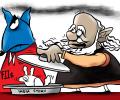
Certain foreign portfolio investors (FPIs), which operate as pooled investment vehicles (PIVs), may not be exempt from the additional disclosure mandates by the Securities and Exchange Board of India (Sebi) following an update in the standard operating procedures (SOPs) for custodians. An updated version of the SOPs has specified several conditions to be met for PIVs to benefit from the exemptions granted. These include no segregated portfolios, independent investment manager, and investors having pari-passu (equal) rights in the entity.
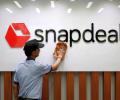
E-commerce platform Snapdeal has filed preliminary documents with markets regulator Sebi to raise funds through an initial public offer (IPO), joining the league of internet-led businesses looking to list on domestic stock exchanges. The public issue comprises fresh issuance of equity shares worth Rs 1,250 crore and an offer for sale (OFS) of 3.07 crore equity shares, according to the draft red herring prospectus (DRHP). According to market sources, potential listing could value Snapdeal at about $1.5-1.7 billion.

The case relates to Sebi probe into trading by Indiabulls Securities in 2008-09.

According to analysts, 11 PSUs, including Rashtriya Chemicals and Fertilizers and State Bank of Mysore, have government holding beyond the 90 per cent mark and the government will have to bring it down.

Experts say you should be certain of living in a city and locality for a long time before purchasing a home.
In a circular dated May 20, Sebi had directed the listed companies to evaluate the impact of Covid-19 on their capital and financial resources, profitability, liquidity position, assets, and ability to service debt. Instead, companies have spoken about the number of plants, warehouses and distribution centres that have resumed operations; work-from-home and safety measures undertaken for employees; and the labour shortage they are facing.

A Mumbai court on Wednesday rejected the bail plea of businessman Raj Kundra, arrested in a case of alleged creation of pornographic films and publishing them through apps, after the prosecution contended the police investigation was still on and his release at this juncture will derail the probe.

Plea-bargaining finally comes to India and you can now resolve your disputes with Sebi through negotiations and settlement rather than litigation.
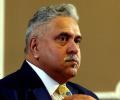
Sebi's order comes close on the heels of Central Bureau of Investigation naming Mallya, Kingfisher Airlines and nine others, in the charge sheet related to the 2015 loan default case.

The regulator last week reached out to custodians for beneficial ownership information of investors coming from China, Hong Kong, and 11 other countries.

Vadra launched Skylight Hospitality four months after the DLF shares got listed, amid complaints of inadequate disclosure from investor associations and former business partner Kimsuk Krishna Sinha.

Independent directors

Many senior citizens 'underestimate the impact of inflation, taxation, health-related expenses, and the heavy premium they will have to pay on health insurance.'

So far this year, bankers have earned Rs 1,226 crore for handling 45 IPOs, which together mobilised Rs 48,363 crore.
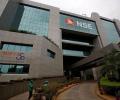
The National Stock Exchange (NSE) has made a fresh attempt at settling a regulatory investigation into the misuse of Trading Access Point (TAP) software at the bourse. The Securities and Exchange Board of India (Sebi) rejected a similar application in 2022. "NSE and its employees have filed a consolidated settlement application dated May 4, 2023, with Sebi.
